| |
HAPPY BIRTHDAY TO THE PEACEMAKING LEGEND!
На русском: https://peacefromharmony.org/?cat=ru_c&key=51


To Professor Rudolf Siebert, Fearless Peacemaker from the Nazi Wehrmacht, With the 98th anniversary On October 1, 2025 CORDIAL CONGRATULATIONS! Your life path at 98 years: https://peacefromharmony.org/?cat=en_c&key=1161 Your personal page with your scientific publications on the GGHA website:
https://peacefromharmony.org/?cat=en_c&key=51 Your great scientific experience of the Critical Theory and the GGHA
Gandhian Peace Science, Spheronics (2005 – 2025) convergence in their history: https://peacefromharmony.org/?cat=en_c&key=746 and https://www.rudolfjsiebert.org Your strong anti-fascist, peace science and the historical experience of denazification: https://peacefromharmony.org/?cat=en_c&key=1106 and https://peacefromharmony.org/?cat=en_c&key=1063 Your great World Family Reunion, 2023: https://peacefromharmony.org/?cat=en_c&key=1144 You - First in the GGHA Peace Pantheon https://peacefromharmony.org/?cat=en_c&key=513 On behalf of all the GGHA 600 members from more than 50 countries, heartfelt congratulations and deep gratitude for your great contribution to our crowning "Primer of Perpetual Peace Science and SAI" (120 p., 2025: https://peacefromharmony.org/?cat=en_c&key=1264)! Warmest wishes for your strong health! With peace and love, Dr Leo Semashko, GGHA Founder (2005) and Honorary President October 1, 2025 ------------------------------ HAPPY BIRTHDAY TO THE PEACEMAKING LEGEND! Professor Rudolf Siebert, Fearless Peacemaker, With the 97th anniversary, October 1, 2024, First in the GGHA Peace Pantheon https://peacefromharmony.org/?cat=en_c&key=513 ---------------------
RESPONSES
Dear Leo and peacemakers, I would like to wish from my heart Happy Birthday to our soul brother Rudolf Siebert. May mercy God give him the chance to achieve everything he wishes. With respect and love Panagiotis -Takis D Ioannides Co-founded, Vice President of GGHA Greece https://peacefromharmony.org/?cat=en_c&key=138 01-10-25 --------------------------- Happy birthday. Let’s hope to celebrate the peace in future. With regards, Dr Noor Muhammad Larik, Pakistan https://peacefromharmony.org/?cat=en_c&key=722 01-10-25 ---------------------

Hello Winfried (Winfried.Perseke@T-online.de), Paul and Albin! My dad is recovery from an infection that started the week of July 7. He went to the hospital on July 10 not feeling very well. They put him on IV antibiotics in the hospital to fight a blood infection (sepsis). He has had this twice before. The antibiotics cleared the infection from his blood, but it also was in part of his big toe. The doctors amputated the top portion of the toe to eliminate the source of the infection. The operation was successful. My dad moved from the hospital to a rehabilitation hospital to help him gain his strength back through physical therapy. He has been at the rehabilitation hospital since July 25. He has been able to walk with some assistance and his walker. He will remain at the rehabilitation hospital for another week or two, then go home. How long will depend on his continuing recovery. He is 97 years old so everything takes longer for the recovery but he is doing well for his age! The family has been out to see him since he was in the hospital. His caregivers are also with him at the hospital so that he is never alone. I am in Michigan right now and will see him again later today. I will let him know that you have asked about him. I am attaching a picture from my daughter’s visit with him on Friday. We hope that he will fully recover soon and return home where he enjoys being! My apologies for not writing earlier, there was a lot of activity. Things are getting better for him! Alles Gutes und herzliche Gruesse, Karl Siebert, (Rudolf’s son) sieberkj@gmail.com 04-08-25 Hallo Winfried, Paul and Albin- I was able to see my dad a lot last week at the REHA. He was moved back to his home on Saturday. He was very happy to be back home. We think he will recover faster there where it is more familiar and he has his books, birds and BBC (and other news channels). I saw him on Saturday at home and he seemed to be doing better, but he will need to continue his recovery to get back where he was before going into the hospital. Other of my siblings will visit him over the next few weeks too. I let him know that you all send your best wishes to him- he was happy about that and says thank you! I plan on visiting him again at the end of this month to celebrate his 98th Birthday on October 1. Enjoy the end of your summer and I will let you know if anything changes. Herzliche Gruesse! Karl Siebert sieberkj@gmail.com 10-09-25 ---------------------- Happy Birthday and good health Rudolf, Sincerely, Dr. Lucas Pawlik Vienna, Austria https://peacefromharmony.org/?cat=en_c&key=887 01-10-25 ------------------------- Congratulations Rudolf! Dr. Pedro Gómez, Madrid pedgom.madrid@gmail.com 01-10-25
---------------------- Happy Birthday Brother Rudolf!! With profound appreciation for all your many extraordinary and historic contributions, Dr. Matt Meyer Secretary-General International Peace Research Association New York https://peacefromharmony.org/?cat=en_c&key=1034 01-10-25 ---------------------- Congratulations Professor Rudolf Happy Birthday 98!! Francisco CEMERG Mexico Lic. Francisco Plancarte y García Naranjo. Av. Juárez N0. 52 Int. 404 Col. Centro; Alcaldía Cuauhtémoc CP 06000; Ciudad de México Cel: (521)+( 333-157-1058). E-mail: pacoplancarte@gmail.com 01-10-25 ------------------------------- Happy birthday to the legendary peacemaker Professor Dr. Rudolf Siebert. Thank you and best regards, Dr. Bishnu Pathak, Nepal https://peacefromharmony.org/?cat=en_c&key=910 02-10-25 ---------------------- Уважаемый Рудольф, я присоединяюсь к поздравлениям с 98-м днём рождения! Вы великий Миротворец, величайший человек, прошедший свой жизненный путь борясь за мир и справедливость! Желаю вам крепкого здоровья, внимания и любви со стороны ваших друзей, родных и близких. С уважением, Вера Попович Россия https://peacefromharmony.org/?cat=ru_c&key=578 02-10-25 ----------------------
Congratulations to Rudolf and his page in our Primer Dear coauthors, We are happy to inform you that your and other congratulations to our legendary peacemaker, Rudolf Siebert, on his 98th birthday have been published in two languages on his page here: In English: https://peacefromharmony.org/?cat=en_c&key=51 In Russian: https://peacefromharmony.org/?cat=ru_c&key=51 We thank you for your warm and heartfelt congratulations. Among the congratulations, we received letters from Rudolf's son, Karl Siebert, which contain a fairly detailed description of Rudolf's stay in the hospital since early July, i.e., more than three months, which filled our ignorance. You'll find these letters published on the indicated pages, along with a wonderful photograph of Rudi from the hospital with his granddaughters below, where he looks remarkably like a true Rodin’s philosopher at 98! This gives us hope for his speedy return to our family of coauthors, whose brilliant ideas we so greatly missed during these months as we were completing our "Peace Science Primer" with his great, seminal contribution, the Golden Rule (https://peacefromharmony.org/?cat=en_c&key=1264)! We are very grateful to Karl for this valuable information; thank you very much!
(See photo above)
Matt and I decided that the legendary peacemaker Rudolf Siebert deserves a separate dedication page, after John Avery's in our Primer. We are sending it to you in the attachment for your consideration and approval one day, tomorrow, October 4th, with your comments and your "I approve." Your silence, without comments, will also be considered affirmative, as is our tradition. Thank you for your responses. Best wishes for your health. With peace and love, Leo 03-10-25 ----------------------------- Dear Leo, We join the group of Rudi’s friends and colleagues and send best regards and wishes for a complete recovery! On behalf of the whole Inter-University Centre Dubrovnik community, we wish Prof. Siebert all the best for his birthday! His work and dedication is a constant inspiration to the generation of his colleagues, scholars and students. With warm regards from Dubrovnik, Nada Nada Bruer Ljubisic Executive Secretary Don Frana Bulica 4, 20 000 Dubrovnik, CROATIA Tel: 00 385 20 413626 / 00 385 20 413627, www.iuc.hr

03-10-25
------------------------------- Замечательная инициатива! Конечно утверждаю. Такое внимание и уважение к этому великому человеку! С пожеланиями мира, добра и благополучия - Вера Попович Россия 03-10-25 ------------------------
Dear Dr. Siebert: I hope you get better and come home soon... I would like to see you at your home soon
and also I have many good articles waiting for you here. Please let me know when you are feeling better at home... Best wishes, Ali Shirani alshirani@yahoo.com 04-10-25 ------------ Dear Rudolf and all, Warmest wishes for your best health! I agree with Leo's proposal in spirit and content. With peace and love, Asha Asha Mukherjee Professor, Department of Philosophy & Religion, Former Director, Women's Studies Centre, Visva-Bharati University, Santiniketan (WB) INDIA 731235 https://peacefromharmony.org/?cat=en_c&key=1170 04-10-25 ------------
Publication of the English "Peace Primer" by donations Dear coauthors and friends of the Peace Primer, Matt and I are happy to announce that we have received no objections to the inclusion of a special dedication page to Professor Rudolf Siebert in honor of his 98th birthday in our Primer (https://peacefromharmony.org/?cat=en_c&key=1265). This decision was approved by democratic consensus among us, for which we congratulate everyone. All responses are here: https://peacefromharmony.org/?cat=en_c&key=51. It is also kindly endorsed by a special response from Executive Director Nada Bruer of the 'Inter-University Centre Dubrovnik community', where Rudi has conducted at least 42 International Peace Seminars "The Future of Religion" since 1976 based on their Golden Rule, as presented in his 2018 document on the GGHA website: https://peacefromharmony.org/?cat=en_c&key=740. For a worthy and wide publication of the unique "Peace Primer" (~130-140 pages: https://peacefromharmony.org/?cat=en_c&key=1264) in English in New York and for its promotion in all formats, a first approximation would require about $5-10 thousand, which our organizations do not have. Therefore, we invite all our peacemakers, all supporters of the "Perpetual Peace Science," first systematically and verifiably embodied in its "Peace Primer" on the "shoulders of giants" of peacemaking: Gandhi, Einstein, King, Galtung, Avery, Siebert, Corrigan, and several others, to publish it with our feasible donations. We have published all 11 of our previous peacemaking books during the past 20 years. During the week ending October 12th, we invite you to transfer your donations to the bank card of Professor Matt Meyer, the editor-in-chief of the English edition. At the same time, sponsors are welcome to suggest improvements to seperate phrases in this book for the editor-in-chief's consideration, consistent with the democratic spirit of this book and its "Perpetual Peace Science." To avoid fraudulent risks, Matt cannot publicly disclose his bank card number. He will only share it with those donors who personally notify him via email (Matt Meyer <mmmsrnb1@gmail.com>) not only of their intention but also of their donation amount, along with their full name and address for verification purposes. The Primer, on a separate page, will state that it was "printed with funds donated by the family of Rudolf Siebert, his friends and colleagues from the GGHA and other peace organizations from around the world," with the Primer's donors names list for the futures centuries. Similar publication will be worthy of the great contribution of Rudolf Siebert, along with other giants of peacemaking, to start a nonviolent and harmonious era of scientific, perpetual peace for humanity in the new modernity of our century. With gratitude to all!
With peace and love,
Matt and Leo Dr. Matt Mayer, Editor-in-Chief of the "Peace Primer" English edition Honorary Secretary General of the International Peace Research Association (IPRA), https://peacefromharmony.org/?cat=en_c&key=1034 New York
Dr. Leo Semashko, Editor-in-Chief of the "Peace Primer" Russian edition,
GGHA founder (2005) and Honorary President, https://peacefromharmony.org/?cat=ru_c&key=286 Sankt Petersburg 05-10-25 ---------------------------------------
---------------------------------------

Rudolf Siebert (1927) and Leo Semashko (1941), scorched by war Photo 2007, St. Petersburg, Synergy Start in Peace Science -----------------------------
Rudolf Siebert's publications archive on GGHA website: 2005-2024
Архив публикаций Рудольфа Зиберта на сайте ГГСГ: 2005-2024 1.Rudolf Siebert: Open letter to President Trump. Golden Rule of Harmony in religions and society. 01-02-2017: https://peacefromharmony.org/?cat=en_c&key=51 2.Siebert: The Slavic and the American World: https://peacefromharmony.org/?cat=en_c&key=611 3.Siebert. Call for Papers: The Future of Religion: The Dialectic of Secularization? Dubrovnik, 2018: https://peacefromharmony.org/?cat=en_c&key=740 4.Rudolf Siebert. Tetrasociology of Spherons: https://peacefromharmony.org/?cat=en_c&key=746 5.Siebert. Memorial Service and Memorial Meal for Steve: https://peacefromharmony.org/?cat=en_c&key=773 6.Rudolf Siebert. Religion Psychology: https://peacefromharmony.org/?cat=en_c&key=939 7.Rudolf Siebert. The Third Way: https://peacefromharmony.org/?cat=en_c&key=945 8.Rudolf Siebert. Global Ethic of Peace: Hans Küng 1928-2021:
https://peacefromharmony.org/?cat=en_c&key=992 9.Rudolf Siebert. Golden Rule: Contra Ukrainian Nazism and Pro the Russian and American worlds solidarity: 15-04-22: https://peacefromharmony.org/?cat=en_c&key=1063 10.Professor Rudolf Siebert. Great scientist, anti-fascist, peacemaker. The historical experience of denazification. Congratulations on your 95th anniversary: https://peacefromharmony.org/?cat=en_c&key=1106 11.Rudolf Siebert and his friends: new joint videos and common publications:
https://peacefromharmony.org/?cat=en_c&key=1142 12.Rudolf Siebert. Family Reunion 2023: https://peacefromharmony.org/?cat=en_c&key=1144 13.Rudolf Siebert. 96th Birthday Autobiography. Add. Critical Theory and Spheronics Convergence (2005-2023): https://peacefromharmony.org/?cat=en_c&key=1161
14. Rudolf J. Siebert. Erich Fromm's Dialectical Attitude toward Religion. 2024: https://peacefromharmony.org/?cat=en_c&key=1171
15. Spherons of Harmony: The Third Way of Religions Reconciliation. 29-04-17: https://peacefromharmony.org/?cat=en_c&key=782,
16. Golden Rule to the present Ukrainian conflict. 02-03-22: https://peacefromharmony.org/?cat=en_c&key=51
17. Sermon on the Mount and Golden Rule: Global Peace Science Today. 09-01-2017: https://peacefromharmony.org/?cat=en_c&key=51
18. Spherons of Harmony: The Third Way of Religions Reconciliation. 29-04-17: https://peacefromharmony.org/?cat=en_c&key=782, 19. Rudolf Siebert. The Golden Rule of Religions: The First Law of Social Harmony. The ABC of Harmony. 2012, с. 134-136: https://peacefromharmony.org/?cat=en_c&key=499 Рудольф Зиберт. Золотое правило религий: Первый закон социальной гармонии. Азбука гармонии. 2012, с. 134-136: https://peacefromharmony.org/?cat=ru_c&key=527 20. The Critical Theory of Religion: The Evolution of the Moral Consciousness from the Jus Talionis to the Golden Rule. July 2007: https://peacefromharmony.org/?cat=en_c&key=51
++ Rudolf Siebert's numerous letters about the Golden Rule in the GGHA during 20 years of his work there.
+ Многочисленные письма Рудольфа Зиберта о Золотом ПРавиле в ГГСГ за 20 лет его работы в нем.
Publications together with L. Semashko: 1. The GGHA Message for March 8, 2024:“Women's Peace Revolution: It's time to save humanity!” 26-03-24: https://peacefromharmony.org/?cat=en_c&key=363 2. GGHA Message. Gandhi, Putin and Bushnell: Resisting NATO's Nazi genocide with force and nonviolence scientific mobilization. 19-03-24: https://peacefromharmony.org/?cat=en_c&key=1175 3. GGHA Message. Christian Easter 2024: Peace in Harmony of Faith and Science. 05-05-24: https://peacefromharmony.org/?cat=en_c&key=1184 4. GGHA Message. May 9, 2024. The 79th Peace Victory Day, “SO THAT WILL BE NO WAR!”: https://peacefromharmony.org/?cat=en_c&key=1188 5. Article. The Peace Science Spheral Artificial Intelligence (PS-SAI): Twelve Attributes of Advantage. 28-05-24: https://peacefromharmony.org/?cat=en_c&key=1189
6. Leo Semashko and Rudolf Siebert. Spherons of Harmony: The Third Way of Religions Reconciliation. 29-04-17: https://peacefromharmony.org/?cat=en_c&key=782
--------------------------------
Публикации совместно с Л. Семашко :
Лев Семашко и Рудольф Зиберт. ПУТИН – ТРАМП. Две парадигмы глобального мира. Открытое письмо. 28-01-2017: http://peacefromharmony.org/?cat=ru_c&key=708 Leo Semashko and Rudolf Siebert. PUTIN - TRUMP: Two Paradigms of Global Peace. Open Letter. 01-02-17: http://peacefromharmony.org/?cat=en_c&key=735
1. Послание ГГСГ. «Женская Революция Мира: настало время спасти человечество!» на 8 марта 2024. 26-03-24: https://peacefromharmony.org/?cat=ru_c&key=388 2. Статья. Ганди, Путин и Бушнелл: Сопротивление нацистскому геноциду НАТО силой и научной мобилизацией ненасилия Гандианской Науки Мира. 19-03-24:https://peacefromharmony.org/?cat=ru_c&key=1065 3. ГГСГ Послание. 9 Мая 2024. 79-й День Победы Мира, «ЧТОБЫ НЕ БЫЛО ВОЙНЫ!»: https://peacefromharmony.org/?cat=ru_c&key=1030 4. ГГСГ Послание. Христианская Пасха 2024: Мир в Гармонии Веры и Науки. 05-05-24: https://peacefromharmony.org/?cat=ru_c&key=1069 5. Статья. Сферный Искусственный Интеллект Науки Мира (СИИ-НМ): Двенадцать атрибутов преимущества. 28-05-24: https://peacefromharmony.org/?cat=ru_c&key=1071
И многие друние
01-06-24 ------------------------------------ -------------------------------

https://peacefromharmony.org/?cat=en_c&key=1161
---------------------------------------
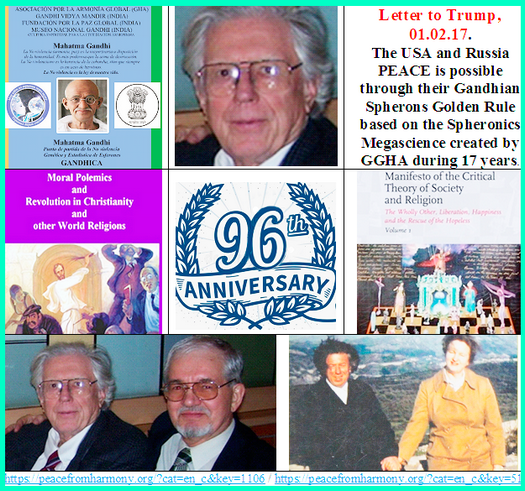
https://peacefromharmony.org/?cat=en_c&key=1106
------------------------------
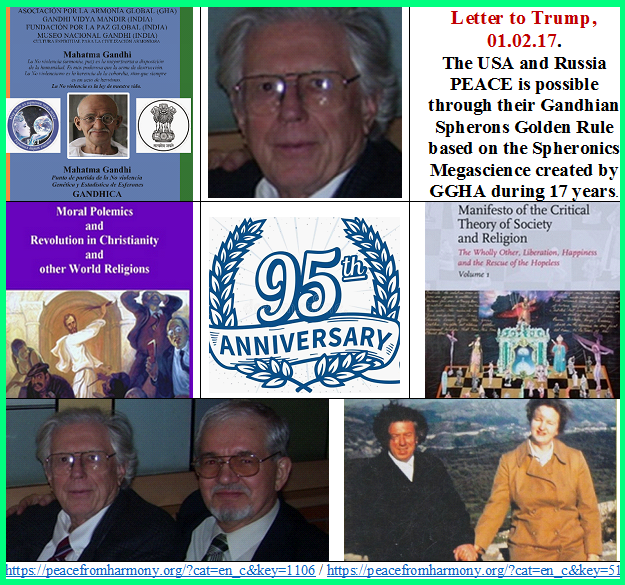
https://peacefromharmony.org/?cat=en_c&key=1106
English and Russian, русский язык - ниже.
----------------------------------------------------
Professor Rudolf Siebert. Great scientist, anti-fascist, peacemaker. The historical experience of denazification. Congratulations on your 95th anniversary! Dear friend Rudolf, The GHA is happy to congratulate you on your 95th birthday, wish you good health, harmony and creative success in expanding the Golden Rule of the Gandhian spherons to the American and Slavic worlds. You have been doing this for many decades, starting with the creation of your volunteer International Course on the "The Future of Religion", IUC, Dubrovnik, Croatia, (https://peacefromharmony.org/?cat=en_c&key=740. Then you created a parallel course at Simferopol University in Crimea since 2004. Then came with lectures to St. Petersburg University in 2006, where we got to know you personally. In 2007, the GGHA recognized you as the first "Gandhian Creator of World Harmony", opening its gallery in more than 40 peacemakers (https://peacefromharmony.org/?cat=en_c&key=513). At the same time, you got involved in the active development of the “Tetrasociology of Spherons” (https://peacefromharmony.org/?cat=en_c&key=746), which was called the Gandhian “Spheronics” as “Spherons Global Peace/Security MegaScience”. You have been actively involved in all of her publications, in her 11 books and 84 peace projects in 17 years. These are the main milestones of your creative, scientific path in the development of peacekeeping science from the position of your original, "Critical Theory of Religion and Society", widely presented in numerous books and articles on your website: http://www.rudolfjsiebert.org. A significant part of them, along with your memories, is presented on the GGHA website on 10 pages of your archive since 2005 (http://peacefromharmony.org/?cat=ru_c&key=51). The most significant political publication of them is your letter to Trump with peacemaking proposals for cooperation between America and Russia in the development of the Gandhian "Spherons Global Peace MegaScience" that is the only acceptable and saving for them (Ibid.). You are the first American scientist who was convinced of its truth and peacemaking effectiveness, without hesitation in recognizing it. Your last publication: “Denazification as Reeducation”, dedicated to your service from the age of 15 in the Hitler Wehrmacht, captivity by the Americans in 1945 and re-education in the USA until 1946, was published along with your memoirs here (https://peacefromharmony.org/?cat=en_c&key=1106). It reveals the vital, existential layer of your rich and complex destiny, the core of which was the construction of your great "House of Peace" for humanity and for the immediate environment in Kalamazoo, where you lived and taught at the University of Michigan. We tried to somehow reflect at least its main milestones in our banner in honor of your 95th anniversary, which is published on two of your pages: http://peacefromharmony.org/?cat=ru_c&key=51 and https://peacefromharmony.org/?cat=en_c&key=1106 Throughout your long fruitful life, you have carried and preserved the solid spiritual core of a true Christian, humanist and peacemaker, who has never been tolerant of violence, its most monstrous form - Nazism of both Hitler's Germany and the Kyiv puppet fascist regime. You are one of the few Western intellectuals who have remained faithful to truth, peace, non-violence and reject the sheer Western lies and fakes that mask the Nazi nature of the Kyiv pro-Western government established in the bloody 2014 coup d'état (https://peacefromharmony.org/?cat=en_c&key=1063 and others). You are still showing yourself as a brave and courageous defender of innovative scientific ideas that are of fundamental importance for the scientific “reset” of the traditional false and confrontational ideologies of capitalism and communism within the framework of the “Third Way” ideology embodied in the Gandhian spheronics. You resolutely, were the first to support the GGHA Call to world scientists “on the verge of nuclear death in 100 seconds”, into the abyss of which humanity is being pushed by NATO tactical nuclear exercises from October 17 to October 30, together with the “dirty” atomic bomb of Kyiv neo-Nazis today (https://peacefromharmony.org/?cat=en_c&key=1104). The GGHA highly appreciates and deeply thanks you for your firm moral position, which will never give up peace and its Gandhian science in favor of the treacherous tolerance of war/fascism. GGHA wishes you good health and new creative achievements in your great life! With love, Leo Semashko, on behalf of the GGHA members, GGHA Founder (2005) and Honorary President, www.peacefromharmony.org 24-02-22 ------------------------------ Профессор Рудольф Зиберт. Великий ученый, антифашист, миротворец. Исторический опыт денацификации. Поздравления с 95-й годовщиной! Дорогой друг Рудольф! ГСГ счастлив поздравить Вас с 95-м днем рождения, пожелать Вам крепкого здоровья, гармонии и творческих успехов в расширении Золотого Правила Гандианских сферонов на Американский и Славянский миры. Вы делали это многие десятилетия, начав с создания вашего волонтерского Международного Курса «Будущее Религии» в Дубровнике, Хорватия, начиная с 1976 года. (International Course on the «The Future of Religion», IUC, Dubrovnik, Croatia, (https://peacefromharmony.org/?cat=en_c&key=740). Потом вы создали параллельный Курс в Симферопольском Университете в Крыму с 2004 года. Потом приезжали с лекциями в Санкт-Петербургский Университет в 2006 году, где мы познакомились с вами воочию. В 2007 году ГГСГ признал вас первым «Гандианским Творцом Мировой Гармонии», открыв ее галерею в более чем 40 миротворцев (https://peacefromharmony.org/?cat=en_c&key=513). Вместе с этим вы включились в активную разработку «Тетрасоциологии Сферонов» (https://peacefromharmony.org/?cat=en_c&key=746), которая получила название Гандианской «Сфероники» как «Наука Глобального Мира/Безопасности Сферонов». Вы активно участвовали во всех ее изданиях, в ее 11 книгах и 84 миротворческих проектах за 17 лет. Это основные вехи вашего творческого, научного пути в развитии миротворческой науки с позиции вашей оригинальной, «Критической Теории Религии и Общества», широко представленной в многочисленных книгах и статьях на вашем сайте: http://www.rudolfjsiebert.org. Значительная их часть вместе с вашими воспоминаниями представлена на сайте ГГСГ на 10 страницах вашего архива с 2005 года (http://peacefromharmony.org/?cat=ru_c&key=51). Наиболее весомая политическая публикация из них – это ваше письмо к Трампу с миротворческими предложениями сотрудничества Америки и России в развитии единственно приемлемой и спасительной для них Гандианской «Науки Глобального Мира Сферонов» (Там же). Вы – первый американский ученый, который убедился в ее истинности и миротворческой эффективности, без колебаний признав ее. Последняя ваша публикация: «Денацификация как перевоспитание», посвященная вашей службе с 15 лет в Гитлеровском Вермахте, пленении американцами в 1945 году и перевоспитании в США до 1946 года опубликована вместе с вашими воспоминаниями здесь (https://peacefromharmony.org/?cat=en_c&key=1106). Она раскрывает жизненный, экзистенциальный пласт вашей богатой и сложной судьбы, стержнем которой было строительство великого «Дома Мира» для человечества и для ближайшего окружения в Каламазу, где вы жили и преподавали в Мичиганском Университете. Мы попытались как-то отразить хотя бы ее основные вехи в нашем баннере в честь вашего 95-летия, который опубликован на двух ваших страницах: http://peacefromharmony.org/?cat=ru_c&key=51 и https://peacefromharmony.org/?cat=en_c&key=1106 Через всю свою долгую плодотворную жизнь вы пронесли и сохранили твердый духовный стержень истинного христианина, гуманиста и миротворца, который никогда не был толерантным к насилию, к его самой чудовищной форме – к нацизму как Гитлеровской Германии, так и Киевского марионеточного фашистского режима. Вы один из немногих западных интеллектуалов, которые сохранили верность истине, миру, ненасилию и отвергают сплошную западную ложь и фейки, маскирующие нацистскую природу Киевской прозападной власти, установленной в кровавом государственном перевороте 2014 года (https://peacefromharmony.org/?cat=en_c&key=1063 и другие). Вы до сих пор проявляете себя смелым и мужественным защитником инновационных научных идей, имеющих фундаментальное значение для научной «перезагрузки» традиционных ложных и конфронтационных идеологий капитализма и коммунизма в рамках идеологии «Третьего Пути», воплощенной в Гандианской сферонике. Вы решительно, первым поддержали Призыв ГГСГ к мировым ученым «на грани ядерной смерти через 100 секунд», в пропасть которой человечество толкают тактические ядерные учения НАТО с 17 до 30 октября вместе с «грязной» атомной бомбой Киевских неонацистов сегодня (https://peacefromharmony.org/?cat=en_c&key=1104). ГГСГ высоко ценит и глубоко благодарит вас за вашу твердую моральную позицию, которая никогда не откажется от мира и его Гандианской науки в угоду предательской толерантности войны/фашизма. ГГСГ желает вам крепкого здоровья и новых творческих достижений в вашей великой жизни! С любовью, Лев Семашко, от имени членов ГГСГ, ГГСГ Основатель (2005) и Почетный Президент, www.peacefromharmony.org 24-02-22 -----------------------------------
Responses Dear Professor Rudolf Siebert please accept my warmest wishes for a happy birthday with health happiness and success to your life efforts for the Global Community peace and harmony. With respect and love Dr Panagiotis -Takis D. Ioannides Co founder, Vice President of GGHA Greece 27-10-22 --------------- Отличное поздравление Льва Семашко! Я хотела бы присоединиться к поздравлению и в свою очередь поздравить Рудольфа Зиберта, этого замечательного человека с юбилейной датой со дня рождения, с пожеланиями крепкого здоровья и творческих успехов. С уважением Вера Попович Россия 28-10-22 ---------------------- May I also congratulate Professor Siebert on his 95 years! The good must live long so that history is not forgotten and repeated! The really tragic turn of world events is how the Anglo Saxon world went from anti fascist heroes in 1945 to fascist supporters of European and NATO imperialism since the 1990s. The answer of course is the loss of democratic capitalism and elector sovereignty as corporatism ( the basis of Nazi and fascist systems which combines authoritarianism of left and right) took over in the UK and USA. I have published 3 articles on the rise of corporatism and the death of "democracy, truth and prosperity" on Freenations.net Rodney Atkinson
https://www.peacefromharmony.org/?cat=en_c&key=1064
Britain 29-10-22
Dear Leo: I thank you and all the GGHA members for your dear, most generous letter and good wishes concerning my 95th birthday. I thank you for your friendship. I shall never forget your dear Father and his heroic death in defense of Leningrad by the Russian army against the heinous attack of a European army of 4 million men, who killed 26 million Russians, many of them civilians, and 6 million Jews. The goal of the attack was the colonization of the Slavic World. The attacks of the Crusaders against Novgorod, of Napoleon against Moscow, and of Hitler against Moscow, Leningrad and Kiev must never be repeated again. The present conflict in the Ukraine started unfortunately in Washington, not in Moscow. President Reagan and his Secretary of State Baker promised President Gorbachev, the Leninist author of Glasnost, that NATO would not move "one inch» toward the East, the Russian borders. Since then NATO weapon systems have been moved Eastward up to the Russian interest and defense sphere, which reaches from the Baltic Sea to the Black Sea. That meant a provocation which broke not only an international promise, but also the Golden Rule, which most living world religions have in common, and which has also immigrated into the secular sphere, into the categorical imperative of Kant, the greatest bourgeois enlightener, and into the ethics ofthe unlimited communication community of Appel and Habermas. Recently the USA has done to the Russian Federation, what it does not want to have done to itself, as it showed clearly during the Cuban Crisis. The Golden Rule and the Monroe Doctrine should be valid not only for the American World, but also for the Slavic World. Also the rule of moral equivalence should be valid for both worlds. The spirit of a nation contains not only its consciousness of other nations, but also its own self-consciousness, and conscience. Since 1945, it has been my strong belief that through the anti-fascist World War II, the USA and Russia had moved from the rank of regional powers to world- historical powers, who had superseded the European World and had inherited its position, as once Rome superseded Greece, and the Germanic Europe superseded Rome. I hope that the anti-fascist alliance of the Slavic World and the American World, which won World War II, will be renewed again, and that no war will be declared over the Ukraine. I hope that the American and the Slavic World will compete with each other not with nuclear weapons, but rather will not only compete but also cooperate in terms of humane progress: who has lessruralor urban slums, less poverty, higher life expectancy, better education, better social security, better health insurance, better environmental protection, better pandemic protection, etc. The rest of the nations will follow the more humane model. Take good care of yourself! In Solidarity and Friendship, Your Rudi from the House of Mir. 29-10-22 ------------------------
--------------------------------------------------------------
Denazification as Reeducation. My Life Experience in the USA by Rudolf J. Siebert, b. 1927, Professor Emeritus in Comparative Religion June 28, 2022 (Updated version) Publication: https://peacefromharmony.org/?cat=en_c&key=51 https://peacefromharmony.org/?cat=en_c&key=1106 I. Wehrmacht I grew up in Nazi Germany and Fascist Europe. Growing up, I was continually exposed to the exclusive, authoritarian learning, nazification, and propaganda in family, civil society, state, and even Church. But I also had still some democratic teachers in the Humanistic Lessing Gymnasium and in the Catholic parishes St. Family and St. Albert, in Frankfurt am Main, who enlightened me about the most dangerous untruth of Rightwing extremism, and radicalism, and fascism, and nazism, and Anti-Semitism, and other forms of racism. When I was 15 years old, in August 1943, I was drafted into the German air force. I resisted the draft, since I did not agree with the war goal of the Third Reich: the colonization of the Slavic World and the project Barbarossa. But an air force officer came to my home, Hügelstrasse 194, in Frankfurt am Main, and told my mother and me, that there existed no conscientious objector status in Germany. I had to join the armed forces or would be punished severely, even by death. Two young Catholic farmers, who resisted the draft on grounds of their conscience,were indeedsentenced to death andexecuted. The officer took me to the airport Sossenheim, near Frankfurt, for military training. During my first night at the airport Sossenheim, Frankfurt was bombed by the British Airforce. I was horrified by the bombing out of the old town, the many casualties, and the ruins. While I was against the war, I, nevertheless for one year helped to defend the women, and children, and old people in the basements and bunkers of the cities in the Rhein - Main area against American and British saturation bombing, invented by Admiral Harris against the Geneva conventions. I considered this defensive activity to be morally justified in terms of the Augustinian Seven Point Just War Theory, which I had learned in my Catholic parishes, and which were still valid at this time before the atomic bombs were thrown on Hiroshima and Nagasaki.. At the airport of Sossenheim, I met the first time young Russian prisoners, who spoke fluent German, and were committed Marxists-Leninists. They interpreted the war and their own situation most bravely in terms of historical materialism. When they were hungry, we young German soldiers, who were anti-Nazi, shared secretly our bread with them. In defense of the cities we shot down 18 bombers, and thus prevented them to throw their destructive loads on innocent civilians. Saturation bombing was to demoralize the population. But it was as ineffective as it was immoral. It only bound an authoritarian population more closely to their authoritarian and totalitarian leadership, while the war industry continued to be most productive under ground. In September 1944, I was transferred from the air force to the army, to the anti-tank battalion in Büdingen, Hessen, in order to be trained for the Eastern front. At that time the life expectancy of a young lieutenant in the anti-tank battalion at the retreating Russian front was 4 weeks. But in March 1945, General Patton crossed with his tank army the Rhein River and the Main River. My company was sent to the second Siegfried Line on the West bank of the Rhein River, into the battle of Aschaffenburg, in order to resist Patton's tank army. In the Easter week of 1945, 77 years ago, I participated in the Battle of Aschaffenburg, part of the Siegfried Line. on Easter Sunday, I fought on the Hahnenkamp Mountain, where I lost all my comrades, 250 of them, whose graves I then visited for the next 50 years. Ninety fascist, Hungarian officers had deserted the German line secretly early on Easter Sunday morning, and thus opened the German flank to General Patton's 80 tanks. We all had been trained to leave during this Easter week 1945 for Russia, to participate in the project Barbarossa, and to shoot down Russian tanks, which had reached the German border. Barbarossa had already killed 27 million Russians and six million Jews, and we were to continue the senseless war against Russia, which had already been lost at Moscow, Stalingrad and Kursk. It is characteristic for authoritarian, or fascist, personalities to be as masochistic as they are sadistic, and to continue meaningless battles long after they have been lost. That victory of the great anti-fascist alliance of the socialist Slavic Worldand the liberal American World over the fascist European World was celebrated again, and rightly so, only a few weeks ago, in the beginning of May 2022. In 1945, instead of the great dialectician, General Chukow, we resisted the General Patton, who was as positivistic strategist, as my own general. II. Captivity After my company was annihilated by Patton's tanks, I surrendered in the forests of Alzenau to the American and Canadian Army. I was incarcerated into the basement of a family home, full of apricots, cherries and pears in canning jars. My Catholic conscience did not allow me to eat from the fruit visible through the glass. It would mean stealing! The next day, I was transported to the prisoner of war camp in Worms via Dieburg and Darmstadt, containing 20,000 prisoners, and was starving for a week.I remembered the home canned fruit, and regretted a little bit not to have eaten from it. The starvation in the Worms prisoner of war camp was not a war crime, but rather a matter of logistics. Thousands of German soldiers deserted from the Eastern to the Western front, in order not to be captured by the Soviet Army and to have to face denazification, but rather by the American and the British Army. They all had to be fed besides the allied armies. The task was overwhelming! From Worms, I was transported by train, in animal cars, to a prisoner of war camp in Marseille, France. On the way through Elsass Lorain, I was stoned by newly French citizens, who wanted to prove, that they were no longer German, but rather good Frenchmen. A protestant Pastor, a co-prisoner, sacrificed his last drops of water, in order to wake me up again. I became an ecumenist for life! From thelargeprisoner of war camp in Marseille I was taken by a liberty shipto Oran, and then through Gibraltar across the Atlantic Ocean to Norfolk, Virginia, into the prisoner of war Camp Allen. on the way, we still met with three German U-boats. Their periscopes appeared in the waters around and inside the escort fleet, to which our liberty ship belonged. Our captain put the prisoners along the railings, so that the U-boat captains would not torpedo our ship. He was an optimist! However, the U-boats did not want to fight any longer so close to the end of the war, but rather were on their way to Latin America with Nazi leaders and gold on board. In Norfolk journalists came on board, and took alarge picture of me, age 17, and of an old comrade, age 70, with the title: Hitler's army! The picture appeared in Norfolk and Newport newspapers. Unfortunately, I was not able to save it. III. The US POW: May 1945 – February 1946 When I arrived in the Camp Allen prisoner of war camp in May 1945, I was greeted by a High German officer, a cousin of Graf von Staufenberg, who had tried to assassin Hitler in the Wolfsschanze in East Prussia, the year before. The officer had remained a committed Nazi, like most of his comrades in the camp. They were all members of the Africa Corp. They considered all allied news about bombed out cities in Germany, and even about Hitler's suicide, as sheer enemy propaganda. They simply did not believe it. They asked us newcomers, why we had not fought better for the fatherland? We asked them the same question.During my first night in the Camp Allen, the prisoners sentenced to death a comrade in the name of the Führer, who by the time had already committed suicide, together with his wife Eva, nee Braun, in their Berlin bunker, surrounded by General Chukow's Northern army , and suffocated him in a toilet, simply because he had spoken with one of the Jewish secret service officers outsidethe Camp. When the American military police came into the Camp, in order to investigate the murder, no prisoner volunteered any information whatsoever: Nazi solidarity! IV. Denazification: Program The denazification process in Camp Allen started soon after my arrival.Originally, the Roosevelt Administration was of the opinion, that all Germans were Nazis. Morgenthau, a Jewish member of the Roosevelt Cabinet, wanted to transform all of defeated Germany into an agricultural nation, and castrate the men. That at least was the Nazi narrative! But then immigrant members from the later so called Frankfurt School, and from the later so called New School University in New York, convinced the Roosevelt Administration, probably through the mediation of Mrs. Roosevelt, that there were also German anti-fascists not only in Germany, but also in the German armed forces and among the German prisoners in the USA. A denazification, or reeducation plan and program were developed for the 300,000 German prisoners and the 100,000 Italian prisoners in the USA, most of them caught in Africa. In the following denazification process 25,000 potentially democratic prisoners were chosen for a reeducation process, in order then to be sent back to Germany, where they were expected to help to transform the Nazi state into a democratic state. I was one of them. The other 275 thousand German prisoners were also subjected to denazification procedures, and were then identified, and classified, and categorized, as nazis, or fascists, or even as war criminals. They were shipped into European labor camps, and were later on released. The denazification program for German prisoners was developed by scholars of the International Institute for Social Research at Columbia University in New York. It was rooted in the researchand writings of Erich Fromm,Max Horkheimer,Theodor W. Adorno, and Herbert Marcuse, all informed by the enlighteners Immanuel Kant, Georg W.F. Hegel, Karl Marx and Sigmund Freud, about anti-Semitism and other forms of racism, in Germany and in the USA. They concentrated on the exclusive, authoritarian, or fascist, personality, on one hand, and on the inclusive, democratic character, on the other. The authoritarian personality was romantic, and past–oriented. He was a counter-revolutionary, often posing as revolutionary. He was a counter - reformation person. He was a restorer, a man of the restoration of past social systems. The authoritarian personality was nationalistic: right or wrong, my country! He stood for capitalism, not only as private appropriation of collective, surplus value, but also, and most of all, as a matter of strong leadership, like that of Henry Ford, a good, highly decorated friend of Adolf Hitler. The Führer considered himself as the great man in the political sphere and Henry Ford as the great man in the economic sphere. The authoritarian personality was extremely, and often fanatically anti-communist. The authoritarian personality was characterized in the Id by strong aggressive instincts to the point of a death drive, by an extremely controlling, power-hungry, and manipulative Ego, and by a weak Super Ego, or conscience. The authoritarian personality was sadistic toward the weak, and masochistic toward the strong. He was often a racist: Hitler was more of an anti-Semite than Mussolini, and Mussolini more so than Franco or Salazar. In opposition to the authoritarian or national socialist personality, the democratic character was future-oriented. He was devoted to the Novum, the New. He created and perused concrete utopias. He was cosmopolitan. He was anti-capitalistic: opposed to the private appropriation of collective surplus labor, and aiming at the collective appropriation of collective surplus value. He was inclined toward a humanistic socialism. The democratic personality tended toward the sublimation of the aggressive and libidinous instincts of the Id, a rational Ego, and a religious or humanistic, Superego, or conscience. I became fully aware of the critical theory of society of Horheimer, Adorno, Fromm and Marcuse, only after my return from Norfolk to Germany. only then, I began to develop together with my friends in Europe and America out of the Critical Theory of Society my own Critical Theory of Religion and Society (CTRS). It has found expression in many books and articles, and videos. The most recent book is entitled: Psychological Elements in Religion and Religious Moments in Psychology: From the Authoritarian Personality to the Democratic Character. .It will be published by Sanbun Pubishers, New Delhi, in 2023. It sums up my life long experience with the struggle between the democratic character and the authoritarian personality in family, civil society, political state and history, as well as in culture, i.e. art, religion, philosophy and science. A few weeks after I arrived in Camp Allen, I was exposed to an investigation or interrogation, in the form of a cross, hearing, by secret service officers, who were mainly Jewish, and had recently emigrated from Germany, and spoke German better than I did, and knew Frankfurt better than I did. They looked for three types of prisoners: Nazis, war criminals, and anti-nazis, or potential, inclusive, democratic characters. The cross hearings were amazingly intelligent. There was no pressure, no torture. one of my co-prisoners revealed mostly unconsciously and unintentionally in his investigation and cross hearing, that he had been a truck driver in a German infantry battalion in Russia, and that he had driven prisoners, mostly Jews, to a quarry near a big city, where they were executed. He was categorized not only as nazi, but also as war criminal. In the same investigation process, I was categorized as anti-nazi or potential democratic character, because of my membership and leadership in the Catholic Youth Movement in Frankfurt from 1933-1945. Among other good deeds, we had helped Jews in Frankfurt, and we had spread the controversial sermons of Bishop Graf von Galen in Münster, Westphalia, all over Germany, against concentration camps, but also against saturation bombing of civilians. V. Denazification: Process After my selectionas anti-nazi and potential democrat by a small group of mostly German -Jewish secret service agents, former refugees from Nazi Germany, I received a reeducation, or better still re-education, byliberal professors of economics, sociology and political science from nearby outstandinguniversities in Virginia. Unfortunately, I have forgotten their names since quite a long time. However, I still remember, that the professors’ lectures were highly informative, and meaningful, and helpful, and effective in terms of a later application and practice in Germany. Admittedly, some of the lectures were somewhat naive, and even comical. Thus, one economics professor answered the question of a prisoner, how the problem of lack of living space was to be solved and dealt with in the overcrowded, defeated Germany, by suggesting, that we should build skyscrapers, and plant potatoes on top of them After our return to Germany, we found a better, more realistic solution to Germany's living space problem in expanding trade with the help of the Marshall plan. But through the lectures of the American professors I came into touch the first time indirectly and unconsciously with the free enlightenment spirit of the Critical Theory of Society of the International Institute of Social Research at Columbia University, in New York. Formerly, up to 1933, Adolf Hitler's entrance to power, situated at the Johann Wolfgang von Goethe Universidad in Frankfurt. I encountered this Critical Theory of Society the first time directly and consciously only after my return to Germany in lectures presented by the critical theorists Max Horkheimer and Theodor W. Adorno, after they themselves had come back from American exile, in thehalls of the young Frankfurt University. It became the foundation of all my own denazification and reeducation work after my return to Germany, and of my future educational work in Europe and America, including the German Democratic Republic and the German Federal Republic, and international courses in Dubrovnik, Yugoslavia, on the Future of Religion, and in Yalta, Crimea, on Religion in Civil Society. Many years after my investigation, and reeducation, and denazification in Camp Allen, one of the secret service officers, who had interrogated and categorized me as anti-Nazi, found an article about me in a Detroit dentist office. He contacted me in the House of Peace in Kalamazoo, Michigan, and we became friends up to his death. We met often and talked about Camp Allen and the denazification and reeducation program and process and experience. After my friend had left the army, he had become a sweater merchant in Chicago. He devoted much of his time in reconciliation work among the former enemies in World War II. I cooperated in his peace work. In February 1946, I was sent back to Germany, in order to practice, what I had learned in Camp Allen in mydaily economic, sociological and political science classes, from May 1945 to February 1946 about the history of democracy as well as of fascism in America and Europe, and particularly in Germany, about its economics and its political system from the Weimar Republicto the Hitler empire, and its violent collapse and beyond, and the threat of a future wave of Rightwing radicalism and authoritarian populism, and how to use all this knowledge practically in rebuilding Germany after our return, and to help immediately with the denazification and reeducation of people in the different occupation zones of Germany, and later on in the German Federal Republic, and how to support the transformation of the exclusive, authoritarian, fascistpersonality and state into a democratic character and stat. VI. Denazification in Germany with my Participation After my arrival in Germany, in Heilbronn, and Frankfurt , from Norfolk and New York,in February 1946, I joined the journalist Walter Dirks, who had come out of internal emigration, and Eugen Kogon, who had returned from 7 years in the Concentration Camp Buchenwald, near Weimar, where also Stalin's son had been. I was further educated through their critical, Left wing, Catholic journal for culture and politics, the Frankfurter Hefte.Through Dirks and Kogon, I was also introduced to the critical theorists Max Horkheimer and Theodor W. Adorno, who had returned with their Institute for Social Research from Columbia University to the Johann Wolfgang Goethe Universidad in Frankfurt. Dirks and Kogon founded a Christian Democratic Union Party, CDU, in Hessen, which stood in opposition to the former, completely Catholic, bourgeois Center Party in the Weimar Republic, which gave Adolf Hitler the emergency laws, and thus made him legitimately into an authoritarian dictator, and then dissolved itself in agreement with the Vatican. Dirks and Cogon tried to unite in their CDU not only Catholics and Protestants, but also Christians and workers.They succeeded most of all with their work for a united Europe, the European Union. Dirks and Kogon were successful with their CDU, and with their Frankfurter Hefte, until Conrad Adenauer took over the CDU with his restoration policies and politics. once in the 1920ties, Adenauer, then member of the Catholic Center Party, had congratulated Benito Mussolini, founder of Italian fascism, to his election victory. Adenauer's CDU united the Catholic and Protestant bourgeoisie in his CDU, but not the Christians and the workers. Now the workers left the CDU and joined the Social Democratic Party, the SPD, under Kurt Schumacher, who had been with Eugen Kogon in the Concentration Camp Buchenwald. The Communist Party was outlawed.Dirks stayed in the Adenauer CDU on the Left Wing, and Kogon joined the SPD. I also stayed, like Dirks, on the Left of the CDU, which at the time became responsible for the very progressive, social legislation of the German Federal Republic, which not even the later neo-conservative and neo-liberal wave could not destroy completely.The CDU gave me the opportunity to practice, what I had learned in the denazification, or reeducation program in Camp Allen, and afterwards from critical theorists at the Frankfurt University and in the Institute for Social Research about the struggle between fascism and democracy: about denazification and reeducation. A decade later, in 1953-1954, I refreshed what I had learned about practical leadership at Camp Allen, in a leadership program in the School of Social Work, at the Catholic University of America, in Washington D.C. As Adenauer's restoration prevailed and the Nurnberg Trials, which had still been carried out by American as well as Russian judges, were stopped, the denazification process in the German Federal Republic slowed down considerably. Less and less former National Socialist Worker Party, NSDAP, members were interrogated by local courts, and categorized as Nazis, or collaborators, and were removed from their jobs in the state, or in civil society, or were even moved back into their former jobs, and, in any case, were no longer punished for whatever they had done in the Third Reich. The Pankov Government in East Berlin, capital of the German Democratic Republic, had the lists of former NSDAP members, and continually published the names of former Nazis, who had been moved back again into high offices of the German Federal Republic. Old Nazis moved back into scientific positions in the universities, like my doctor father Joseph Lortz, into religious positions in the churches, and were morally rehabilitated. The later CDU economics minister and chancellor, Ludwig Earhart, had been head of the committee, which prepared the German currency reform already at the end of the Third Reich, which left the German class system untouched in the later German Federal Republic. But also great democratic characters, like the SPD member, Willy Brandt, found their way into the chancellor office of the German Federal Republic, who had spent the Nazi period in exile, and who as Chancellor tried to built bridges between Germany and Eastern Europe, and expressed his repentance for the former German atrocitiesparticularly in Poland and Russia, and to work for reconciliation and peace. There were also, inspire of the drastic slowing down of the denazification process howeverstill ,nevertheless , the Auschwitz trials in Frankfurt from 1963-1966 , in which my very democratic cousin, Joseph Persecke, participated as judge. His hairs became gray in a short time from what he heard from the witnesses about the crimes committed in Auschwitz and Birkenau on the basis of fascist teachings, the aristocratic principle of nature, and the Nurnberg Racial Laws, which imitated the American racial laws, with the exception that they did not consider the Jews to be white, or Arians. Judge Persecke suffered even more from the pressure by the Frankfurt and German population, who resented, that he sat in judgment over former German citizens, the SS guards of the concentration camps, who supposedly had been great patriots, and had only done their duty in difficult times. VII. Theodicy and Golden Rule Here, in Frankfurt and in the German Federal Republic, was indeed still much to be reeducated and to be denazified. Denazification meant in terms of thenegative dialecticof the critical theorist Theodor W. Adorno at the FrankfurtUniversity and Institute for Social Research after World War II the negation of the negativity of the exclusive, authoritarian personality, family, civil society, political state, history and culture, including art, religion, philosophy and science, asnot necessary, but rather only possible affirmation of the inclusive, democratic character and world. Denazification was a difficult and long-term task, which could succeed as well as misfire. In this world-historical situation, not only non-believers, but also believers asked: Where had God been in Auschwitz, or in Buchenwald, or in any other Eastern death camp? Already the Hebrew Psalmist asked in Psalm 73: And Where in the World Are You? I see the wicked glide by sleek in their velvet hearses rich beyond measure ,egos puffed like an adder's. No sons of misfortune these: no cares shadow the perfumed brows; a whirligig of furies their axletree cuts; the innocent die. I sweat likea beast for the fate of my people. Is God ignorant, blank eyed deaf,far distant bought off, grown old ?..... My wife Margie prayed this Psalm 73, when she was dying from a terrible cancer in 1978, and thus asked the theodicy question concerning the goodness of God, the freedom of man, and the origin of evil, in the face of the horror and terror ofhis world, particularly of world history. Jesus cried out as he was crucified by sadistic authoritarian leaders and masses: My God, my God why have you deserted me.( Matthew 27: 46) Fascism had its roots in the Roman World. But the Hebrew Psalmists and Prophets and Jesus himself in his Sermon on the Mount, Matthew 6:25-34, had preached, that Providence governed the world. Earlier in the Greek World, Parmenides had taught, that Reason governed the world. Heraclitus had taught, that everything moved, and that conflict was the father of all things, but that all movement was guided by the Logos. Hegel superseded Hebrew Psalmists and Prophets as well as both Greek philosophers into his dialectical Logic, and philosophy of Law and history. The Jewish prisoners of the Concentration Camp Auschwitz put God on trial, because he supposedly had broken the covenant with his chosen people, and had made a new covenant with Adolf Hitler, and his Third Reich, and fascist Europe, and they found God to be guilty. But then the prisoners put their hands on their shaven heads in submission to Yahweh nevertheless, and thus walked into the gaschamber, and were murdered through Cyclone B. The European fascists,theexclusive authoritarian populists and Right-wing radicals, who in the 20th century wanted to make Europe great again, after the Crusaders and Napoleon,in the name of Barbarossa, the greatest emperor of the first German Empire, Frederick II, from the House of Habsburg,for the priceof the colonization of the Slavic Worldup to the Volga, or the Ural, along the three main roads to Leningrad, Moscow and Kiev. Theythereby wanted to prevent old Europe from being superseded world-historically by the American World and the Slavic World, as once the Germanic World had determinately negated the Roman World, achieved precisely the very opposite,guidedunconsciously by what Hegel, who had warned them not to make any wars any longer, because their boarders had been fixed, had called the cunning of Reason. That was a more adequate theodicy, to justify the denazification and the reeducation process in the 20th century, as well as in the 21st century. May it not be true any longer, that, as Hegel put it, the only thing people learned from history, was that they did not learn anything from history? In any case, fascism always meant, since Roman times, the provocation of war, and real war. That had to be learned from the catastrophe of the 20th century for the 21st century: world history was world judgment! The Crusaders learned this in Novgorod, and Napoleon in Moscow, and Hitler in Kursk! While, however, the denazification was slowed down and finally declined completely in the German Federal Republic and in the rest of Western Europe after the end of the Nurnberg Trials, in order to win over the German and European population for the new struggle against the Soviet Union, during the Cold War.It remained strong in the German Democratic Republic up to its very end, in that no former members of the NSDAP remained unpunished, or could reenter state offices again. The later President Putin was part of this severe denazification process, as a secret service officer in Pankov, and particularly in Dresden, where the last, most monstrous British and American saturation bombings had taken place. According to Vladimir Putin, while today few modern states were without exclusive, authoritarian populism, including the Russian federation, what really mattered was, that such fascist or Nazi elements, were prevented by democratic rules and institutions, from getting into power, and from making history again. That happened in the Russian Federation, but not in the Ukraine. Around 2000, President Putin had a very good reputation in the West. USA President Bush junior saw into Putin’s eyes and found in them a good soul. President Putin gave a well-received speech in fluent German in the Parliament in Berlin, in which he praised agreement and cooperation between East and West. The European Union promised no further expansion of NATO toward the boarders of the Russian Federation, and into its interest, and influence, and security sphere. The promise was broken. NATO continued to expand. The expansion even included a Western regime change in Kiev, with strong support from traditional and new Rightwing, nationalist, fascist movements and organizations, which caused the separation of the Crimea and the Donbas area, who did not want to be governed by Kiev any longer. President Putin changed understandably in response to the Western betrayal. Now Vladimir Putin was demonized in the West. The Russian Federation was further provoked. The Golden Rulefrom the Sermon on the Mount, Matthew 7: 13, which ispresent in almost all still living world religions,and which was practisedin an exemplary way by the Hindu Mahatma Gandhi, as well as by the Christian Martin Luther King, was violated: So always treat others as you would like themto treat you; that is the meaning of the Law and the Prophets. The West treated the East in the Ukrainian crisis, as it did not want to be treated during the Cuban missile crisis, when a Russian fleet brought rockets to communist Cuba, and thus penetrated the USA interest, influence, and security sphere, and thus violated the Monroe Doctrine. The President Kennedy protested against it, the Russian fleet withdrew, and an atomic war was prevented.The West misunderstood Vladimir Putin's religion as mere hypocritical ideology and politics. But Putin is as much a baptized and practicing Christian, as President Biden is a baptized and practicing Roman Catholic Christian, and as such both of them are familiar with the theodicy problem, and with the Sermon on the Mount, and with the Golden Rule. Maybe the West misunderstood President Putin's actions as weakness, when he followed the fourth commandment of the Sermon on the Mount, and did not take revenge, when his ambassador was assassinate and his military plane was shot down in Turkey. Maybe the USA and NATO miscalculated, that Putin would continue not to respond negatively, when he was challenged by their further expansion toward the East, and their large navy maneuvers precisely in the nearby Baltic Sea. As well as by the Ukrainian army, infiltrated by Nazi organizations, and supported by Western advisors and war materials, attackingthe separatist Donbass area, killing 14 000 of its citizens in 8 years. Their suffering was seldom reported in the West. President Putin's warnings were not heard. The wise and realistic former USA Secretary of State, Henry Kissinger, informed by the conservative Austrian statesman Metternich and by the German Chancellor Bismarck, suggested even, that the separatist territories should be allowed to secede, in order to get an armistice in the Ukraine. Some European journalists admitted, that the USA and the European Union had gone to far in their Eastward expansion, and that mistakes had been made concerning the Ukraine. But they, nevertheless, still insisted, that Putin should not have reacted so radically with a bloody war. Maybe so! But what would the West have done in Putin's situation? We must hold on to moral equivalence! I was there personally in the Cuban crisis, and in the Ukrainian crisis, and I experienced immediately the immense, most dangerous tensions ad pressures. VIII. Denazification in the USA with my participation In 1962, I came, informed by the critical theorist Theodor W. Adorno's predictions about a new wave of Rightwing radicalism, and extremism, and fascism in the future, not only in Germany and Europe, but also in America, to the conclusion, that my denazification and reeducation work in Germany and Europe had not been done, and that there may be an even greater need for it in the American World. I emigratedwith my family to the USA. I was guided by my memory of the antifascist alliance between the American World and the Slavic World, which had produced the Yalta and Potsdam Agreements, and the Nurnberg Trials, and then had ceased to exist and made room for the Cold War. I became a professor of economics and theology at Loyola College in Baltimore, Maryland, and then a professor of comparative religion and sociology at Western Michigan University, Michigan. The global, democratic youth movement of the time gave me the opportunity to continue to practice, what I had learned at Camp Allen and in the Frankfurt School about denazification and reeducation, in order to help to prepare the way to alternative, post-modern Future III - a reconciled society carried by inclusive, democratic characters, and to avoid alternative, post-modern Future I – a totally administered, beaurocratics society, dominated by exclusive, authoritarian personalities and masses,and an alternative Future II- a completely militarized society engaging in one regiem change war after the other, and continually risking an nuclear World War III, and likewise being dominated by sadistic, and masochistic, exclusive, authoritarian personalities and Rightwing, populist movements. I continued to do so, even after the student movement had been repressed by the Nixonian counter-revolution, and Adorno's predictions of a new wave of Rightwing radicalism and extremism became true under the cover and in the form of neo-liberalism, neo-conservatism, white supremacy movements, Christian nationalism, Trumpism, etc. For 50 years, I traveled back and forth between the American World and the Slavic World, through the European World, in order to explore their democratic future potential. I engaged in American politics via the Democratic Party, its Left wing. Twice I was the campaign manager in the Third Congressional District for the Presidential Candidate Senator McGovern, a Methodist minister, a professor of history, and a most progressive democratic character, who was not satisfied with a merely formal democracy, but aimed beyond that at a material democracy in all spheres of life. World War II started 20 years after the end of the First World War was lost. The same aggressive fascist forces, which initiated World War II, could easily start the Third World War, 80 years after the Second World War was lost for them: it would probably be a nuclear war.The authoritarian personality, with an Id containingstrong aggressive and libidinous drives, with its power-hungry Ego and its ideology, and with its weak Super-Ego, or conscience, is admittedly hard to convert, and to reeducate, and to denazify, after it has once been produced, and shaped, in the authoritarian family, civil society, state and religion. During World War II, the authoritarian, American General Patton, against whom I fought in the Battle of Aschaffenburg, was greatly admired by the likewise authoritarian German military leadership, because of his personality, as well as his military strategies and tactics. Patton read Rommel and imitated him on the battlefields. Patton was definitely even more authoritarian than Rommel and his German opponents in Africa, and in the Normandy. General Patton, a passionate anti-communist, even planned already at the end of World War II, to start World War III right away, by beginning already to retrain the beaten German army, his prisoners of war, in order to march back with them to Berlin, Moscow, Stalingrad, and Kursk. The war-tired U.S. Congress prevented Patton's plan from being actualized. But the authoritarian Patton personality complex, and aggression, and desire for war, never ceased to exist in America or in Europe. For the conservative people war as such was always an iron necessity, anchored in the aggressive human nature. War as such was the greatest test of the strength and health of a nation, and the ultimate possibility of international conflict resolution. Civil society would become pathological without war.The conservative thesis, that wars were unavoidable, was represented even more sharpened and strongly by the exclusive, authoritarian, fascist personality, or nazis, in spite of the fact, that in other areas there existed still great ideological differences between conservatives, and neo-conservatives, and neo-liberals, on one hand, and fascists , or nazis, on the other. IX. Denazification: one Meaning for the Slavic and American Worlds Denazification, or the reeducation of the sadistic, as well as masochistic, exclusive, authoritarian personality, is a matter of life and death for the American World and for the Slavic World, as the heirs of the European civilization, particularly itsChristian and democratic tradition, and for the rest of humanity. Since and through World War II, the Post-European American World and the Post-European Slavic World are destined to carry the heavy burden of world leadership toward a democratic world federation with one army: the tragic experiences of the 20th century must not be repeated again in the 21first century. The Golden Rule must govern their interactions: mutual recognition and respect must prevail between the great autonomous, and sovereign Slavic spirit exemplified by Dostoevsky,Tolstoy, Gogol, and Chekhov, and the American spirit. Like the law of gravity in nature, the Golden Rule, thanks to the Gandhian, "Newtonian" spherons, not yet recognized by humanity, but proven scientifically in the GGHA for 17 years with my participation all these years (https://peacefromharmony.org/?cat=en_c&key=1019), is effective in human history. Even if people have become secularized, and do not believe in it any longer, because their negative theodicy experiences have driven them into atheism. If one person, nation, or civilization will treat the other, as they do not want to be treated themselves, then this challenge will, with internal necessity, produce a negative response. That is to be prevented under all circumstances in the future, if world peace of the planetary Gandhian spherons is no to prevail. At this point in time, June 2022, Russian and American scientists are still working together friendly and successfully in the international space station. May this be a symbolical anticipation of a new, future, anti-fascist alliance of the American World and the Slavic World Gandhian spherons, for the common good of humanity on our fragile earth. I give you my permission for Dr. Leo Semashko, whom I fully trust as a scientist, to translate and publish this article on “Denazification as Reeducation”. 
Dr. Rudolf J Siebert
Professor Emeritus 630 Piccadilly Rd. Kalamazoo Michigan49006 Webpage: https://peacefromharmony.org/?cat=en_c&key=51 USA 10-06-22 Leo Semashko, translator, commentary. The great and fundamental socio-philosophical article of Professor Rudolf Siebert contains the unity of two eternal truths of humanity: non-violence through the moral Golden Rule of religions and non-violence of the universal social structure of spherons. They mutually reflect and permeate each other, making them inseparable. The first provides it with a moral embodiment, and the second - with a social embodiment, which merged in the teachings of Mahatma Gandhi about non-violence and its actors - spherons. only their unity provides humanity and separate nations with deliverance and cure from their carcinogenic pathologies, one of the most terrible and suicidal of which is Nazism, racism, misanthropy of all stripes and all national phobias. only their unity ensures the complete success of denazification, the complete eradication of all the fundamental pillars of Nazism in all its forms from individual and public consciousness. They received this unity in the fundamental Gandhian "Spherons Global Peace MegaScience", Spheronics, started by Gandhi since his discovery of spherons in 1927 and formed as verified science in the GGHA over 17 years of its purposeful development: https://peacefromharmony.org/?cat=ru_c&key=927. Rudolf Siebert understands denazification as the mental process of reeducation and communion of all people, primarily the American and Slavic worlds, as well as their leaders, parties and democracies to the Golden Rule. Together with it, I understand by denazification their communion with this rule through the universal non-violent objective social structure of spherons, through the scientific mastery of this structure in the thinking, consciousness, worldview and ideologies of these worlds and all of humanity. These fundamental ideas turn out to be mutually complementary. World religions intuitively realized in the Golden Rule the existence of non-linear spherons, their fundamental structure for all people in all religions. The universality of this rule is another social proof of the universality and eternity of spherons, which has been proven by thousands of years of practice of world religions. Siebert by his experience of denazification in the Allen camp, USA, proved that denazification is a mental process, not physical destruction that it is possible only based on a humanistic theory, which eradicates the socio-psychological foundations of Nazism in authoritarian individuals. However, these individuals, in addition to the listed attributes, have one more fundamental quality - a lie, a denial of the truth, a belief in a lie as a powerful tool for gaining and maintaining power over the masses, who will more readily believe in a lie, the more monstrous it will be. This principle became the law of Goebbels and his entire Hitlerist propaganda empire of lies. To refute and eradicate the support of lies in the process of denazification, a true social theory is required, which is not found in any traditional ideology but which is embodied by the Gandhian “Spherons Global Peace MegaScience”, Spheronics for almost 100 years of its history since the discovery of Gandhi’s spherons in 1927, but especially for 17 years of its development in the GGHA (https://peacefromharmony.org/?cat=ru_c&key=983). The denazification great life experience of Rudolf Siebert in the period May 1945 - February 1946 is of great historical significance, especially important for Russia in SWO of our time, when it proclaims the "denazification of Ukraine" as one of its strategic goals. The successful implementation of this goal among, first of all, the prisoners of war of the Armed Forces of Ukraine, and then its entire population, is impossible without taking into account the experience of denazification of German POW in the American camp Allen, without preserving and developing its effective tools and without overcoming its shortcomings and limitations. They did not provide full the eradication of fascism, which lived and revived in Ukraine and in many other countries after 77 years. Only the holistic unity of the moral religious Golden Rule and the interdisciplinary social science of spheronics, which is verified by history and world statistics. All known ideologies lack this. They, due to their deceit, are powerless to ensure the success of any denazification. Nazism, after its destruction as a result of the WWII, revived in its mental sources in many countries, especially in Ukraine. only science and scientific ideology based on spheronics are effective against Nazism. only in this direction is it possible to develop an effective mental tool that completely eradicates Nazism without any possibility of its revival in decades, ensuring complete denazification in all its mental roots. Dr. Leo Semashko, GGHA Founder (2005) and Honorary President, 27-10-22 -------------------- Обновленный русский перевод, (25-27)-10-22 Денацификация как перевоспитание. Мой жизненный опыт в США Рудольф Дж. Зиберт. 1927 г.р. Почетный профессор сравнительного религиоведения 8 июня 2022 г. I. Вермахт Я вырос в нацистской Германии и фашистской Европе. В детстве я постоянно подвергался эксклюзивному авторитарному обучению, нацификации и пропаганде в семье, гражданском обществе, государстве и даже церкви. Но у меня были еще и демократические учителя в Гуманистической гимназии Лессинга и в католических приходах Св. Семейства и Св. Сент-Альберт во Франкфурте-на-Майне, которые рассказали мне об опаснейшей лжи правого экстремизма, радикализма, фашизма, нацизма, антисемитизма, и других форм расизма. Когда мне было 15 лет, в августе 1943 года, меня призвали в немецкие военно-воздушные силы. Я сопротивлялся призыву, так как не был согласен с целью войны Третьего рейха: колонизацией славянского мира и проектом Барбаросса. Но ко мне домой на Хюгельштрассе 194 во Франкфурте-на-Майне пришел офицер ВВС и сказал нам с мамой, что в Германии не существует статуса отказника от военной службы по убеждениям. Я должен был вступить в вооруженные силы, иначе меня бы жестоко наказали, вплоть до смерти. Двое молодых фермеров-католиков, которые сопротивлялись призыву по соображениям совести, действительно были приговорены к смертной казни и казнены. Офицер отвез меня в аэропорт Соссенхайм, недалеко от Франкфурта, на военную подготовку. В мою первую ночь в аэропорту Соссенхайм во Франкфурте бомбили британские ВВС. Меня ужаснули бомбежки старого города, многочисленные жертвы и развалины. Пока я был против войны, я тем не менее в течение одного года помогал защищать женщин, детей и стариков в подвалах и бункерах городов Рейн-Майн от американских и британских бомбардировок, изобретенных адмиралом Харрисом. против Женевских конвенций. Я считал эту оборонительную деятельность морально оправданной с точки зрения августианской теории справедливой войны из семи пунктов, которую я изучил в своих католических приходах и которая все еще была действительна в то время, до того, как атомные бомбы были сброшены на Хиросиму и Нагасаки. В аэропорту Соссенхайма я впервые встретил молодых русских военнопленных, свободно говоривших по-немецки и убежденных марксистов-ленинцев. Они смело интерпретировали войну и собственное положение в терминах исторического материализма. Когда они были голодны, мы, молодые немецкие солдаты, настроенные против нацистов, тайно делились с ними своим хлебом. При обороне городов мы сбили 18 бомбардировщиков и тем самым помешали им обрушить свои разрушительные заряды на мирных жителей. Насыщенные бомбардировки должны были деморализовать население. Но они были столь же неэффективны, сколь и аморальны. Это только теснее привязывало авторитарное население к его авторитарному и тоталитарному руководству, в то время как военная промышленность продолжала оставаться наиболее продуктивной в подполье. В сентябре 1944 года меня перевели из ВВС в армию, в противотанковый дивизион в Бюдингене, Гессен, для подготовки к Восточному фронту. В то время продолжительность жизни молодого лейтенанта противотанкового дивизиона на отступающем русском фронте составляла 4 недели. Но в марте 1945 года генерал Паттон со своей танковой армией форсировал реки Рейн и Майн. Моя рота была отправлена на вторую линию Зигфрида на западном берегу реки Рейн, в битву при Ашаффенбурге, чтобы противостоять танковой армии Паттона. В пасхальную неделю 1945 года, 77 лет назад, я участвовал в битве при Ашаффенбурге на линии Зигфрида. В пасхальное воскресенье я сражался на горе Ханенкамп, где потерял всех своих товарищей, 250 из них, чьи могилы я затем посещал в течение следующих 50 лет. Девяносто фашистских венгерских офицеров тайно дезертировали с немецкой линии рано утром в пасхальное воскресенье и, таким образом, открыли немецкий фланг для 80 танков генерала Паттона. Нас всех готовили уезжать в эту пасхальную неделю 1945 года в Россию, участвовать в проекте «Барбаросса» и сбивать русские танки, достигшие границы с Германией. Барбаросса уже убил 27 миллионов русских и шесть миллионов евреев, а нам предстояло продолжать бессмысленную войну против России, уже проигранную под Москвой, Сталинградом и Курском. Для авторитарных или фашистских личностей характерно быть столь же мазохистами, сколь и садистами, и продолжать бессмысленные сражения еще долго после того, как они были проиграны. Эта победа великого антифашистского союза социалистического славянского мира и либерального американского мира над фашистским европейским миром была вновь отмечена, и совершенно справедливо, всего несколько недель назад, в начале мая 2022 года. В 1945 году вместо великого диалектика генерала Чуйкова, мы противостояли генералу Паттону, который был таким же позитивным стратегом, как и мой собственный генерал. II. Плен После того как моя рота была уничтожена танками Паттона, я сдался в лесах Альценау американской и канадской армии. Меня заточили в подвал семейного дома, полный абрикосов, вишен и груш в консервных банках. Моя католическая совесть не позволяла мне есть видимые сквозь стекло плоды. Это будет означать кражу! На следующий день меня перевезли в лагерь для военнопленных в Вормсе через Дибург и Дармштадт, где находилось 20 000 заключенных, где я неделю голодал. Вспомнил домашние консервы и немного пожалел, что не ел их. Голод в лагере для военнопленных Вормс был не военным преступлением, а скорее вопросом логистики. Тысячи немецких солдат дезертировали с Восточного фронта на Западный, чтобы не попасть в плен к Советской Армии и подвергнуться денацификации, а скорее к американской и британской армии. Их всех нужно было кормить, кроме союзных армий. Задача была непосильной! Из Вормса меня перевезли поездом, в вагонах для животных, в лагерь для военнопленных в Марселе, Франция. По дороге через Эльзас-Лорен меня забросали камнями новоявленные граждане Франции, которые хотели доказать, что они уже не немцы, а хорошие французы. Протестантский пастор, со-заключённый, пожертвовал последними каплями воды, чтобы снова разбудить меня. Я стал экуменистом на всю жизнь! Из большого лагеря для военнопленных в Марселе меня доставили на корабле свободы в Оран, а затем через Гибралтар через Атлантический океан в Норфолк, штат Вирджиния, в лагерь для военнопленных Аллен. По пути мы еще встретились с тремя немецкими подводными лодками. Их перископы появились в водах вокруг и внутри эскортного флота, которому принадлежал наш корабль свободы. Наш капитан усадил заключенных вдоль ограждений, чтобы капитаны подводных лодок не торпедировали наш корабль. Он был оптимистом! Однако подводные лодки не хотели больше воевать так близко к концу войны, а направлялись в Латинскую Америку с нацистскими лидерами и золотом на борту. В Норфолке на борт поднялись журналисты и сделали большую фотографию меня, 17 лет, и моего старого товарища, 70 лет, с заголовком: «Гитлеровская армия!» Фотография появилась в газетах Norfolk и Newportnews. К сожалению, мне не удалось ее сохранить. III. Военнопленный США: май 1945 г. - февраль 1946 г. Когда я прибыл в лагерь для военнопленных Кэмп-Аллен в мае 1945 года, меня встретил высокопоставленный немецкий офицер, двоюродный брат графа фон Штауфенберга, который годом ранее пытался убить Гитлера в Вольфшанце в Восточной Пруссии. Офицер остался убежденным нацистом, как и большинство его товарищей по лагерю. Все они были членами Африканской корпорации. Они считали все союзнические новости о разбомбленных городах Германии и даже о самоубийстве Гитлера чистой вражеской пропагандой. Они просто не поверили. Нас, новоприбывших, спрашивали, почему мы лучше не сражались за отечество? Мы задали им тот же вопрос. В первую мою ночь в Кэмп-Аллен заключенные приговорили к смертной казни товарища от имени фюрера, который к тому времени уже покончил жизнь самоубийством вместе с женой Евой, урожденной Браун, в своем берлинском бункере, в окружении Северной армии генерала Чуйкова. Они задушили его в туалете только потому, что он разговаривал с одним из офицеров еврейской секретной службы за пределами лагеря. Когда американская военная полиция прибыла в лагерь для расследования убийства, ни один из заключенных не пожелал сообщить какую-либо информацию: нацистская солидарность! (Это ментальная живучесть нацизма – примечание переводчика.) IV. Денацификация: Программа Процесс денацификации в лагере Аллен начался вскоре после моего приезда. Первоначально администрация Рузвельта придерживалась мнения, что все немцы были нацистами. Моргентау, еврей, член кабинета Рузвельта, хотел превратить всю побежденную Германию в сельскохозяйственную нацию и кастрировать мужчин. По крайней мере, таков был нацистский нарратив! Но затем иммигранты из более поздней так называемой Франкфуртской школы и более поздней так называемой Новой школы университета в Нью-Йорке убедили администрацию Рузвельта, возможно, при посредничестве госпожи Рузвельт, что немецкие антифашисты существуют не только в Германии, но и в германских вооруженных силах и среди немецких военнопленных в США. План и программа денацификации, или перевоспитания, были разработаны для 300 000 немецких заключенных и 100 000 итальянских заключенных в США, большинство из которых было поймано в Африке. В последующем процессе денацификации 25 000 потенциально демократических заключенных были отобраны для процесса перевоспитания, чтобы затем быть отправленными обратно в Германию, где они должны были помочь преобразовать нацистское государство в демократическое государство. Я был одним из них. Остальные 275 тысяч немецких военнопленных также подверглись процедурам денацификации, а затем были идентифицированы, классифицированы и отнесены к категории нацистов, фашистов или даже военных преступников. Их отправили в европейские трудовые лагеря, а затем освободили. Программа денацификации немецких заключенных была разработана учеными Международного института социальных исследований при Колумбийском университете в Нью-Йорке. Он был основан на исследованиях и трудах Эриха Фромма, Макса Хоркхаймера, Теодора В. Адорно и Герберта Маркузе. Все они были образованы просветителями: Иммануилом Кантом, Георгом Гегелем, Карлом Марксом и Зигмундом Фрейдом в антисемитизме и других формах расизма в Германии и в США, с другой стороны. Авторитарная личность была романтической и ориентированной на прошлое. Она была контрреволюционером, но часто выдавала себя за революционера. Она была контр реформационным человеком. Она была реставратором, человеком реставрации прошлых социальных систем. Авторитарная личность была националистической: прав он или нет, но всегда права моя страна! Она выступала за капитализм не только как частное присвоение коллективной прибавочной стоимости, но также и, прежде всего, за сильное лидерство, как у Генри Форда, хорошего, высокопоставленного друга Адольфа Гитлера. Фюрер считал себя великим человеком в политической сфере, а Генри Форд — великим человеком в экономической сфере. Авторитарная личность была крайне, а часто и фанатично антикоммунистической. Авторитарная личность характеризовалась в Ид сильными агрессивными инстинктами, вплоть до влечения к смерти, с чрезвычайно контролирующем, властолюбивым и манипулятивным Эго, но слабым Супер-Эго, или совестью. Авторитарная личность была садисткой по отношению к слабым и мазохистской по отношению к сильным. Она часто была расистом: Гитлер был большим антисемитом, чем Муссолини, а Муссолини - большим, чем Франко или Салазар. В отличие от авторитарной или национал-социалистической личности демократический характер был ориентирован на будущее. Он был предан Новому. Он создавал и претворял в жизнь конкретные утопии. Он был космополитом. Он был анти капиталистом: выступал против частного присвоения коллективного прибавочного труда и стремился к коллективному присвоению коллективной прибавочной стоимости. Он склонялся к гуманистическому социализму. Демократическая личность склонна к сублимации агрессивных и либидозных инстинктов Ид, рационального Эго и религиозного, или гуманистического, Супер-Эго, или совести. Я полностью осознал критическую теорию общества Хорхмайера, Адорно, Фромма и Маркузе только после моего возвращения из Норфолка в Германию. Только тогда я начал разрабатывать вместе с моими друзьями в Европе и Америке из Критической теории общества свою собственную Критическую теорию религии и общества (КТРО). Она нашла выражение во многих книгах, статьях и видеороликах. Самая последняя книга называется «Психологические элементы в религии и религиозные моменты в психологии: от авторитарной личности к демократическому характеру». Она будет опубликована издательством SanbunPublishers, Нью-Дели, в 2023 году. Она обобщает мой жизненный опыт борьбы между демократическим характером и авторитарной личностью в семье, гражданском обществе, политическом государстве и истории, а также в культуре, то есть в искусстве, религии, философии и науке. Через несколько недель после того, как я прибыл в Кэмп-Аллен, я подвергся расследованию или допросу в форме перекрестного слушания со стороны офицеров секретных служб, которые были в основном евреями и недавно иммигрировали из Германии и говорили по-немецки лучше, чем я. Они искали три типа заключенных: нацисты, военные преступники и антинацисты, или потенциальные, инклюзивные, демократические персонажи. Перекрёстные слушания были удивительно разумными. Не было никакого давления, никаких пыток. Один из моих созаключенных в ходе допроса и перекрестного слушания в основном бессознательно и непреднамеренно сообщил, что он был водителем грузовика в немецком пехотном батальоне в России и что он возил пленных, в основном евреев, в каменоломню недалеко от большого города, где они были казнены. Его квалифицировали не только как нациста, но и как военного преступника. В том же процессе расследования я был классифицирован как антинацистский или потенциально демократический персонаж из-за моего членства и лидерства в католическом молодежном движении во Франкфурте с 1933 по 1945 год. Среди других добрых дел мы помогали евреям во Франкфурте и распространяли противоречивые проповеди епископа графа фон Галена в Мюнстере, Вестфалия, по всей Германии против концентрационных лагерей, а также против массовых бомбардировок гражданского населения. V. Денацификация: процесс После того, как небольшая группа в основном немецко-еврейских агентов секретных служб, бывших беженцев из нацистской Германии, выбрала меня антифашистом и потенциальным демократом, я получил перевоспитание, или, еще лучше, перевоспитание у либеральных профессоров экономики, социологии и политических наук из близлежащих выдающихся университетов Вирджинии. К сожалению, я давно забыл их имена. Однако я до сих пор помню, что лекции профессоров были очень информативными, содержательными, полезными и эффективными с точки зрения последующего применения и практики в Германии. Правда, некоторые лекции были несколько наивны и даже комичны. Так, один профессор экономики ответил на вопрос заключенного, как решать проблему нехватки жизненного пространства в перенаселенной, побежденной Германии, предложив построить небоскребы, а поверх них сажать картошку. После нашего возвращения в Германию мы нашли лучшее, более реалистичное решение проблемы жизненного пространства Германии в расширении торговли с помощью плана Маршалла. Но благодаря лекциям американских профессоров я впервые косвенно и бессознательно соприкоснулся со свободным просветительским духом Критической теории общества Международного института социальных исследований при Колумбийском университете в Нью-Йорке. Раньше, до 1933 года, до прихода Адольфа Гитлера к власти он находился в Университете Иоганна Вольфганга фон Гёте во Франкфурте. Впервые я столкнулся с этой критической теорией общества непосредственно и сознательно только после моего возвращения в Германию на лекциях, прочитанных критическими теоретиками Максом Хоркхаймером и Теодором В. Адорно, после того как они сами вернулись из американской ссылки, в залах молодежного Франкфуртский университет. Это стало основой всей моей собственной работы по денацификации и перевоспитанию после моего возвращения в Германию, а также моей будущей образовательной работы в Европе и Америке, включая Германскую Демократическую Республику и Германскую Федеративную Республику, и международных курсов в Дубровнике, Югославия, «Будущее религии», и в Ялте, Крыму — «Религия в гражданском обществе». Много лет спустя после моего расследования, перевоспитания и денацификации в Кэмп-Аллен один из офицеров секретных служб, допрашивавший меня и классифицировавший меня как антифашиста, нашел статью обо мне в кабинете дантиста в Детройте. Он связался со мной в Доме Мира в Каламазу. Мичиган, и мы дружили до его смерти. Мы часто встречались и говорили о лагере Аллена, о программе денацификации и перевоспитания, о процессе и опыте. После того, как мой друг уволился из армии, он стал торговать свитерами в Чикаго. Он посвятил большую часть своего времени работе по примирению между бывшими врагами во время Второй мировой войны. Я сотрудничал в его миротворческой работе. В феврале 1946 г. меня отправили обратно в Германию, чтобы применить на практике то, чему я научился в Кэмп-Аллен на моих ежедневных занятиях по экономике, социологии и политологии с июня 1945 г. по февраль 1946 г., а также об истории демократии, истории фашизма в Америке и Европе, и особенно в Германии, об ее экономике и ее политической системе от Веймарской республики до гитлеровской империи, о ее насильственном крах. И далее, об угрозе будущей волны правого расизма и авторитарного популизма, о том, как использовать все эти знания практически в восстановлении Германии после нашего возвращения, и помочь немедленно с денацификацией и перевоспитанием людей в различных оккупационных зонах Германии, а затем и в Германской Федеративной Республике, и как поддержать преобразование исключительных, авторитарных, фашистски личностей и государств в демократические по характеру и статусу. VI. Денацификация в Германии с моим участием После моего приезда в Германию, в Хайльбронн и Франкфурт, из Норфолка и Нью-Йорка, в феврале 1946 года, я присоединился к журналисту Вальтеру Дирксу, вышедшему из внутренней эмиграции, и Ойгену Когону, вернувшемуся после 7 лет пребывания в Концентрации. Лагерь Бухенвальд, недалеко от Веймара, где также находился сын Сталина. Дальнейшее образование я получил благодаря их критическому, левому, католическому культурно-политическому журналу Frankfurter Hefte. Через Диркса и Когона я также познакомился с критическими теоретиками Макс Хоркхаймер и Теодором В. Адорно, которые вернулись со своим Институтом социальных исследований из Колумбийского университета в Университет Иоганна Вольфганга Гёте во Франкфурте. Диркс и Когон основали в Гессене Христианско-демократическую союзную партию (ХДС), стоявшую в оппозиции к бывшей, полностью католической, буржуазной Центристской партии Веймарской республики, которая дала Адольфу Гитлеру чрезвычайные законы и, таким образом, законно превратила его в авторитарного диктатора, а затем распустилась по соглашению с Ватиканом. Диркс и Когон пытались объединить в своем ХДС не только католиков и протестантов, но также христиан и рабочих. Больше всего они преуспели в своей работе для объединенной Европы, Европейского Союза. Диркс и Когон добились успеха со своим ХДС и со своим FrankfurterHefte, пока Конрад Аденауэр не возглавил ХДС со своей политикой и политикой восстановления. Однажды в 1920-х годах Аденауэр, в то время член Центристской католической партии, поздравил Бенито Муссолини, основателя итальянского фашизма, с его победой на выборах. ХДС Аденауэра объединил католическую и протестантскую буржуазию, но не христиан и рабочих. Теперь рабочие вышли из ХДС и присоединились к Социал-демократической партии, СДПГ, под руководством Курта Шумахера, который был с Ойгеном Когоном в концентрационном лагере Бухенвальда. Коммунистическая партия была объявлена вне закона. Диркс остался в ХДС Аденауэра на левом крыле, а Когон присоединился к СДПГ. Я также остался, как и Диркс, на левом фланге ХДС, который в то время стал ответственным за очень прогрессивное, социальное законодательство ФРГ, которое даже позднейшая неконсервативная и неолиберальная волна не смогла полностью разрушить. ХДС дал мне возможность применить на практике то, чему я научился в программе денацификации или перевоспитания в Кэмп-Аллене, а затем от критических теоретиков во Франкфуртском университете и в Институте социальных исследований о борьбе между фашизмом и демократией: о денацификации и перевоспитании. Десять лет спустя, в 1953–1954 годах, я освежил в памяти то, что узнал о практическом лидерстве в Кэмп-Аллене, в рамках программы по лидерству в Школе социальной работы Католического университета Америки в Вашингтоне, округ Колумбия. По мере того, как возобладала реставрация Аденауэра и был остановлен Нюрнбергский процесс, который все еще проводился как американскими, так и российскими судьями, процесс денацификации в ФРГ значительно замедлился. Все меньше и меньше бывших членов Национал-социалистической рабочей партии, НСДАП, допрашивались местными судами и классифицировались как нацисты или коллаборационисты, их увольняли с работы в государстве или в гражданском обществе или даже возвращали на прежние рабочие места. Во всяком случае, они больше не были наказаны за то, что они сделали в Третьем рейхе. Правительство Панкова в Восточном Берлине, столице Германской Демократической Республики, имело списки бывших членов НСДАП и постоянно публиковало имена бывших нацистов, которые снова были переведены на высокие посты в Германской Федеративной Республике, на научные должности в университетах, как мой отец-врач Йозеф Лорц, на религиозные должности в церквях и были морально реабилитированы. Поздний министр экономики и канцлер ХДС Людвиг Эрхарт был главой комитета, который готовил немецкую денежную реформу уже в конце Третьего рейха, что оставило немецкую классовую систему нетронутой в более поздней Федеративной Республике Германии. Но и великие демократические личности, такие как член СДПГ Вилли Брандт, нашли свой путь в канцелярии канцлера Федеративной Республики Германии, который провел нацистский период в изгнании и который, будучи канцлером, пытался навести мосты между Германией и Восточной Европой. и выразил раскаяние в прежних зверствах немцев, особенно в Польше и России, и выступил за примирение и мир. Были также, несмотря на резкое замедление процесса денацификации, тем не менее, процессы Освенцима во Франкфурте в 1963-1966 годах, в которых мой очень демократичный двоюродный брат Йозеф Персеке участвовал в качестве судьи. Его волосы за короткое время поседели от того, что он услышал от свидетелей о преступлениях, совершенных в Освенциме и Биркенау на основе фашистского учения, аристократической природы и расовых законов, имитировавших американские, за исключением того, что они не считали евреев ни белыми, ни арийцами. Судья Персеке еще больше страдал от давления франкфуртского и немецкого населения, возмущавшегося тем, что он судит бывших немецких граждан, эсэсовских охранников концлагерей, которые якобы были большими патриотами и только исполняли свой долг в тяжелые времена. VII. Теодицея и золотое правило Здесь, во Франкфурте и в Федеративной Республике Германии, действительно еще многое предстояло перевоспитать и денацифицировать. Денацификация означала в терминах негативной диалектики критического теоретика Теодора Адорно из Франкфуртского университета и Института социальных исследований после Второй мировой войны отрицание негативности исключительной, авторитарной личности, семьи, гражданского общества, политического государства, истории и культуры, включая искусство, религию, философию и науку, как не необходимое, а скорее, как возможное утверждение инклюзивного, демократического характера и мира. Денацификация была трудной и долгосрочной задачей, которая могла как увенчаться успехом, так и дать осечку. В этой всемирно-исторической ситуации не только неверующие, но и верующие задавались вопросом: где был Бог в Освенциме, или в Бухенвальде, или в любом другом восточном лагере смерти? Уже еврейский псалмопевец спрашивал в Псалме 72: (Профессиональный перевод Псалома 72 на русском языке смотреть здесь: https://omolitvah.ru/molitvy/psalom-72/) Моя жена Марджи молилась этим 72-м псалмом, когда умирала от страшного рака в 1978 году, и таким образом задавала теодицейский вопрос о благости Бога, свободе человека и происхождении зла перед лицом смерти и ужаса своего мира, особенно всемирной истории. Иисус воскликнул, когда его распяли садистские авторитарные лидеры и массы: Боже мой, Боже мой, для чего Ты оставил меня? (Матфея 27:46) Фашизм имел свои корни в римском мире. Но еврейские псалмопевцы и пророки, а также сам Иисус в своей Нагорной проповеди, Матфея 6:25-34, проповедовали, что Провидение правит миром. Ранее в греческом мире Парменид учил, что Разум правит миром. Гераклит учил, что все движется, и что конфликт есть отец всех вещей, но что всякое движение направляется Логосом. Гегель заменил еврейских псалмопевцев и пророков, а также обоих греческих философов своей диалектической логикой, философией права и истории. Евреи-узники концлагеря Освенцим судили Бога за то, что он якобы нарушил завет со своим избранным народом и заключил новый завет с Адольфом Гитлером, его Третьим рейхом и фашистской Европой, и они нашли Бога виновным. Но затем заключенные возложили руки на бритые головы, подчиняясь Яхве, тем не менее, и таким образом прошли в газовую камеру, где были убиты Циклоном Б. Европейские фашисты, исключительные авторитарные популисты и право радикалы, которые в ХХ веке хотел снова сделать Европу великой, после крестоносцев и Наполеона, во имя Барбароссы, величайшего императора первой германской империи, Фридриха II, из дома Габсбургов, ценой колонизации славянского мира вплоть до Волги, или Урала, по трем основным дорогам на Ленинград, Москву и Киев. Тем самым они хотели воспрепятствовать тому, чтобы старая Европа была всемирно-исторически вытеснена американским миром и славянским миром, как когда-то германский мир решительно отрицал римский мир, достиг прямо противоположного, бессознательно руководствуясь тем, о чем предупреждал их Гегель, чтобы не вести больше никаких войн, потому что их границы были закреплены, хитростью Разума. Это была более адекватная теодицея, чтобы оправдать процесс денацификации и перевоспитания в 20 веке, как и в 21 веке. Разве уже не может быть истиной то, что, по выражению Гегеля, единственное, чему люди научились у истории, это то, что они ничему не научились у истории? Во всяком случае, фашизм всегда означал, начиная с римских времен, провокацию войны, и настоящую войну. Катастрофа 20-го века должна была извлечь урок для века 21-го: всемирная история была мировым судом! Крестоносцы научились этому в Новгороде, а Наполеон в Москве, а Гитлер в Курске! В то время как, однако, денацификация была замедлена и, наконец, полностью сошла на нет в ФРГ и в остальной части Западной Европы после окончания Нюрнбергского процесса, чтобы склонить немецкое и европейское население к новой борьбе против Советского Союза во время холодной войны. Он оставался сильным в Германской Демократической Республике до самой своей смерти, поскольку ни один из бывших членов НСДАП не остался безнаказанным и не мог снова занять государственные должности. Поздний президент Путин участвовал в этом жестком процессе денацификации в качестве офицера секретной службы в Панкове, и особенно в Дрездене, где произошли последние, самые чудовищные британские и американские бомбардировки полного разрушения. По словам Владимира Путина, сегодня немногие современные государства лишены монопольного авторитарного популизма, в том числе и РФ. Что действительно имело значение, так это то, что демократические правила и институты не позволяли таким фашистским или нацистским элементам прийти к власти и снова творить историю. Это произошло в Российской Федерации, но не на Украине. Примерно в 2000 году у президента Путина была очень хорошая репутация на Западе. Президент США Буш-младший увидел глаза Путина и нашел в них добрую душу. Президент Путин произнес хорошо принятую речь на беглом немецком языке в парламенте в Берлине, в которой высоко оценил согласие и сотрудничество между Востоком и Западом. Евросоюз обещал дальнейшее НЕ расширение НАТО к границам Российской Федерации, в сферу ее интересов, влияния и безопасности. Обещание было нарушено. НАТО продолжала расширяться. Экспансия даже включала смену западного режима в Киеве при активной поддержке со стороны традиционных и новых правых, националистических, фашистских движений и организаций, что привело к разделению Крыма и Донбасса, которые не хотели больше находиться под управлением Киева. Президент Путин по понятным причинам изменился в ответ на предательство Запада. Теперь Владимира Путина демонизировали на Западе. Российская Федерация была дополнительно спровоцирована. Золотое правило из Нагорной проповеди, Матфея 7:12, которое присутствует почти во всех еще живых мировых религиях, и которое образцово практиковалось индусом Махатмой Ганди, а также христианином Мартином Лютером Кингом, было нарушено: «Поэтому всегда относитесь к другим так, как вы хотели бы, чтобы они относились к вам; в этом Закон и Пророки.» Запад относился к Востоку в украинском кризисе так, как не хотел, чтобы относились к нему во время Карибского кризиса, когда российский флот доставил ракеты на коммунистическую Кубу и, таким образом, проник в сферу интересов, влияния и безопасности США и тем самым нарушил доктрину Монро. Президент Кеннеди протестовал против этого, русский флот ушел, и атомная война была предотвращена. Запад неправильно понял религию Владимира Путина как простую лицемерную идеологию и политику. Но Путин — такой же крещеный и практикующий христианин, как президент Байден — крещеный и практикующий христианин-католик, и поэтому они оба знакомы с проблемой теодицеи, Нагорной проповедью и Золотым правилом. Возможно, Запад неправильно воспринял действия президента Путина как слабость, когда он следовал четвертой заповеди Нагорной проповеди и не мстил, когда в Турции был убит его посол и сбит его военный самолет. Возможно, США и НАТО просчитались, что Путин и дальше не будет реагировать отрицательно, когда ему бросили вызов их дальнейшая экспансия на восток и маневры их крупного флота именно в близлежащем Балтийском море. А также украинской армией, проникнутой нацистскими организациями и поддерживаемой западными советниками, и военными материалами, напавшей на сепаратистскую территорию Донбасса, убив 14 000 его граждан за 8 лет. Об их страданиях редко сообщали на Западе. Предупреждения президента Путина не были услышаны. Мудрый и реалистичный бывший госсекретарь США Генри Киссинджер, информированный консервативным австрийским государственным деятелем Меттернихом и немецким канцлером Бисмарком, предлагал даже позволить отделиться сепаратистским территориям, чтобы добиться перемирия на Украине. Некоторые европейские журналисты признали, что США и Евросоюз зашли слишком далеко в своей экспансии на Восток, и что в отношении Украины были допущены ошибки. Но они, тем не менее, по-прежнему настаивали на том, что Путину не следовало так радикально реагировать кровопролитной войной. Может быть, так! Но что бы сделал Запад на месте Путина? Мы должны придерживаться морального равенства! Я лично был там во время кубинского кризиса и во время украинского кризиса, и я сразу испытал огромное, опаснейшее напряжение и давление. VIII. Денацификация в США с моим участием В 1962 году я, информированный предсказаниями критического теоретика Теодора В. Адорно о новой волне правого радикализма, экстремизма и фашизма в будущем не только в Германии и Европе, но и в Америке, пришел к выводу, что моя работа денацификаци в Германии и Европе еще не была проделана, и что в американском мире в ней может быть еще большая потребность. Я эмигрировал с семьей в США. Я руководствовался своей памятью об антифашистском союзе между американским миром и славянским миром, который породил Ялтинские и Потсдамские соглашения и Нюрнбергский процесс, а затем прекратил свое существование и уступил место холодной войне. Я стал профессором экономики и богословия в колледже Лойола в Балтиморе, штат Мэриленд, а затем профессором сравнительного религиоведения и социологии в Университете Западного Мичигана, штат Мичиган. Глобальное демократическое молодежное движение того времени дало мне возможность продолжить практиковать то, чему я научился в Кэмп Аллен и во Франкфуртской школе о денацификации и перевоспитании, чтобы помочь подготовить путь к альтернативному, постмодернистскому «Будущему-III», как примиренному обществу с инклюзивным, демократическими характером во избежание альтернативного, постмодернистского «Будущего-I», как тотально управляемому, бюрократическому обществу, в котором доминируют исключительные, авторитарные личности и массы, и альтернативного «Будущего-II», как полностью милитаризованного общества, вовлекающего в одном режиме в одну войну за другой, и постоянно рискующего ядерной Третьей мировой войной, которые находятся во власти садистских и мазохистских, исключительных, авторитарных личностей и правых, популистских движений. Я продолжал это делать даже после того, как студенческое движение было подавлено никсоновской контрреволюцией, а предсказания Адорно о новой волне правого радикализма и экстремизма сбылись под прикрытием и в форме неолиберализма, неоконсерватизма, движения за превосходство белых, христианского национализма, трампизма и т. д. В течение 50 лет я путешествовал туда и обратно между американским миром и славянским миром, через европейский мир, чтобы исследовать их демократический будущий потенциал. Я занимался американской политикой через Демократическую партию в ее левом крыле. Дважды я руководил предвыборной кампанией в Третьем избирательном округе кандидата в президенты сенатора Макговерна, министра-методиста, профессора истории и самого прогрессивного демократического деятеля, который не довольствовался простой формальной демократией, а стремился помимо этого к реальной демократии во всех сферах жизни. Вторая мировая война началась через 20 лет после того, как Первая мировая война была проиграна. Те же агрессивные фашистские силы, которые инициировали Вторую мировую войну, могли легко начать Третью мировую войну через 80 лет после того, как Вторая мировая война была для них проиграна: вероятно, это была бы война атомная и водородная. Авторитарную личность с Ид, с сильными агрессивными и либидозными влечениями, с властолюбивым Эго и его идеологией, а также с ее слабым Супер-Эго или совестью, по общему признанию, трудно преобразовать, перевоспитать и денацифицировать после когда-то она была произведена и сформирована в авторитарной семье, гражданском обществе, государстве и религии. Во время Второй мировой войны авторитарный американский генерал Паттон, против которого я сражался в битве при Ашаффенбурге, вызывал большое восхищение у такого же авторитарного немецкого военного руководства благодаря его личности, а также его военной стратегии и тактике. Он был даже определенно более авторитарным, чем его немецкий оппонент в Африке генерал Роммель. Паттон планировал в конце Второй мировой войны сразу же начать Третью мировую войну, начав уже переучивать разбитую немецкую армию, своих пленных, чтобы с ними вернуться на Москву, Сталинград и Курск. Утомленный войной Конгресс США помешал реализации его плана. Но комплекс авторитарной личности Паттона, агрессия и стремление к войне никогда не переставали существовать в Америке и Европе. Для консервативного народа война как таковая всегда была железной необходимостью, заложенной в агрессивной природе человека. Война как таковая была величайшим испытанием силы и здоровья нации и конечной возможностью разрешения международных конфликтов. Консервативный тезис о неизбежности войн был еще более обострён и сильно представлен исключительной, авторитарной, фашистской личностью, или нацистами, несмотря на то, что в других областях существовали ещё большие идеологические разногласия между консерваторами, с одной стороны, а с другой - фашисты и нацисты. IX. Денацификация: общий смысл для славянского и американского миров Денацификация, или перевоспитание садистской, а также мазохистской, исключительной, авторитарной личности, является вопросом жизни и смерти для американского мира и для славянского мира, как наследников европейской цивилизации, особенно ее христианской и демократической традиции, так и для остального человечества. После и во время Второй мировой войны постевропейскому американскому миру и постевропейскому славянскому миру суждено нести тяжелое бремя мирового лидерства в направлении демократической мировой федерации с одной армией: трагический опыт 20-го века не должен повториться. снова в 21-м веке. Золотое правило должно управлять их взаимодействием: взаимное признание и уважение должны превалировать между великим автономным и суверенным славянским духом, примером которого являются Достоевский, Толстой, Гоголь и Чехов, и американским духом. Подобно закону гравитации в природе, Золотое правило, благодаря Гандианским, «Ньютоновским» сферонам, пока не признанным человечеством, но научно доказанным в ГГСГ за 17 лет с моим участием все эти годы (https://peacefromharmony.org/?cat=ru_c&key=927), действует в истории человечества, даже если люди стали секуляризованными и больше не верят в него, потому что их негативный опыт теодицеи привел их к атеизму. Если один человек, или нация, или цивилизация будут относиться к другому так, как не хотят, чтобы относились к ним самим, то этот вызов с внутренней необходимостью вызовет отрицательный ответ, если не воцарится мир во всем мире планетарных Гандианских сферонов. На данный момент, июнь 2022 года, российские и американские ученые все еще дружно и успешно работают вместе на международной космической станции. Может ли это быть символическим предвосхищением нового, будущего, антифашистского союза Мира Америки и Мира Славян, их Гандианских сферонов, ради общего блага человечества на нашей хрупкой земле? Я разрешаю Льву Семашко, которому я полностью доверяю как ученому, перевести и опубликовать эту статью о «Денацификации как перевоспитании.»
Доктор Рудольф Дж. Зиберт
Заслуженный профессор в отставке 630 Пикадилли Роуд. Каламазу Мичиган 49006 США Веб: https://peacefromharmony.org/?cat=en_c&key=51 10-06-22 Окончательный перевод текста после его многочисленных поправок автора завершен 27 октября 2022. ======================= Комментарий Льва Семашко, переводчика.
Великая и фундаментальная социофилософская статья Зиберта заключает в себе единство двух вечных истин человечества: ненасилие через моральное Золотое Правило религий и ненасилие универсальной социальной структуры сферонов, которые взаимно рефлексируют и пронизывают друг друга, делая их нераздельными. Первая обеспечивает ей моральное воплощение, а вторая – социальное воплощение, которые слились в учении Махатмы Ганди о ненасилии и его акторах – сферонов. И только их единство обеспечивает человечеству и отдельным нациям избавление и излечение от своих канцерогенных патологий, одна из страшнейших и самоубийственных из которых – это нацизм, расизм, человеконенавистничество всех мастей и все национальные фобии. Только их единство обеспечивает полный успех денацификации, полное искоренение из индивидуального и общественного сознания всех фундаментальных опор нацизма во всех его формах. Это единство они получили в фундаментальной Гандианской «Меганауке Глобального Мира Сферонов», Сферонике, начатой Ганди открытием сферонов в 1927 году и оформившейся в верифицируемую науку в ГГСГ за 17 лет ее целенаправленной разработки (https://peacefromharmony.org/?cat=ru_c&key=927). Рудольф Зиберт понимает под денацификацией ментальный процесс перевоспитания/переобучения и приобщения всех людей, прежде всего Американского и Славянского миров, а также их руководителей, партий и демократий к Золотому Правилу. Я, вместе с ним, понимаю под денацификацией их приобщение к этому правилу через универсальную ненасильственную объективную социальную структуру сферонов, через научное овладение этой структурой в мышлении, сознании, мировоззрении и идеологиях названных миров и всего человечества. Эти фундаментальные идеи оказываются взаимно дополнительными. Мировые религии интуитивно осознали в Золотом Правиле существование нелинейных сферонов, их фундаментальной структуры для всех народом во всех религиях. Универсальность этого правила – это еще одно социальное доказательство универсальности и вечности сферонов, что доказала многотысячелетняя практика мировых религий. Зиберт своим опытом денацификации в лагере Аллен, США доказал, что денацификация – это ментальный процесс, а не физическое уничтожение, что она возможна только на основе гуманистической теории, искореняющей социально-психологические опоры нацизма в авторитарных личностях. Однако, эти личности, кроме перечисленных атрибутов, обладают еще одним фундаментальным качеством – ложью, отрицанием истины, верой в ложь как мощнейший инструмент завоевания и удержания власти над массами, которые тем охотнее поверят в ложь, чем она будет чудовищней. Это принцип стал законом Геббельса и всей его Гитлеровской пропагандистской империи лжи. Для опровержения и искоренения опоры лжи в процессе денацификации требуется истинная социальная теория, которой нет ни в одной традиционной идеологии, но которая воплощена Гандианской «Меганаукой Глобального Мира Сферонов», Сфероникой почти за 100 лет ее истории с открытия сферонов Ганди в 1927 году, но особенно за 17 лет ее развития в ГГСГ (https://peacefromharmony.org/?cat=ru_c&key=983). Великий жизненный опыт денацификации Рудольфа Зиберта в период май 1945 - февраль 1946 г.г., имеет огромное историческое значение, особенно важное для России в наше время СВО, когда она провозглашает одной из ее стратегических целей «денацификацию Украины». Успешная реализация этой цели среди, прежде всего, военнопленных ВСУ, а затем и всего населения Украины, невозможна без учета опыта денацификации немецких военнопленных в американском лагере Аллен, без сохранения и развития его эффективных инструментом и без преодоления его недостатков и ограниченностей. Они не обеспечили полного искоренения фашизма, который жил и возродился на Украине и во многих других странах через 77 лет. Только целостное единство морального религиозного Золотого Правила и междисциплинарной социальной науки сфероники, которая верифицируется историей и мировой статистикой. Этого лишены все известные идеологии. Они, в силу своей лживости, бессильна обеспечить успех любой денацификации. Нацизм, после его разрушения в результате второй мировой войны, возродился в своих ментальных источниках во многих странах, особенно на Украине. Против нацизма эффективна только наука и научная идеология на основе сфероники. Только в этом направлении возможно развитие эффективного ментального инструмента, искореняющего нацизм полностью, без всякой возможности его возрождения через десятки лет, обеспечив полную денацификацию во всех его ментальных корнях. Лев Семашко, ГГСГ основатель (2005) и почетный президент, 27-10-22 -------------------------------------
Dear Leo: Here is my application of the Golden Rule to the present Ukrainian conflict. Pease share it with our GGHA. Rudi 03-03-22 ----------------------- Golden Rule to the present Ukrainian conflict Dear Leo! Dear GHA Friends! Pope Francis is right, of course, concerning the war in the Ukraine , and we should follow him: his appeal to our consciences before God, prayers, and fasting for peace in the Ukraine. But that also means, that we should follow the Golden Rule of the Sermon on the Mount: the meaning of the Law and the Prophets. The Golden Rule is not only present in the Abrahamic Religions, in the Jewish Religion of Sublimity, and in the Christian Religion of Becoming, Freedom, and Manifestation, and in the Islamic Religion of Law, but also in most other world religions in the East and the West. The Golden Rule has also been translated into the secular ethics of the Kantian categorical imperative andofthe Appellant unlimited communication community, etc.. The West could have avoided this war in the Ukraine, if in the last 8 years it would have followed the Golden Rule. During the Cuban Missile Crisis the Russian Navy entered Cuban space, part of the USA influence sphere. According to the Monroe Doctrine, President Kennedy forced the Russian ships out of the American influence sphere, and they returned with their weapons to Russia. The East did to the West what it did not want to have done to itself, namely penetration of the other's influence sphere, but corrected its behaviour, and peace was preserved. East and West have their influence spheres: their Monroe Doctrine, formulated or not. In the past 8 years, the West did to the East, what it did not want to have done to itself, penetration of its influence sphere, and did not correct its behavior in time, andthus there was war. Since World War II, the Slavic World, or Eurasia, and the American World have moved beyond Europe, and have become the contemporary world-historical powers, the heirs of Europe. They can compete peacefully with each other to the advantage of the rest of the world only, when they follow the Golden Rule: otherwise, there will be war, at least proxy-war. In the past 8 years at least, the West has violated the Golden Rule, the fundamental moral law recognized by all decent people and nations since the axis time, against the East The West should have treated the Russian Federation as it itself wanted to be treated during the Cuba crisis. The West did the opposite. Since the West violated the Golden Rule, it became responsible for the consequences: e.g. the present Ukrainian war. The West has been warned by the Russian Federation for8 years, during which the nationalist Ukrainian army continually bombarded with artillery the mostly Russian population of the two separatist republics in the East, and caused much collateral damage. While I travelled continually between the American World and the Slavic World for 50 years also became personally familiar with Ukrainian nationalism in Kiev. I held my international course on "Religion in Civil Society" (2000 - 2024), a sister course to my international course on the” Future of Religion” (1975-2024) in Dubrovnik, Yugoslavia/ Croatia, not only in Yalta,Crimea, but also in Kiev, capital of Ukraine. The Russian and the Ukrainian language were both spoken in the course on “Religion in Civil Society.” Ukrainian professors came from all over the country. Russian professors came from as far as Siberia. Western professors came from the USA, and elsewhere. We treated each other according to the Golden Rule. There was harmony. I gave lectures on the Golden Rule not only in Yalta, but also in Simpheropoland Sevastopol ,and later inSt. Petersburg . My essays on the Golden Rule appeared already early on in the documents of the GHA. My essays on the Golden Rule were translated from English into the Russian and Ukrainian language year after year, and were published in articles ,chapters, and books. They were part of proclamations, which were sent to the Presidents of Russia and the USA, and to the UN in New York. The Western sanctions, punishing the RussianFederation for its“ invasion “into Crimea, forbid my further conducting the international course on “Religion in Civil Society “ in Yalta. My friends in the Crimea noticed a Referendum of the people, in which even the Tartars participated, but no “invasion”, except the presence of the Russian Navy in Sevastopol, which remained there contractually, when the Crimea was given to the Ukraine as reward for Kiev, surrenderingits atomic weapons to Moscow. As result of the violation of the Golden Rule by the West for the past decades, the war has finally started in the Ukraine: a red line has been drawn by the Russian Federation against NATO expansion toward the East, which protects the interest sphere of the Russian Federation toward the West. The triplicate-dialectical warfare practiced by the Russian Generals in the Ukrainian war, as before in World War II in Moscow, Stalingrad, Kursk and Berlin, is much more effective than the positivistic one, which the Germans practicedin Russia, and the USA in Vietnam, Iraq , Afghanistan, Syria, and Yemen, etc.: all wars which were lost. Therefore, the Ukrainian war will be short. However, the potentially, or really, fascistic personality is as masochistic toward itself, as it is sadistic toward weaker others, and therefore often continues fighting and sacrificing itself and others long after it has become meaningless, and after all rational chances for victory are gone,as it often happenedin Germany toward the end of World War II, e.g. in the Battle of Aschaffenburg in March 1945, in which I participated. The War in the Ukraine, after it finally ends, will probably be followed by a so called “denazification” process. President Putin has become the focus point of Western propaganda, as if there was no Russian Federation, civil society, political state with division of powers, a Duma, a supreme court, several parties on the Right, in the Center and on the Left, generals, and an army, an air force and a navy, and allies, etc.: anold propaganda trickto personalize collective power systems and structures. President Putin and his former comrades haveadmittedly experience with denazification in the German Democratic Republic. It was very effective. I was there. The denazification in the German Federal Republic was phonic. I was there. During the Adenauer restoration, all the old Nazis put on a liberal mask and returned happily into their old positions. That is why fascism continued under the cover of the Marshall Plan and the consequent economic miracle.Chancellor Ehrhard prepared the German currency reform already under Adolf Hitler and on his orders, which left the German class system unchanged. That will probably not happen in the Ukraine. The Ukraine denazification will probably contain a tribunal following the model of the Nurnberg Trial, the Tokyo Trial, and the present Den Haag War Criminal Tribunal, which the USA established but unfortunately did not sign on to. The charge of the Ukraine tribunal will probably be genocide against the Russian population of the two Eastern Republics during the past eight years. Unfortunately, the West will be charged as well, because of its participation through advisors and weapons. That will be very sad. World history is world judgment for East and West. World history teaches us; the only thing which people learn from history is that they do not learn anything. We hope, nevertheless, that West and East shall be teachable in the future, and follow the Golden Rule, and thus avoid catastrophies and tragedies like the one, which is going on right now in February 2022 in the Ukraine. If West and East, particularly the two world - historical front powers, do not learn to practice the Golden Rule from the family, through civil society, the political state, history,to culture, including art, religion, philosophy and science, we shall not live very long. West and East can not onlylearn the Golden Rule from the Sermon on the Mount, but also its fourth commandment against revenge and retaliation, the foundation of Mahatma Gandhi'sand Martin Luther King'smethod of peaceful resistance. Revenge may be understandable, but it only produces new revenge, and suffering, and certainly no positive resolution of any conflict. The Russian Federation has shown the world in past decades, thatalso the fourth commandment of the Sermon on the Mount can be practiced even in the sphere of world history, and that it is not a sign of weakness but to the contrary, it needs and shows the greatest courage and bravery. For example, the Russian Federation did not practice revenge, when its ambassador was assassinated in Turkey, or when its military airplane was shot down in Turkey, or when its 300 soldiers were killed in Syria, etc., etc. Also, the Pope of Rome and the Patriarch of Moscow must follow the Golden Rule and the commandment of peaceful resistance. Otherwise, they would not be religious and Christian and ethical people at all, nor genuine representatives of Western and Eastern Catholicism and culture. President Putin is a practicing Eastern Catholic, and President Biden is a practicing Western Catholic. Both Christian leaders should be able to convince their many religious and secular followers soon to come to an agreement with each other concerning the war in the Ukraine and other issues, on the basis of the Sermon on the Mount, and of the Golden Rule, and of the practice of non-violent resistance. Mir ! Peace ! Dr. Rudolf J. Siebert Professor Emeritus of Comparative Religion Western Michigan University, Kalamazoo, Michigan .USA 02-03-22 ------------------------------ Excerpts for: https://peacefromharmony.org/?cat=en_c&key=1049
Dear Leo! Dear GHA Friends! Pope Francis is right, of course, concerning the war in the Ukraine , and we should follow him: his appeal to our consciences before God, prayers, and fasting for peace in the Ukraine. But that also means, that we should follow the Golden Rule of the Sermon on the Mount: the meaning of the Law and the Prophets… In the past 8 years at least, the West has violated the Golden Rule, the fundamental moral law recognized by all decent people and nations since the axis time, against the East The West should have treated the Russian Federation as it itself wanted to be treated during the Cuba crisis. The West did the opposite. Since the West violated the Golden Rule, it became responsible for the consequences: e.g. the present Ukrainian war. The West has been warned by the Russian Federation for8 years, during which the nationalist Ukrainian army continually bombarded with artillery the mostly Russian population of the two separatist republics in the East, and caused much collateral damage. While I travelled continually between the American World and the Slavic World for 50 years also became personally familiar with Ukrainian nationalism in Kiev… The Ukraine denazification will probably contain a tribunal following the model of the Nurnberg Trial, the Tokyo Trial, and the present Den Haag War Criminal Tribunal, which the USA established but unfortunately did not sign on to. The charge of the Ukraine tribunal will probably be genocide against the Russian population of the two Eastern Republics during the past eight years. Unfortunately, the West will be charged as well, because of its participation through advisors and weapons. That will be very sad. … (But in the end) on the basis of the Sermon on the Mount, and of the Golden Rule, and of the practice of non-violent resistance will be Mir! Peace! Dr. Rudolf J. Siebert Professor Emeritus of Comparative Religion Western Michigan University, Kalamazoo, Michigan .USA 03-03-22 Full publication: https://peacefromharmony.org/?cat=en_c&key=51 ------------------------------- Уважаемый Лео! Уважаемые друзья ГГСГ! Папа Френсис прав, конечно, в отношении войны на Украине и мы должны следовать за ним: он обратился к нашей совести перед Богом, к молитвам и посту за мир на Украине. Но это также означает, что мы должны следовать золотому правлению проповеди на горе: значение закона и пророков… За последние 8 лет Запад нарушил Золотое Правило, фундаментальный моральный закон, признанный всеми достойными людьми осевого времени. Запад должен был слушать Российскую Федерацию, как он был услышан во время Кубинского кризиса. Запад сделал наоборот. Поскольку Запад нарушил Золотое Правило, он стал ответственным за нынешнюю украинскую войну. Запад предупреждался Россией об ответственности 8 лет, в течение которых националистическая украинская армия постоянно бомбила артиллерией российское население двух сепаратистских республик на востоке и причинила большой ущерб. Пока я постоянно путешествовал между американским миром и славянским миром в течение 50 лет, я также стал лично познакомился с украинским национализмом в Киеве… Денацификация Украины, вероятно, будет осуществляться по модели судебного разбирательства Нюрнберга, …Украинский Трибунал, вероятно, будет загружен геноцидом против российского населения двух восточных республик в течение последних восьми лет. К сожалению, Запад также будет обвиняться на нем из-за его участия в нем через консультантов и поставку оружия. Это будет очень грустно… Но в итоге, на основе Золотого Правила, будет Мир! Мир ! Рудольф Зиберт, Заслуженный Профессор сравнительной религии, Университет Западного Мичигана, Каламазу, Мичиган, США 03-03-22 Полная публикация:
https://peacefromharmony.org/?cat=en_c&key=51 ----------------------------------------------
Rudi's 93rd Birthday+++151st Birthday Mahatma Gandhi for Humanity nonviolence
Dear Rudolf, GHA is happy congratulate you as in the GHA and world first, in 2007, "World Harmony Gandhian Creator" (https://peacefromharmony.org/?cat=en_c&key=51 and https://peacefromharmony.org/?cat=en_c&key=513) with your 93rd Birthday on the 151st Birthday of Mahatma Gandhi (https://peacefromharmony.org/?cat=en_c&key=848) as our spiritual inspirer and eternal beacon for humanity nonviolence. All your life you have been promoting in your numerous scientific works the fundamental Gandhian idea of nonviolence/harmony/peace/love of the world religions through their Golden Rule. Therefore, evaluating you as a true and hard follower of Gandhi is the highest recognition of your humanitarian scientific merits. You are the first scientist in the world and USA, who used the Gandhian idea of equal and harmonious spherons to determine the societal source and genetic code of world religions harmony within the framework of the Third Way, which excludes the eternal violence of the traditional ways of capitalism and communism: https://peacefromharmony.org/?cat=en_c&key=782 and https://peacefromharmony.org/?cat=en_c&key=945 . To be a Gandhian in these systems means to be their strong, invincible spiritual dissident. Both of us, like the GHA in a whole, are the Gandhian spiritual dissidents of these dying violent systems that is the subject of our constant pride and uniqueness during more than 15 years in the GHA. It is the first in the world to pave system and fundamentally scientific during 15 years the humanity way to nonviolence in its new historical Era in the 21st century. The GHA and all our numerous friends from dozens of countries and international peace organizations wish you a happy birthday, long life and new Gandhian achievements. Heartily, with love, Best wishes of strong health for your and peace from Gandhian spherons harmony, Leo 02-10-20 ----------------------------------------
Rudolf Siebert. Global Ethic of Peace: Hans Küng 1928-2021 (+ Нарусском) https://peacefromharmony.org/?cat=en_c&key=992 ----------------------------
Open letter to President Trump
--------------------------- Global Harmony Association (GHA) Citizens of the Earth! Unite in harmony for love, peace, freedom, justice, fraternity and happiness!

GHA since February 15, 2005 is an international NGO uniting more than 600 members in 65 countries and more than one million participants from the GHA collective members in 80 countries. Web: www.peacefromharmony.org Board: 36 GHA members from 14 countries www.peacefromharmony.org/?cat=en_c&key=249 GHA headquarters: Office A 170, New Manglapuri, New Delhi 110045, India; Ph. 1244266169. Email: ghatrust@gmail.com GHA Mission is: To bring global peace from harmony and to pave a conscious way for harmonious civilization on scientifically based ‘ABC of Harmony’ and through ‘Global Peace Science’ --------------------------------------------------------------------------------------------------------------------- February 1, 2017 Professor Rudolf J. Siebert, Department of Comparative Religion, Western Michigan University, Michigan, USA rsieb3@aol.com http://www.rudolfjsiebert.org http://peacefromharmony.org/?cat=en_c&key=51
To: Mr. Donald Trump, President of the United States,
Subject: Your Global Peace Paradigm for the US geopolitics, its Christian meaning, and convergence with President Putin’s Global Peace Paradigm of Russia.
Dear President Trump:
I enjoyed very much that you became a peacemaker, when you in your campaign speech on foreign policy of April 27, 2016, promised to end President Obama’s aggressive geopolitics, and to make our goal - peace and prosperity, not war and destruction, and to make America great again through global peace, and not through war. Here you have formulated the Global Peace Paradigm for the United States, in which I see a deep religious, and even Christian meaning. You have formulated this Paradigm at a time, when the Dooms Clock in New York has once more moved several degrees toward Midnight.
I am a scholar, who has devoted his life to the comparative study of religions, particularly their ability to promote harmony and peace, as formulated and expressed especially in the Sermon on the Mount, including the Golden Rule. The latter is recognized by almost all living world religions. It has been translated into the widely accepted secular ethics of the categorical imperative and of the a priori unlimited communication community. Your Global Peace Paradigm is built on this Golden Rule. Thus, it carries in itself the religious and Christian meaning of love and nonviolence, inspiring all faithful and reasonable people. You and President Putin have both confessed publicly, that you are not only modern enlightened people, but also believers, and even Christians, if also in different Christian paradigms.
I have founded a Center for Humanistic Future Studies at Western Michigan University, with a strong peace component, out of which developed an international course on The Future of Religion at the IUC in Dubrovnik, Croatia, which has lasted now for over 40 years, and an international sister course about Religion in Civil Society in Yalta, Crimea, which is supported by American as well as by the Crimean Universities, and which has now lasted for 14 years. Scholars from all over the world have met in both courses every year in order to work for peace. Unfortunately, we were unable to meet in the past year in Yalta, because of President Obama’s United States Executive Order 13685, and other sanctions, which are harmful not only for Russia, but also for America, and for the development of mutual scientific and cultural cooperation.We are looking very much foreward to your cancellation of these sanctions, which will allow us to resume again our international course in Yalta, in the service of peace.For more than 40 years, I have travelled between the American and the Slavic Worlds, in order to promote friendship and peaceful cooperation between them. Please, see my biography: http://www.rudolfjsiebert.org/.
In our Center for Humanistic Future Studies, and its branches in Dubrovnik and Yalta, we have created a critical theory of religion in the past 50 years, which asserts that there can not be any peace among nations without peace among religions; no peace among religions without discourse among them; and no dialogue among the religions without foundation research in them (Hans Küng). Our dialectical religiology understands itself as practical discourse: as future-oriented remembrance of human suffering, particularly through war, with the practical intent, to diminish it through helping to reconcile the dissonance between the sacred and the profane dimension, and in the religious and secular spheres, and thus to resolve some of the consequent, most painful culture wars, at home and abroad. The critical theory of religion aims, with the help of the great world religions and world philosophies, particularly Kant, Hegel, Tolstoy, Gandhi, Einstein, King, Kalam, and many Nobel Peace Laureates, at the post-modern alternative of Future III - a free and peaceful society, characterized by the reconciliation of the religious and the secular, as well as of personal autonomy and universal solidarity, instead of Future I - a totally administered society, or Future II - and entirely militaristic society. Secular people know, that there is something missing in modern civil society. Religious people have to find new translators for their message of redemption, and liberation, and peace. Please, see our books, in which our critical theory of religion has been developed, on my website: http://www.rudolfjsiebert.org/. More than 11 years ago, I became a member of the international peacemaking organization Global Harmony Association (GHA: http://peacefromharmony.org). It brings together thousands of individual and collective members from over 60 countries, and has a prominent place in the global civil society. The GHA has published 8 books, and has created more than 50 projects of global peace for 12 years (http://peacefromharmony.org/?cat=en_c&key=472). The GHA has created a Global Peace Science (GPS) with the help of 174 co-authors, including the President of India, Abdul Kalam, three Nobel Peace Prize Laureates, and dozens of distinguished scientists and peacemakers from 34 countries, including 59 of them, coming from the US (http://peacefromharmony.org/docs/global-peace-science-2016.pdf). A book about this Global Peace Science is attached. As GHA nominated Ambassador of Peace and Disarmament, on the basis of the Sermon on the Mount, including the Golden Rule, I would like to submit the following proposals and invitations to you, in the name of all of us: 1. In your speech on April 27, 2016, you promised to seek a new vision, new minds, voices, ideas and approaches to peace. Could you make practical use of these resources by inviting GHA to cooperate?
2. For the purpose of convergence of the peace positions of the Presidents of the two nuclear superpowers, GHA invites you and President Putin to take part in the republication of the book on the Global Peace Science, including articles on your own vision of a global peace paradigm and its geopolitics, in the historical perspective of the 21st century, which you can today offer to your nations, and the entire world. This will immortalize your names as the founders of peace science together with the names of Kant, Hegel, Tolstoy, Gandhi, King, Kalam, and several Nobel Peace Laureates, and will open the common ground for peace negotiations between the American and the Slavic Worlds. Here the Global Peace Paradigm contained in our critical theory of religion can be particularly helpful. 3. A logical extension of the Global Peace Science would be a joint establishment of a small, but nevertheless effective International Institute/Academy of Global Peace in the United States and in Russia, in order to find collective answers to increasing challenges, and for the sake of peace of all humanity. only you and President Putin together can constitute this science through its support, use and participation in its development. only you and President Putin are able to give practical lifeto the Global Peace Science in the world politics and culture. Hardly anything else can strengthen and lift up your and President Putin’s world prestige, as well as the good reputation of yourcountries respectively. This Global Peace Institute would be an intellectual as well as spiritual bridge between the two countries, which will show to all the world that you can build not only walls, but also bridges. Pope Francis I has defined being Christian as being able to build bridges: to break through the many ingroup - outgroup barriers. 4. You, together with President Putin, could offer the Global Peace Science, developed with your participation, to the educational systems of the American and the Slavic worlds, in order to increase the level of peaceful consciousness in their populations. Your presidential narratives in the Global Peace Science would be able, to pull the consciousness of the world media away from militarism, fakes and military terminology in all areas (Putin), and from defining politics as the identification of the enemy (Carl Schmitt, Hitler’s jurist and political theologian), and toward defining it as the art to make friends, and toward a way of peaceful thinking, in order to provide a common goal - peace and prosperity, not war and destruction (Trump).
5. A joint development of the Global Peace Science could be the best convergence of President Putin’s and President Trump's global peace paradigms, and their common sense (Trump) in nuclear disarmament up to nuclear zero as soon as possible. It will allow both of you together to make this century the most peaceful and prosperous the world has ever known (Trump), and spread the peace ideal of humanity (Putin).
6. The joint Global Peace Science could become a common philosophical and scientific foundation for the creation of Peace Departments in the Governments (Ministry of Foreign Affairs, and the Department of State) of the two world powers, about which the best minds of Russia and America have dreamed and thought. Global Peace Science, global peace education, and governmental Peace Departments as the soft-power resources (Putin) could fulfill the hope of Mahatma Gandhi and of Martin Luther King Jr.: We must shift the arms race into a peace race.
You and President Putin are pragmatists in the best sense of the word, and both of you are the peacemakers, who can make use of the proposed soft-power resources, in your quest to find a new vision, new minds, ideas and approaches (Trump) for your common peace geopolitics.
Certainly, the GHA, and the majority of peace organizations in the USA, and in the world, are happy to support your historically important paradigm of global peace, which you have presented on April 27, 2016 in your election campaign speech. It was presented in comparison with President Putin’s peace paradigm in our published article Putin-Trump: Two Paradigms of Global Peace: http://peacefromharmony.org/?cat=en_c&key=735 (in attachment). Our deep concern is to ensure, that your peace program is not only a pre-election promise, that is easily forgotten, but that it will find its development and validation in a radical change of the US relations with Russia, which recently have reached a very dangerous point in the nuclear standoff. We would like to believe and to hope, that your peaceful program will be implemented as promised: We shall seek common ground, based on shared interests. Theory must turn over into praxis, without neglecting theory! We are convinced that the Global Peace Science and its philosophy will be the best scientific and spiritual basis for shared interests and fora whole complex of peacemaking cooperation between the American World and the Slavic World, Eurasia, concerning, e.g. terrorism, or environmental issues, or epidemics, etc., but mainly and particularly nuclear disarmament/zero, and a common Summit, to address this global and most dangerous challenge for all nations, and not just for the USA and Russia. Please, see our project: Russia and the USA Peaceful Cooperation Instead of the Insanity of Nuclear War: "RUSAP" by 42 peacemakers, including three Nobel Peace Laureates from 21 countries: http://peacefromharmony.org/?cat=en_c&key=710 (in attachment). Our proposals include not only the creation of a Peace Department in the USA and in the Russian Federation, but also the development of an Earth Constitution, as a renewed international law, ensuring global peace. Both projects are formulated in a Pragmatics page at the end of our article Trump: Peacemaking Revolution of the USA against Aggressive Geopolitics by 20 coauthors from 11 countries: http://peacefromharmony.org/?cat=en_c&key=685 (in attachment). We very much hope for your attention to the peace proposals contained in the Global Peace Science, which were carried on for decades in theory, but were ignored in praxis by the past Administrations, neglecting peace problems. These proposals are extremely important for the development, and successful realization of your global peace paradigm. With your Administration, the time has come to move from peace talk to peace action. Thank you for your consideration. I am, with my best wishes, for you and your administration Yours, Rudolf J. Siebert Professor of Religion and Society Department of Comparative Religion Western Michigan University, Kalamazoo, Michigan.
-------------------------------------------------
Dear friend Rudolf,
The GHA members and all our friends - the true peacemakers - admire with your great, wise letter of Golden Rule peacefulness to President Trump! (In attachment). This is your highest peacemaking achievement as "WORLD HARMONY CREATOR" GHA! This is historic letter, because it sounds by strong reasonable voice of reconciliation among the huge militaristic pay-chorus of NATO’s yells and the like.
This is historic letter, because it supports and promotes the global peace paradigm of President Trump with his great, unprecedented for the militarist America goal: "Our goal is peace and prosperity, not war and destruction!" America has never in its history did not set such a goal! This is historic letter because it was sent on February 1, when the President approved the new Secretary of State to fulfill this great American purpose and put an end to the aggressive geopolitics of the previous administration.
This is historic letter, because it shows an effective way out of the total and dangerous militarization of world politics, as Mikhail Gorbachev wrote recently. But he cannot name this way, and you together with the GHA called it: it is a joint development of Global Peace Science in its joint Institution in Russia and the United States with the accession of other countries in the future. This Institute will be the spiritual and scientific antithesis to militaristic NATO bloc, which "is obsolete" (Trump), and which no one is opposed to its nuclear aggression on Russia's borders. This is historic letter, because it shows the new ways of Christian Golden Rule, the peaceful potential of which from harmony is effective and immortal until now.
You are not only the great religious philosopher and scientific theorist, but a great political practitioner who is not afraid to raise the Christian peace voice in an angry and bribed crowd of militarists and hawks on entire world! You have shown to the world leaders the religious and scientific way, which alone can lead to nuclear disarmament and to zero. NATO and similar warlords will never show it. God bless you on your wisdom and courage to the quickest nuclear disarmament/zero. We highly appreciate you and kneeled before you. Your ideas coincide with the ideas of the Dalai Lama, who wrote that "Trump and Putin union can create WORLD PEACE” http://www.express.co.uk/news/world/757635/Donald-Trump-Putin-WORLD-PEACE-Dalai-Lama-World-relations-US-Russia
I was happy to send your letter to Russian President Putin in the Kremlin, because it is directed not only to the American President, but to him also.
I was happy to publish your letter in the networks and in our article: "Putin - Trump: Two Global Peace Paradigms”: http://peacefromharmony.org/?cat=en_c&key=735 And on your personal page: http://peacefromharmony.org/?cat=en_c&key=51
I call to all true peacemakers to publish this letter on your sites and in your networks. Today it is the most effective, the Christian and scientific instrument of global peace. The true peacemakers, whom want peace not in words but in deeds, in politics, cannot pass indifferently past its. And if they are indifferent, they are the fake peacemakers from zombie faked mainstream media of militarism, preparing the world for the nuclear disaster. only spirituality of Rudolf and similar true and brave peacemakers, together with adequate world leaders, are able to resist militarism and prevent a nuclear catastrophe.
With love for peace from harmony of Golden Rule through science,
Cordially,
Leo
Dr. Leo Semashko,
GHA Honorary President
http://peacefromharmony.org
----- Original Message -----
From: rsieb3@aol.com, rsieb3@aol.com
To: leo.semashko@gmail.com
Sent: 2 февраля 2017 г., 0:14:59
Subject: Letter to President Trump+++Attachments+++Your Final version
Dear Leo:
Attached you find my final letter to President Trump.
I have sent it today, February 1, 2017, together with the book, and the other attachments.
Best wishes,
your Rudi,
from the
House of Mir
Professor Rudolf J. Siebert,
Department of Comparative Religion,
Western Michigan University, Michigan, USA
rsieb3@aol.com
http://www.rudolfjsiebert.org
http://peacefromharmony.org/?cat=en_c&key=51
-----------------------------------------------------------------------------------------------------
Dear Family! Dear Friends! September 30th, 2017
90th Birthday, 1927-2017
I would like to thank you all for your wonderful birthday wishes, your letters, and cards, and presents, from all over the globe. Some of you knew my life and accomplishments better than I do. We welcomed a small group of family and friends at the former Black Swan, at the Swan Lake, in order to initiate the birthday celebration, which will come to its climax in the new House of Peace on Christmas 2017. We started out with our remembrance of our beloved Steve. We had a picture of Steve and his Mother on our table, both walking from our vacation home to Lake Michigan, having the summer house of President Ford in their back. The sand was hot. Steve had a hard time. But his Mother pulled him lovingly down to the water's edge. We hope, that she will lead him now into Eternity. I took the picture in 1970, when Steve was seven years old. We were together for over half a century. We had an almost continual discourse. When Steve left home for Law School, and then for his work for the Federal Government and in the private sector, he developed the habit of calling me faithfully every Sunday, around 7.00 pm. We had many good weekly talks about his life and work, and God and the world, until they ended shortly before his death with: I love you Dad! During our birthday celebration I remembered my long life with gratitude. I summarized our greatest accomplishment: the critical theory of religion and society. I have expressed this critical theory of religion and society in 30 books, and in over 500 articles. Our critical theory of religion and society is rooted in my life experiences in the Weimar\Republic; in Hitler’s Third Reich; in the Catholic Youth Movement; in the Hitler Youth; in the humanistic Lessing Gymnasium; in the German Airforce; in. the German Army; in the Prisoner of War Camp Allen as Antifa; in the German Federal Republic; in the Christian Democratic Union; in the Universities of Frankfurt, Mainz, and Münster; in the Catholic University of America in Washington D.C, where Margie and I met in October 1953; in the German School System from 1954 to 1962; in Baltimore from 1962-1965; in Kalamazoo from 1965 - now; in the American World, USA and Canada; in the Slavic World, in Yugoslavia and Crimea; in the European World, France, Germany, Holland, Belgium, Switzerland, Italy, Spain; in the German Democratic Republic; in Israel; in Japan; etc.. Out of my memories came my gratitude to my family and friends throughout the 90 years. In gratitude I offered a toast to Karen for 33 years of friendship and cooperation; to Bill and Karen, for rebuilding the House of Peace in 2000 and in 2017; to my doctoral sons Mike, Walter, and Dustin, for their promotion of the critical theory of religion and society, most recently Dustin’s excellent defense of his thesis on the Frankfurt School's critical theory, which predicted Trump 70 years ago, at Michigan State University, in the Philosophy Department; to Agnes, for having kept me alive with the best medicine for several decades, without which there would have been no critical theory of religion and society. I thank Agnes and the Family, and Karen and Ken for wonderful, and most necessary clothing, and additions to the House of Peace, as it reaches its completion. I thank especially Dustin for books on Martin Luther and Pope Benedict XVI, which we shall use in our public lectures on Luther in October and November 2017. Finally we moved into the future, the ninth decade, where we have never been before, and where hopefully once more new things will happen. Shortly before his death, my good friend Walter Dirks, a believer, told me, that even if death was nothingness, as his atheistic assistants asserted, it would still be interesting, since we have never experienced it. We hoped, that in the future we could still develop a little bit further our critical theory of religion and society, through teaching and research, at home and abroad, in solidarity with family and friends, and that we could. promote further our so necessary peace work between the American World and the Slavic World, Eurasia. I am with all my love to all of you, in gratitude, your Rudi, from the House of Peace, which is becoming more and more beautiful from day to day. http://www.peacefromharmony.org/?cat=en_c&key=51 World Harmony Creator (2007) http://peacefromharmony.org/?cat=en_c&key=513 08-10-17 -------------------------------------------------------------- Dear Rudi, Thank you for c.c. me your beautiful thank you letter. May I on behalf of myself all your many friends in Peace People wish you a very Happy Birthday. What a wonderful life you have lead, and continue to lead in the cause of peace. A life, fully alive, happy and deeply curious about it all - is truly inspirational to us all. Deo Gracias, Mairead Maguire Nobel Peace Laureate North Ireland http://www.peacefromharmony.org/?cat=en_c&key=678 08-10-17 ---------------------------------------------- Dear Rudi My wishes on your Day. I pray to the one and only, the Almighty to bestow good health to you. Nice to hear your experiences. Good wishes Dr Sanjay Tewari India http://www.peacefromharmony.org/?cat=en_c&key=758 08-10-17 ------------------------------------------------- Dear Prof. Rudolf Siebert, Wishing you the happiest of birthdays filled with pleasant memories, peace, love and always a special day to remember. Thanks for sharing your life, love, wisdom, thoughts and some of the precious times you had with your beloved son with us. Indeed you had a wonderful life together and you can celebrate the life lived...the memory of a life well spent is eternal. You will gradually find comfort in all the happy memories. With thoughts of Peace and Courage for you, Ayo Dr. Ayo Ayoola-Amale, MCiarb Educator |Lawyer| ADR Practitioner| Poet |Peace Builder| Founder/President,Splendors of Dawn President GHA - Africa Vice President, GHA Vice President, Poets of the World Blog: Grow Into Peace https://web.facebook.com/ayo.ayoolaamale http://www.peacefromharmony.org/?cat=en_c&key=524 08-10-17 ----------------------------------------------- Dear Rudi, On behalf of the GHA, I am happy to congratulate you on the 90th anniversary of your great creative and peacemaking life! Its most important page is connected since 2005 with the Global Harmony Association, which recognized you by the first in its highest honorary title of "World Harmony Creator " 10 years ago: "GHA recognizes for Professor Siebert, for his unique contribution into the comprehension of the Golden Rule of the World religions as ethical source for peace from harmony, the highest Honorary Title: "World Harmony Creator" in honor of the 80th anniversary. September 30, 2007" (http://peacefromharmony.org/?cat=en_c&key=513). You have opened a gallery of these unique peacemakers from harmony, which now includes 14 similar "World Harmony Creator" according to the GHA version, including political leaders of 5 countries: Kazakhstan, Russia, India, Jordan and Great Britain. I remember our wonderful creative meetings in St. Petersburg (2007) and in Simferopol (2011) at your wonderful seminar and hope to meet with you again in the Crimea. You made a significant scientific theoretical contribution by your critical theory of religion and society, especially the Golden Rule of religions, to many projects of global peace from the harmony of the GHA and its key books: Harmonious Era Calendar (2006), Harmonious Civilization (2009), The ABC of Harmony (2012) and Global Peace Science (2016). You own a powerful peacemaking message to President of the United States Donald Trump with proposals for dialogue and cooperation between the American and Slavic worlds, which is published on your personal page with all the congratulations (http://www.peacefromharmony.org/?cat=en_c&key=51). Your work has made an indelible spiritual contribution to the new harmonious global thinking and social consciousness of the 21st century. The GHA is happy to congratulate you on a unique anniversary and wish you good health. We are waiting for your new creative contributions to the scientific consciousness of peace from harmony. With love, friendly,
Dr. Leo Semashko,
GHA Honorary President
09-10-17 Дорогой Руди! От имени ГСГ я счастлив поздравить вас с 90 летним юбилеем вашей великой творческой и миротворческой жизни! Особо важная ее страница связана с 2005 года с Глобальным Союзом Гармонии, который признал вас первым в его Высшем Почетном Звании «Творец Мировой Гармонии» 10 лет назад: «GHA recognizes for Professor Siebert, for his unique contribution into comprehension of the Golden Rule of world religions as ethical source for peace from harmony, the highest Honorary Title: "World Harmony Creator" in honour of the 80th anniversary. September 30, 2007» (http://peacefromharmony.org/?cat=en_c&key=513). Вы открыли галерею этих уникальных миротворческим персон из гармонии, которая теперь включает 14 подобных «Творцов Мировой Гармонии» по версии ГСГ, включая политических лидеров 5 стран: Казахстана, России, Индии, Иордани и Великобритании. Я помню наши замечательные творческие встречи в Петербурге (2007) и в Симферополе (2011) на вашем чудесном семинаре и надеюсь снова встретиться с вами в Крыму. Вы внесли существенный научный теоретический вклад вашей критической теорией религии и общества, особенно Золотого Правила религий, во многие проекты глобального мира из гармонии ГСГ и в ключевые книги ГСГ: Календарь Гармоничной Эры (2006), Гармоничная Цивилизация (2009), Азбука Гармонии (2012) и Наука Глобального Мира (2016). Вам принадлежит мощное миротворческое послание Президенту США Дональду Трампу с предложениями диалога и сотрудничества Американского и Славянского миров, которое опубликовано на вашей персональной странице вместе со всеми поздравлениями (http://www.peacefromharmony.org/?cat=en_c&key=51). Ваши работы составили неизгладимый духовный вклад в новое гармоничное глобальное мышление и общественное сознание 21 века. ГСГ счастлив поздравить вас с уникальным юбилеем и пожелать вам крепкого здоровья. Мы ждем ваших новых творческих вкладов в научное сознание мира из гармонии. С любовью, дружески,
Лев Семашко,
Почетный Президент ГСГ
09-10-17
----------------------------------------------------------------------------
Dear Prof. Rudolf Siebert, Wishing you thehappiest celebrationof yourbirthday filled with Love, Peace, JoyandHealthy , Happy & Wealthy Best wishes always with divine blessings . Dr. Subhash Chandra, GHA President and the GHA Board Chairman GHA Ambassador of Peace and Disarmament from Harmony http://www.peacefromharmony.org/?cat=en_c&key=583 M +91 9910241586, E-mail:: schandra101@gmail.com 09-10-17 -------------------------------------------------------------- Dear Rudi, I am happy to join Leo and GHA colleagues in congratulating you on your 90th birthday. I wish you many more years in Peace and for Peace. Thanks to you, I was able to celebrate my 80th, first in Moscow then with you in Dubrovnik. Dubrovnik, the Pearl of Civilization at Peace By Vladislav Krasnov ... www.raga.org/news/dubrovnik-the-pearl-of-civilization-at-peaceby-vladislav-krasnov May 28, 2017 - Dr. Vladislav Krasnov took part in a peace-promoting forum, "The Future of Religion: Civilization or Barbarism?" in Dubrovnik, Croatia on April ... You may know Dr. Philip Jenkins of Baylor University, a specialist on Christianity and religions. He recently wrote a brilliant article clearing the way for better understanding of Russia on the 100th anniversary of October Revolution. I translated it to Russian. http://www.raga.org/news/remembering-the-old-russia-by-philip-jenkins So let's plan a next step on the road of East-West, German-Slavic and American-Russian friendship! Hope, President Trump is attentive enough to your Open Letter we also posted. http://www.raga.org/news/open-letter-to-president-trump For Peace and Justice in the World of Harmony! Sincerely,
W George Krasnow (http://wiki-org.ru/wiki/Краснов,_Владислав_Георгиевич) President, RAGA www.raga.org Facebook 10-10-17
------------------------------------------------------------------------------
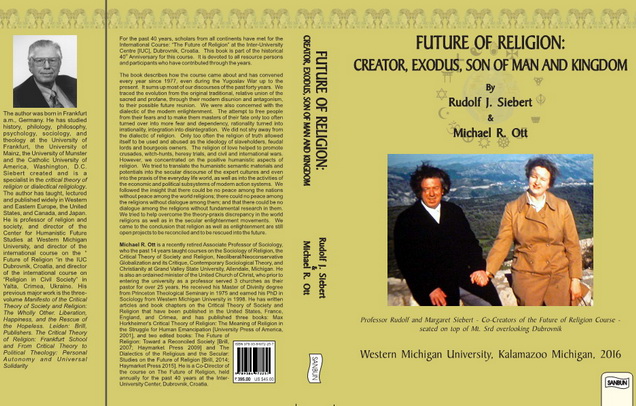
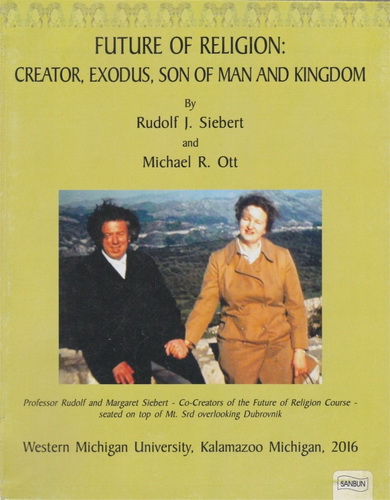
Rudolf Siebert
The Global Harmony Association highest Honorary Title (first):
World Harmony Creator
http://peacefromharmony.org/?cat=en_c&key=513
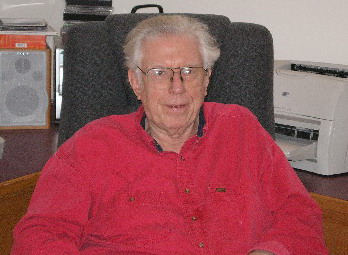
GHA Ambassador of Peace and Disarmament from Golden Rule Harmony for the US in theTrump’s administration
Ph.D., Professor of Religion and Society in the Department of Comparative Religion at Western Michigan University, Kalamazoo, Michigan, USA
http://www.rudolfjsiebert.org/;
in Russian: http://peacefromharmony.org/?cat=ru_c&key=51
Rudolf Siebert List of the published articles in the Global Harmony Association’s books since 2006: - Harmonious Era Calendar. By 27 coauthors from 12 countries in 12 languages, 2006, St-Petersburg University, article: The Golden Rule, pages on English: 30-34: http://peacefromharmony.org/?cat=ru_c&key=190
- The ABC of Harmony. By 76 coauthors from 26 countries in two languages, 2012. New Delhi, Doosra Mat Prakashan, article: The Golden Rule of Religions: The First Law of Social Harmony, pages on English: 134-136: http://peacefromharmony.org/?cat=en_c&key=499
- Global Peace Science. By 174 coauthors from 34 countries in two languages, 2016. New Delhi, JD Group of Publication, article: The Slavic and the American World: The Possibility of Peaceful Cooperation. Chapter 10.62, p.396-401:
http://peacefromharmony.org/docs/global-peace-science-2016.pdf
+Publication: In English: http://peacefromharmony.org/?cat=en_c&key=747 In Russian: http://peacefromharmony.org/?cat=ru_c&key=718
Rudolf Siebert’s Archive pages on the GHA website "Peace from Harmony" in English:
1.Personal page: Open letter to President Trump. Golden Rule of Harmony in religions and society:
http://peacefromharmony.org/?cat=en_c&key=51 Detailing pages:
2.The Slavic and the American World: http://peacefromharmony.org/?cat=en_c&key=611 3.Call for Papers: The Future of Religion: The Dialectic ofSecularization. Dubrovnik, 2018:
http://peacefromharmony.org/?cat=en_c&key=740 4.Tetrasociology of Spherons: http://peacefromharmony.org/?cat=en_c&key=746 5.Memorial Service and Memorial Meal for Steve: http://peacefromharmony.org/?cat=en_c&key=773
6. Rudolf Siebert. The Third Way: https://peacefromharmony.org/?cat=en_c&key=945 ----------------------------------------------------------------------------------
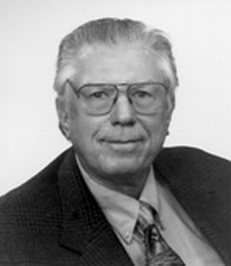
Professor Siebert’s Brief biography:
Rudolf Siebert was born in Frankfurt a.M., Germany, on October 1. 1927. He participated in the resistance of the Catholic youth movement against the fascist regime in Germany. He studied history, philology, philosophy, psychology, sociology and theology at the University of Frankfurt, the University of Mainz, the University of Münster and the Catholic University of America in Washington D.C. He has taught, lectured, and published widely in Western and Eastern Europe, United States, Canada, Near East and Asia. He is Professor of Religion and Society, and Director of the Center for Humanistic Future Studies at Western Michigan University, and Director of the international course on the “Future of Religion” in Dubrovnik. Croatia, and Director of the international course on “Religion in Civil Society” in Yalta, Crimea, Ukraine. Detailed biography: http://www.rudolfjsiebert.org/bio_story.htm -----------------------------------------------------------------------------------------------------------------------
Sermon on the Mount and Golden Rule: Global Peace Science Today By Rudolf J. Siebert In November 2016, the Obama Administration's United States Executive Order # 13685 prohibited us, to conduct in any form, including chairing, lecturing, skyping, signing of certificates, etc., our 13th International conference on Religion and Civil Society: Cooperation between the American and the Slavic World in Yalta, Republic of Crimea. The Executive Order # 13685 intended to be a sanction and penalty for the Referendum of the Crimean people to separate from the Ukraine with good reasons, and to have its own state, which was interpreted as annexation and occupation by the Russian Federation. Each service to the conference in Yalta was taken by the Obama Administration as a recognition of the new Republic of Crimea, and as such was forbidden. We obeyed the Executive Order # 13685, in spite of the fact, that it was based on wrong intelligence. The law is the law, as long as it is not rescinded. We are a nation of laws. The Executive Order # 13685 did not only violate the international right to free speech and to academic freedom, but also the Sermon on the Mount, the very foundation of Christianity, which is summarized in the Golden Rule, and which is present in all world religions, and has been translated into secular morality as well, into the categorical imperative, and into the a priori of the unlimited communication community, and as such can be the basis for a global ethos: particularly its 4th commandment, not to engage in the Jus or Lex Talionis, in retaliation and revenge, ineye for eye. (Exodus 20-21; Matthew 5-7; Luke 6). While many people consider the 4th commandment of the Sermonthe Mount at best merely to be a matter of private morality, President Putin and the Russian Federation have proven in the past year, in the spirit of the great Russian Orthodox tradition, that it has validity also in society, state, and history. When in 2016 a Russian plane was shot down by the Turkish military, Russia did not retaliate, but was tolerant. When on December 29, 2016, the Obama Administration expelled 35 Russian diplomats, and closed two Russian facilities in Washington D.C, because of a supposed interference by the Putin Government in the American Federal Election process, via electronic manipulation and hacking, in favor of the Trump candidacy for the American Presidency, Russia moved to the moral high ground, and did not reciprocate and retaliate by expelling an equal number of American diplomats. President Putin even invited the children of the American diplomats to the Kremlin for a Christmas and New Years celebration. In this spirit of the Sermon on the Mount, the Putin Government and the Russian Federation were able to broker an armistice in Syria after the fall of Aleppo in December 2016, to which also the United States were invited, but in which they did not participate. In this spirit of the Sermon on the Mount, the present equally exceptional frontrunners of the human species in world history, the Slavic and the American World, with their tremendous evolutionary potential, could have discourse and could cooperate with each other away from barbarism, and toward a more just and peaceful world society. Politics is more than to identify the enemy. Politics must not always be dirty. The collision of the religion-based civilizations is not a historical necessity. The pagan fascists and corporatists are simply wrong! The march of the crusaders to Novgorod, and the march of Napoleon and Hitler to Moscow, must never be repeated again! For centuries Russia protected Europe against Asian invasions. Otherwise there would have happened many more Attilas and Dschingiskans, and Europe would never come into existence. Russia stopped the first, most barbarous wave of international fascism in Stalingrad and Kursk. That should never be forgotten. The Slavic World can not be integrated into the European World. Eurasia is a system in its own right and with its own sovereign center of political, and cultural, and religious concentration, which is to be respected by the European Union, and by the NATO, and by the American World. Such recognition is foundational for world peace. The Administration of President Obama, a Protestant Christian and recipient of the Nobel Peace Price, made a good start 8 years ago, when in the spirit of the Sermon on the Mount he really wanted to end the Cold War, which he rightly consideredto have been a great misunderstanding and mistake, and to discourse and cooperate with the Russian Federation, but then ceased to build bridges, and build walls instead. We can only hope, that the new Trump Administration, which won the election with the support of the Evangelicals and Catholics, will in the spirit of the Sermon on the Mount not build walls, but will rather erect bridges, and will thus continue the good beginnings and intentions of the Obama Administration, particularly concerning the relations between the American and the Slavic World, for the best of humanity. Hopefully, the Trump Administration will also cancel and rescind the Executive Order # 13685 as fast as possible, and we shall be able to continue our productive international conference in Yalta, in November 2017. Everything flows, everything changes. The eternal truths remain but they change the forms of expressive reflection in different times, in different cultures and civilizations. Today, Global Peace Science (GPS), created during eleven years in the Global Harmony Association (GHA) by 174 coauthors from 34 countries, is one of the most urgent and highest forms of Sermon on the Mount and its Golden Rule, which is the first in the history reflection of the universal social harmony in the Christian religion. Immanuel Kant suggested its philosophical reflection in the definition of social harmony as human nature, which excludes war and provides "perpetual peace." GPS offered for the first time in the history of its scientific reflection on the basis of discovery of the deep societal structure of SPHERONS - eternal harmonious classes of the population employed in the eternal harmonious spheres of social production. Therefore SPHERONS constitute a societal structure and social genome of eternal harmonious and peaceful human nature in scientific knowledge. This is the historical significance of GPS as a common spiritual ground of harmony, like the Golden Rule, for peaceful cooperation of American and Slavic worlds and other civilizations. 01/01/2017 See in more detail: Rudolf Siebert. The Slavic and the American World: The Possibility of Peaceful Cooperation. Global Peace Science, New Delhi, 2016, Chapter 9.62, p.396-401: http://peacefromharmony.org/docs/global-peace-science-2016.pdf
Dear Antonio, Many thanks for your publication of the unique and genius Dr. Siebert's interpretation of Global Peace Science (GPS) as today reflection and expression of Sermon on the Mount and Golden Rule (https://www.transcend.org/tms/2017/01/sermon-on-the-mount-and-golden-rule-global-peace-science-today/),which is adequate spiritual tool for the Russian and American worlds peace cooperation instead of the insanity of their nuclear war (http://peacefromharmony.org/?cat=en_c&key=710). Dr. Siebert was able to penetrate into the deepest spiritual truth of GPS kindred to the Golden Rule truth. It makes his a peacemaking model for all peacemakers, especially Western and American, which say more about war than about peace, its methods and science. This makes similar peacemakers impotent and helpless before wars, which thrive on their eyes during centuries. Only GPS is able to provide the victory of peace over war by its soft spiritual force. This essay was also published on the Dr. Siebert personal page: http://peacefromharmony.org/?cat=en_c&key=51 and its banner here: http://peacefromharmony.org
On behalf of the GHA I am happy to express here the warmest gratitude to Dr. Siebert, the GHA WORLD HARMONY CREATOR, for his unique and brilliant interpretation of Global Peace Science, which (interpretation) will be kept by history together with this unprecedented science. With love for peace from harmony,
Leo, Dr. Leo Semashko, GHA Honorary President,
09/01/17
--------------------------------------------------------------------------------------------------------------------------
December 11, 2016 Peer Review: Marx’s Humanism and the Christian Doctrine of the Resurrection of the Body, By Rudolf J. Siebert The author returns to a project, which was of great actuality in the Praxis Groups of Zagreb, Budapest, and Belgrade, and elsewhere, in the 1960ties, and which remains of great interest today: to emphasice the young, humanistic Karl Marx against the older one, who may have become more positivistic, and authoritarian, and ideological, and to rescue him from the dialectic of enlightenment, to which he may have fallen a victim to some extend. The author uses frequently the word ideology, or ideological, not in the positive sense as combination of ideas and values, as it is continually used by the American mass media and by the politicians, but rather in a critical sense. For the early bourgeois and socialist enlighteners and revolutionaries ideology was indeedcritical and revolutionary. The French revolutionary ideologuesconsidered religion to be the fraud of the priests, in order to subjugate the people. The ideology of the French bourgeois revolutionaries and enlighteners contained nothing else than the philosophy of John Locke. It was connected to the Scottish philosophy. Ideology became uncritical and counterrevolutionary , when the bourgeois revolutions came to their end with the American civil war. Today, in 2016, the notion of ideology needs to be defined newly for the contemporary American reader, in order to avoid misunderstandings: e.g. as false consciousness, or as hiding and covering up of racial, national, or class interests, or simply as the untruth. The critical notion of ideology was once indeed practical and activist: theory-praxis dialectic! This is no longer the case. Thus, the critical theory of society, e.g., is indeedpractical ideology critique. The author tries to rescue the young Marx through remembering his humanistic, as well as Judeo-Christian heritage. After all, Marx was not only raised in a Kantian,humanistic enlightenment atmosphere: his father and his highschool director were devoted Kantians. Marx was alsoa Jew, and he was baptisedinto the Lutheran faith. When once Marx took his children to a Roman Catholic Church in London, in order to listen to the beautiful religious music, and they asked him, what the music was all about, he taught them his Christology from below: There was once a poor carpenter, and the rich people murdered him. It was directed against the bourgeois opium religion, which according to Kant, the inventor of the word, as well as accordingto Hegel and Marx, made people feel good, but at the same time dulled their conscience, so that it no longer reacted against the injustice of the urban and rural slums, and the general horror of the capitalistic system, and against religion being used by it as part of its ideology, understood in the positive, uncritical sense, and thus not being any longerthe outcry of the oppressed creature, and the heart of a heartless capitalistic world. Marx’s children never forgot their father’s most adequate Christology from below, and were never tempted to join the bourgeois opium religion in London, or elsewhere. Without his humanistic and Judeo-Christian motivation, it would remain completely ununderstandable and incomprehensible, why Marx, with his beloved wife Jenny von Westphal from the German nobility and their five children, did not rather pursue a wonderful, prestigious, bourgeois professorship inBerlin, like Fichte, Schelling or Hegel, and instead identified with the European and American proletariat, and lived for over two decades in the poverty-stricken slums of London, working for a proletarian revolution, which was to overthrow the bourgeoise ruling class, and to accomplish a distribution of wealth, as well as the recognition of the working people, who produce all the wealth, and which is still overdue today. He was admittedly supported by his friend Friedrich Engels, a unique capitalist with a conscience, who discovered again, a century before Ernst Bloch, the revolutionary, political theologian, Thomas Münzer, the father not of the future bourgeois revolutions, but rather of the future socialist revolutions, whom Protestants and Catholics had tried very hard to forget for 300 years. The author could findin the revolutionary, political theologian Thomas Münzer, as well as in his later interpreters Engels and Bloch, the best models for the excellent work he tries to accomplish. According to the author, humanitarianism was an ideology in the uncritical sense, and as such a form of idealism. That judgment may not do justice to idealism, and to all the philosophies, which rightly or wrongly, have been called idealistic, and that is most of them. Genuine critical, true idealism can be found in Kant’s position, that there is transcendental identity in the system of the principles of judgment, or in Fichte’s and Hegel’s position, that the world is a product of freedom. Genuine idealism is about the difference and the identity of subject and object. It is about the relationship between nature, determined by the law of gravity, and spirit, characterized by the law of freedom. For Kant’s, Fichte’s, Schelling’s, and Hegel’s subjective, objective and absolute idealism, idealism and materialism were the two shells, in which the mussle of Christianity, and of other world religions, was hidden. The author emphasices the materialistic shell, and that rightly so, because it had somewhat been neglectedin the history of interpretations of holy scripture. However, in the long run an one-sidedly materialistic interpretation of scripture is as abstract and untrue as an one-sidedly idealistic interpretation. only a materialistic interpretation, which would determinately negate in itself the idealistic one, could possibly claim to be true. only the concrete is true. If according to the author, Jesus the Christ was the figuration of the truth of the humanum for Christianity, - and so we may add not only for Christianity, but also still for the early bourgeois enlightenment, for Kant, the greatest bourgeois enlightener,- then we may ask, what or who was the configuration of the truth of the human for Marx? Taking into consideration Marx’s Christology from below and his acquaintance with Kant and Hegel, we may dare to answer: the same configuration. Marx criticizedChristianity as opium religion, a la Kant and Hegel, but not the teachings of Rabbi Jesus from Nazareth, which the former betrayed again and again: to the contrary, Marx confronted criticallythe positive, historical Christian opium religion with Jesus’ so called Sermon on the Mount. Marx continued the humanistic revolution not only of Socrates, who was murdered by the Athenian state, because he introduced a new daimonion, the conscience, but also of the Rabbi Jesus of Nazareth, who was murdered by thecollaboration of the Jewish state and the Roman Empire, because his moral revolutionprovokedtheir ruling classes in Jerusalem and Rome . The author states rightly, that the truth of Christianity and of Marx are still a matter of the future. But the future is for Christianity the kingdom of heaven, and for Marx the realm of freedom of All, men’s ability too realize their full human potentials, - language and memory, work and tool, sexual and erotic love, mutual recognition, and community, -on the basis of the realm ofbiologicaland economicnecessity. Revolution, or better pro-volution, is the mere means toward these goals. The separation ofthe religious kingdom of heaven and the political-historical realm of the freedom of All, is the necessary precondition for the collaboration of Christians and Marxists.Ernst Bloch andWalter Benjamin have proven, that a political theocracy is no longer possible. There can only be a religious theocracy. The goal of political history, and politics, and policies, is human happiness. The goal of religion is redemption. The two directions are indeed opposite. But they can also secretely support each other. For the author, materialism in Christianity was signified by its doctrines of the resurrection, and the ascension of the body. The Gospels are all about the body of Jesus, the Galileean. But also genuine idealism may be signified in Christianity by the same doctrines. The Greek and Roman Church Father’s, the Scholastics, the Mystics Meister Eckhart and Jacob Boehme, Kant, Fichte, Schelling and Hegel may not have been entirely wrong, with their idealistic approach to Christianity and other world religons, which admittedly contained in itself materialistic elements from the very start: the emphasis on the body and history. Anticipating the advanced secularization of the possible readers, it would probably be wise to remind them of the scriptural roots of the two Jewish and Christian doctrines,through quoting them at length, before one rejects the simple believers’ blind faith or fundamentalism, or applies to them the hard work of the modern enlightenment: symbolization, de-mythologization, de-demonization, idology, higher criticism. As a matter of fact, not only the original Biblical texts, but also the hard work of the enlightenment on them may have been forgotten by the contemporary readers, and must therefore be learned again. The task is the concrete supersession, i.e. critique, as well as preservation, and elevation, and fulfillment ofthe naïvereading of scriptures by the simple believers, on one hand, as well as of their sophisticated reading by educated people, who have fallen victim to the dialectic of an enlightenment, which has become positivistic, and which has become alienated from its own original theology, and from its own true, universal faith, aiming at the moral improvement of humanity, on the other, in a truly dialectical, political philosophy and theology. only the atheist can be a good Christian. only the Christian can be a good atheist! Unfortunately, the attempt of the enlighteners to improve the morality of the people was as much frustrated as that of the religions, which the enlighteners had criticized: otherwise the bourgeois enlightenment and revolutions had not turned into fascism up to the present; and the socialist enlightenment and revolitions had not turned into Stalinism or red fascism, and the psychoanalytical enlightenment and revolutions had not turned into a porno-society. Religion and enlightenment have to be rescued in order to preventfurther barbarism . It may be helpful to the author’s great project to remember, that Christianity inherited the notions of the resurrection and ascension of the body from the Maccabees, as they struggled against the Hellenistic Empire, and were massively slaughtered and martyrized in their holy war only 200years beforethe Christ event in the Jewish history. Please, see the seventh chapter of the Seeond Book of the Maccabees: With his last breathhe (the second Maccabee brother) exclaimed, ‘Inhuman fiend, (Antiochus) you may discharge us from this present life, but the King of the world will raise us up since it is for his laws that we die, to live again for ever…. When he neared his end he (the fourth brother) cried.’ Ours is the better choice, to meet death at men’s hands, yet relying on God’s promise that we shall be raised up by him; whereas for you there can be no resurrection, no new life…. ‘My son (youngest brother ready to be executed byAntiochus), have pity on me (mother of the seven martyrized Maccabeean brothers); I carried you nine months in my womb and suckled youthree years, fed you and reared you to the age you are now( and cherished you). I implore you, my child, observe heaven and earth, consider all that is in them, and acknowledge that God made them out of what did not exist, and that mankind comes into being in the same way. Do not fear this execution, but prove yourself worthy of your brothersand make death welcome, so that in the day of mercy I may receive you back in your brothers’ company….’ (youngest son before his execution:) ‘Our brothers already, after enduring their brief pain, now drink of ever-flowing life, by virtue of God’s covenant, while you, by God’s judgment, will have to pay the just penalty for your arrogance. I too, like my brothers, surrender my body and life for the laws of my ancestors, calling on God to show his kindness to our nation and that soon, and by trials and afflictions to bring you to confess that he alone is God, so that with my brothers and myself there may be an end to the wrath of the Almighty rightly let lose on our whole nation. ……’ Definitely, the historical materialist, who emphasices the object, or nature, without forgetting the subject, or spirit and freedom, as well as the historical idealist, who stresses the subject, or the spirit and freedom, without neglecting the object, or nature, can find himself in this Hebrew text on the resurrection and the ascension of the body, ideas, which appeared only very latein Jewish history and literature . The former Pharisee and later convert to Christianity, Saul or Paulof Tarsus, stated, that if the Pharisaeicbelieve in the resurrection and ascension of the body, which came from the Maccabees, was not true, then Jesus had not been resurrected, and then the Christians were the poorest and most miserable people on earth. Therefore, once more anticipating the advanced secularization of the possible readers, it would probably be wise to remind them of the scriptural roots of the two Jewish and Christian doctrines not only in the Hebrew Bible but also in the New Testament,through quoting them at length, before one applies to them the hard work of the modern enlightenment: symbolization, de-mythologization, de-demonization, idology, and higher criticism. Please, see the sixteenth chapter ofthe Gospel of Mark, the oldest preserved, and shortest Gospel, about the resurrection and ascension of the body of Jesus: When the sabbath (the Passover and the Feast of Unleavened Bread of the year 30 )was over,Mary of Magdala, Mary the mother of James, and Salome, bought spices with which to go and anoint him ( Jesus ). And very early in the morning on the first day of the week they went to the tomb, just as the sun was rising. They had been saying to one another,’ Who will roll away the stone for us from the entrance to the tomb. But when they looked they could see that the stone-which was very big-had already been rolled back. on entering the tomb they saw a young man in a white robe seated on the right hand side, and they were struck with amazement. But he said to them,’There is no need for alarm. You are looking for Jesus of Nazareth, who was crucified: he has risen, he is not here..See, here is the place where they laid him. But you must go and tell his disciples and Peter. He is going before you to Galilee; it is there you will see him, just as he told you.’ And the women came out and ran away from the tomb because they were frightened out of their wits; and they said nothing to a soul, for they were afraid. Please, also see the sixteenth chapter ofthe Gospel of Mark, about the bodily ascension of Jesus: Lastly he (the resurrected Jesus of Nazareth) showed himself to the Eleven (disciples) themselves while they were at table. He reproached them for their incredulity and obstinacy, because they had refused to believe those who had seen him after he had risen. And he said to them,’ Go out to the whole world; proclaim the Good News to all creation. He who believes and is baptised will be saved; he who does not believe will be condemned. These are the signs that will be associated with believers: in my name they will cast out devils; they will have the gift of tongues; they will pick up snakes in their hands, and be unharmed should they drink deadly poison; they will lay their hands on the sick, who will recover. And so the Lord Jesus, after he had spoken to them, was taken up into heaven: there at the right hand of God he took his place, while they, going out, preached everywhere, the Lord working with them and confirming the word by the sign that accompanied it. According to higher criticism, many New Testament Manuscripts omit this text on ascension, and this ending of the Gospel may not have been written by Mark, though it is old enough. However, the historical materialist, who emphasices the object and nature, without forgetting the subject and spirit, as well as the historical idealist, who stresses the subject, spirit and freedom, without neglecting the object, nature and gravity, can find himself in this early Christian text on the resurrection and ascension of the body of Jesus, ideas, which not only appeared very latein Jewish history and literature, but also again at the very beginning of Christianity. The author, informed by the enlightenment, does not take theBiblical doctrines on the resurrection and the ascension of the body literally, but rather symbolically. For the author, maybe following Paul Tillich, symbolism is the proper way to understand anything religious. For the author both doctrines, taken symbolically, heavily underline the absolute importance of the physical body, supposedly in opposition to all idealisms. However, the notion of the physical or biological body, or the human organism, remains rather abstract, if it is not differentiated into form, assimilation process, hunger, species process, sexuality, illness, aging, death as victory of the species or genus over the individual, etc.. Maybe Schelling’s, or Hegel’s idealistic philosophies of nature, or the notion of nature in Marx’s materialistic teaching should be consulted. What is more important is, that the Descartian dualism between body and soul, or spirit, did not exist for the Hebrews, or for the early Christians: body and soul were one. The Hebrew and the Greek-Christian texts, quoted above, about resurrection and ascension, how ever read, do not only speak about the tortured physical bodies of the Maccabee brothers, or about the crucified body of Jesus, but also about the King of the world, who raises the dead Maccabees to eternal life; andalsoabout God’s promise to the brothers, to be raised to new life; and also about the God, who created out of nothing nature and man, and therefore can also make possible the resurrection and ascension from the death of the physical body; and also about theever-flowing life, in virtue of God’s covenant; and also about the same God, who resurrected Jesus and took him up into heaven, to take his place there at his right hand. The Biblical texts do not only talk about bodies, but also about a God, who is not body, but Spirit, and who creates, and incarnates, and resurrects, and elevates to himself material, bodily and spiritual human beings. Unfortunately, late Modernity has lost the notion of spirit in the sciences, and it survives only on ships on Lake Michigan, named Spirit of Chicago, or in political speeches as spirit of the nation. Unfortunately, Hegel’s attempt to create a new pneumatology was not continued.In any case, the Biblical texts do not absolutize the physical body, which can not create, or resurrect, or elevate itself into an eternal life, and assert another principle, a Creator God, who is also a Lawgiverand a Judge. To demythologize this God away beyond the demands of Moses’ second and third commandment in the Decalogue, the prohibition against making images ofand naming inadequately the Absolute, and beyond the enlightener Kant’s prohibition against analytical understanding penetrating the domain of the Thing in itself, - God, Freedom and Immortality-, or beyond the teaching on the totally Otherthan the horror and terror of nature and human history by the critical theorists Theodor W. Adorno and Max Horkheimer, who have concretely superseded and reconciled Moses and Kant, Judaism and enlightenment, the above Biblical texts lose all meaning. Theology wouldindeed turn into ideology, the untruth. As helpful asNicolai Berdyaev, Norman O. Brown, and M. Merleau-Ponty may be for the construction of a materialistic, body-committed, humanistic, political theology, stronger support may still come from Kant, Hegel, Marx and Freud, and Horkheimer, Benjamin and Adorno, Marcuse and Fromm, and Jürgen Habermas, and theircontemporary disciples, and certainly not from Martin Heidegger. The essay should be published . I hope the author will take some of my suggestions into consideration. 18/12/16
------------------------------------------------------------------------------------------------------------------------
WMU professor did “duties as a soldier to protect civilians,” in Germany during WWII. Sarah Culton Staff Reporter | Posted: Tuesday, December 15, 2015 Professor Rudolf Siebert of WMU’s comparative religion department. Professor Rudolf Siebert is not only one of Western Michigan University’s oldest sitting professors, but he also has a long, fascinating life history as a soldier in the German army. Siebert, 88, has been a professor in WMU’s comparative religion department since 1965. He has written over 20 books and has been published in over 200 scholarly publications and magazines. Perhaps more interesting than his academic achievements are Siebert’s personal life stories. A German native born in 1927, Siebert spent his formative years under Adolf Hitler’s regime. Siebert said the time he spent under fascist rule and as a member of the German Air Force were important in shaping the person he is today. “In 1933, I was six years old, that is when Hitler rose to power,” Siebert said. “From that time on, the German liberal state was transformed into a fascist state. So, from six years on until 1945 when I was taken prisoner, I lived under fascism.” As a child, Siebert lived a double life as both a member of the Catholic youth movement and the Hitler Youth movement. The Catholic youth movement was a Christian group that disagreed with Nazi policy and actions. In some cases, members aided and protected Jewish refugees. In contrast, the Hitler Youth movement was a paramilitary group existing from 1933 to 1945 that was aimed at indoctrinating German youths in the ways of the Nazi party. The group was mandatory for German children to attend. “I felt much closer to the Catholic youth movement than I did the Hitler Youth movement,” Siebert said. “What [the Hitler Youth movement] told me was just too narrow minded.” However, that does not mean Siebert didn’t understand the appeal of the Hitler Youth movement. “The truth is that the Nazi movement was very attractive for boys and girls,” Siebert said. “They had all Professor Siebert kinds of clubs, motorcycle clubs and glider clubs and swimming clubs and so on. They could attract all kinds of people, and I was attracted by it, but never enough to make me join them.” At age 15, Siebert was drafted in the German Air Force to serve in World War II. At first, Siebert resisted the draft because he had learned in the Catholic youth movement the German war was unjust, but he was eventually taken to his post by a German officer. “While I was forced to go into it, I also found some meaning in it,” Siebert said. “I thought to defend the women and the children in the basements of the cities that were being bombed by British and American forces.” In 1945, at the end of the war, Siebert surrendered to U.S. General George S. Patton after he was caught in Berlin. From there, Siebert became a prisoner of war at a camp in Worms, Germany before being moved to an American military camp in Marseilles and then to Camp Allen in Norfolk, Virginia. “It was a good time in my life, strangely enough,” Siebert said. While at the camps, POWs were categorized into sections of Nazis and anti-Nazis. POWs categorized as Nazis were placed into sub-categories dependent on what kind of war crimes they had committed. “I was categorized as an anti-Nazi, then I was set free and I could study,” Siebert said. “I studied with professors from Harvard, I studied economics and sociology, because I was supposed to go back to Germany to help change the state from a fascist state to a liberal state.” Siebert said his resistance to fascism, especially from the very beginning, was rare in Germany during Hitler’s time in power. He lists his faith as a contributing factor in his refusal of Nazism. “I always lived a very critical life, and in Germany, I think it had to do with Christianity which attracted me much more than National Socialism,” Siebert said. “I never got engaged on the other side fully and happily.” In 1946, Siebert returned to Germany in an attempt to liberalize the country. He stayed there until he returned to the U.S. in 1953. During that year, Siebert finished his Masters of Social Work and met his late wife Margie. The couple moved back to Germany after 1954 and remained there until they returned to the U.S. for good in 1962. Siebert and his family moved to Michigan in 1965 and he began teaching in WMU’s Religion Department. Siebert does not regret the time in his life as a German soldier. “I did my duties as a soldier to protect civilians,” Siebert said. “I was never convinced of Germany’s war goals, but I was convinced to help the Jewish people, and I was convinced to help the people in the basements.” 24/12/15
----------------------------------------------------------------------------------------------------------------------
November 2007 Saint Petersburg- Yalta Report By Rudolf J. Siebert
We have returned from our trip through Russia and the Ukraine. My graduate student in our WMU Sociology Department and Russian interpreter, Katya Vasetsky-Chamberlin and I started from Detroit late on November 3, 2007. Her husband Steve Chamberlin took us to the Detroit airport in my car. on the way we had a small explosion in the air conditioner. But we fixed it.
Katya and I flew in a Luft - Hansa airbus to Frankfurt a. M..The Luft - Hansahad from its very beginning the best weather service, which was even the envy of the German airforce.Thus our flight to Frankfurt was rathersmooth and without too many disturbances. Unfortunately, there was not enough time to visit my family in Frankfurt. We may do that in April on the way to Dubrovnik, Croatia, and our international course on The Future of Religion. in the IUC from April 28 - May 3, 2008.Thus Katya and I flew right away on to Saint Petersburg in Russia also in a Luft - Hansa airbus. The Luft-Hansa is everywhere! We flew up the Baltic Sea to the highest peak of the Gulf of Finland across Lithuania, Latvia, and Estonia. We left Novgorod to the east, where the Crusaders had attacked after they had searched for the empty grave in Jerusalem, and had killed many Arabs and Jews on the way, and had a established a kingdom, and finally had been beaten in the devastated Holy Land, through being cut off from the Sea of Galilee and dehydrated in the dessert, by Saladin. Now they were drowned in the lakes near Novgorod by Alexander, after they had devastated all the villages and towns along the road, as Napoleon and Hitler would do later on.It would definitely have been better for the Crusaders, if they had stayed at home peacefully. Maybe thus they could have avoided the later heresy trial through the Holy Inquisition, because of a suspected relapse into Zoroarstrianism, or more specifically Mithraism, and their later annihilation. But I think there are two or three knights still left in the Deutsch-Herren -Orden Monastery in Frankfurt. I had so far made it only to Rostock, Denmark, and Sweden, There was already snow on the ground everywhere in the Baltic states. Our plane had to be deiced. Hitler flew the same way in 1944 to visit General Mannerheim near Helsinki, to get him into the war against Russia. He failed. But there is a tape left about the whole episode, which has just surfaced. When we approached Saint Petersburg, where the lights were on already, I remembered that the German Northern Army had beleaguered the city for several years, and that thousands of citizens had been killed by the new Crusaders against Bolshevist atheism through artillery shelling and stuka attacks, and mostly through a terrible starvation, until a road opened up across the frozen Lake Ladoga and food could be brought in at night. All the German army reports came back to me about the surrounding battles of Tallinn, Narva, Tartu, Pecov, Velikie Luki, and of course Novgorod. The brave city Leningrad never fell, as Novgorod had never fallen,
Katya's Uncle and Aunt picked us up from the Saint Petersburg airport and drove us to my Hotel Aster. Russia is becoming prosperous under Putin as it curbs in wild capitalism. Uncle and Aunt were retired after a good life with much hard work. They were tremendously happy to see Katya, and me too, of course. Russians are friendly and warm-hearted people, and when they love somebody they really mean it – as long as they are not attacked. Uncle and Aunt were to young, to have remembered the Great Patriotic War and the German attack against Leningrad from their own personal experience.
Next day, Katya's good Uncle gave us a ride in his car through the great city of Saint Petersburg, formerly Leningrad. I took many pictures.Saint Petersburg is a mixture of Amsterdam and Paris. It is a wonderful city. Unfortunately, we drove into a one-way street and were caught by the police, and had to pay for a ticket. I also lost my camera in the excitement. .Katya thinks, the camera may have disappeared during the airport searches. We shall never know. Whoever has it, may enjoy the wonerful pictures I had taken.
We saw the Winter Palace, where Lenin started his revolution in the night from October 24-25, 1917, after Alexander Kerenskij February revolution had failed. Lenin's huge statues are still standing everywhere waiting for the next revolution, after the third counter-revolution of 1989 has exhausted itself. There are still many names of places streets,and metyrostations, which remember theOctober Revolution: the Place of the Revolution, the Place of Iljitsch, Lenin-Allee ,Proletarskaja, Komsomolskaja, Marxistskaja,tc At the Winter Palace Lenin declared all the feudal and bourgeois buildings to be the property of the people, who had built them after all. Then, of course, came the horrible peace treaty of Brest-Litovsk, which the Germans dictated, and which then was revenged by the so called Versaille Dictate, which had much to do not only with World War I, but also, and much more so, with World War II. Hitler’s war was a war of retaliation against the West, Jus Talionis, and of colonial thievery and robbery toward the East. The V in the V I and the V II - which devastated London, and which were produced by Porsche with Hungarian –Jewish slave labor from the Concentration Camp of Auschwitzbythe same Porsche, who was the friend of Hitler and of Henry Ford, and who was the inventer of the Volkswagen and of always new types of tanks for the Eastern Front up to the impossible Mouse, and who was a technical genius without sense for the difference between good and evil - stood for the English word vengence. How triumphantly Hitler had danced around the railroad car in the forest of Compieign: according to Wagner’s Rienzi, the Medieval people’s tribune, whom he had seen 40 times in the opera houses of Vienna and elsewhere, and whom he tried to imitate in the modern political and historical reality. It could not go well! Then came still all the victories on the Balkan and in Russia. But then came the final catastrophes of Stalingrad, Kursk and Berlin. Sometimes world history is indeed world-judgment! Thus, Hitler said to his secretaries in his last hours in the Berlin Führer Bunker: Fate wanted it that way!!! However, when we went through the Frankfurt airport, the native Frankfurters, who assisted us very nicely, spoke still lovingly of their Adolf, and remembered still in detail the flak artillery 10.5 and the Me 109, which had tried to defend the city in vain against the British and American so called saturation - and terror -bombers, who destroyed 80 percent of it.But the Frankfurt natives, who still speak the dialect, and can, still remember Adolf, become fewer and fewer, and the so-called foreigners become more and more. Most of the taxis outside the Frankfurt airport are driven by Pakistanis, and Iranians, and most of all by Turks, who have done this work for 30 or more years, and who speak German well, and their children even better. They are all Muslims and do not believe that September 11,2001 was the work of Muslims, but rather of the CIA. The Turks are longing for a Turkish Chancellor in Berlin. once the so called foreigners came to the rich German Federal Republic from the Near East and from Eastern Europe, having been attracted by powerful German capital, and now with massive outsourcing of jobs to Africa, India, or China, and a consequently shrinking labor market, have become a burden and a social and political problem. Even many still religious Frankfurters have forgotten the Abrahamic community and solidarity, and the Sermon on the Mount, and the Golden Rule, and have moved to the Right, and want the Islamic foreigners to go home. The Frankfurt natives are observing regretfully and sadly, that everything in Germany has gone the opposite way from the one, which their Adolf had once led them, democracy or not, and they are longing for the good old times, when there was law and order, and when there was Volksgemeinschaft, i.e. people’s solidarity, and when there were no foreigners yet, except in the forced labor camps around the city.
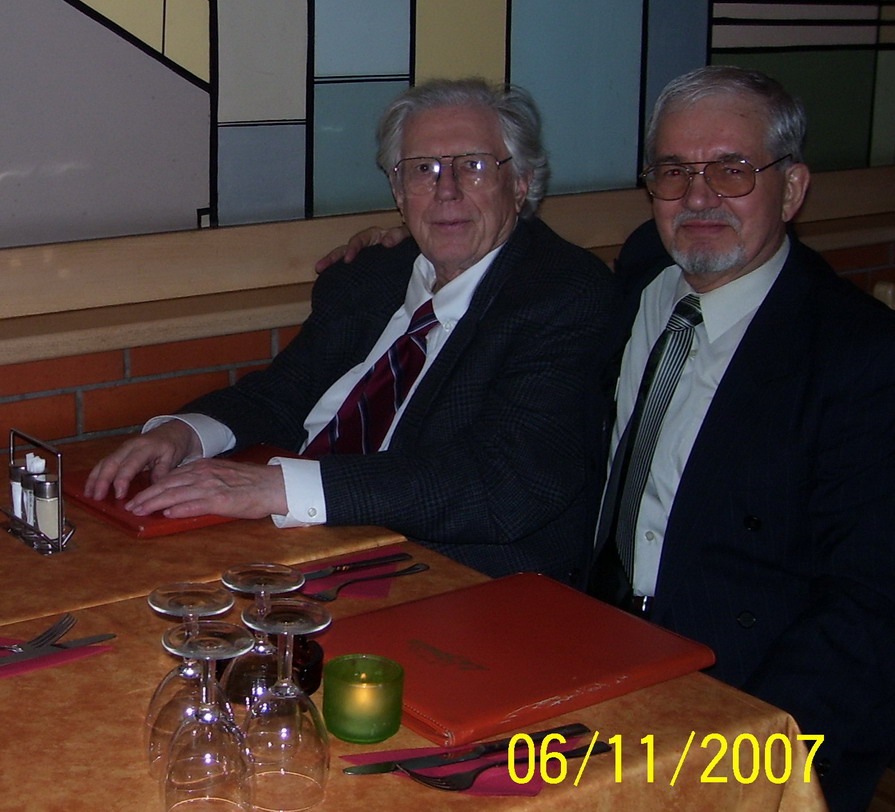
In the afternoon, Professor Leo Semashko, leader of the global Peace from Harmony Movement (www.peacefromharmony.org) and Global Harmony Association President took us from my Hotel Aster to the University of Saint Petersburg.I gave two lectures at the University. one lecture was on "The Critical Theory of Religion: New Models." The other paper was on the "Critical Theory of Religion: The Golden Rule". The critical theory of society of the Frankfurt School had been banned as revisionist during the Soviet period.Katya did an excellent job in translating my papers. Professors and students were very interested.
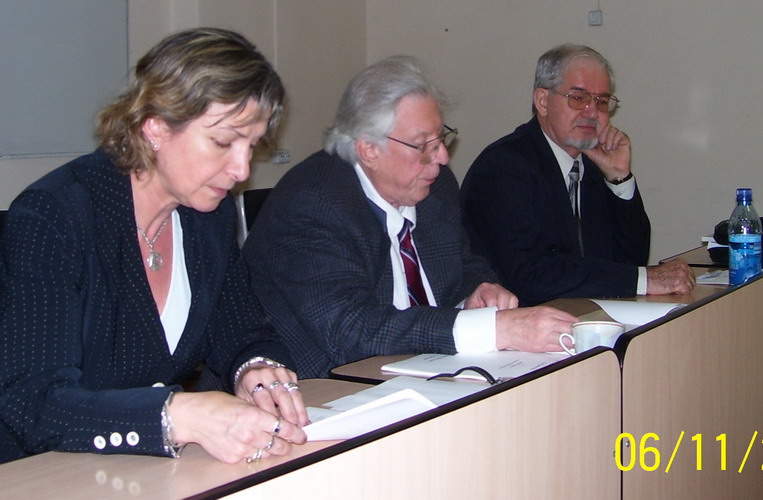
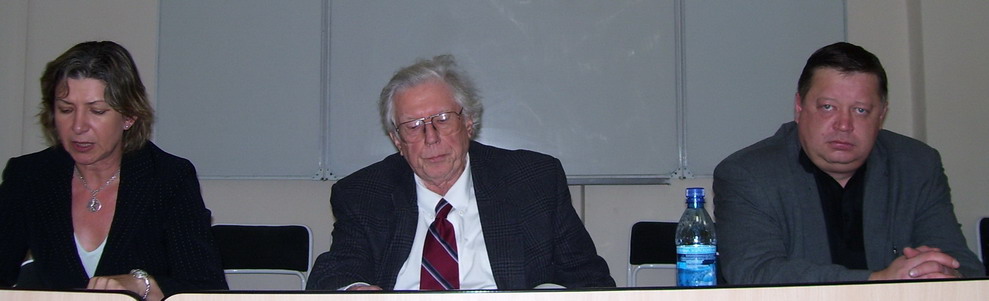
The students were well dressed and happy. However, the third generation remembers little of the pain and suffering of the grandparents. There were good questions by students and faculty alike, Older professors still had a tendency toward scientific atheism, falling back behind Immanuel Kant, which Marx never did. Atheists are people, who had lived through such horrible circumstances, that they could no longer trust in the God of their fathers, and therefore denied his existence. They could not solve the theodicy problem, theoretically or practically. Their atheism was a practical, not a scientific matter. In Auschwitz Rabbis put God on trial and after three days found him guilty and some of them never went back to pray again, and 80 % of the population of Israel ceased praying, But some of the Rabbis did go back and prayed again. Some of the older professors in the University of Saint Petersburg had already in the Soviet period become agnostics: they’re sociological or other scientific methodologies could not transcend the boundaries of the world of appearances. Neither atheists nor agnostics wanted to risk a Kirkegardian leap of faith, and return to the Orthodoxy of their grandfathers. We discussed the possibility, that Marx and Lenin may have had something to do with Baruch Spinoza’s modern pantheism. When I asked our Russian friends, if they were afraid of a new encirclement by the West, they answered quietly and self-confidently, that Russia was a very large country, and that thus it was hard to encircle: there was much more behind the Ural! In the evening we celebrated our great success with Professor Leo Semashko and his wife in a nice restaurant near my Hotel Aster. Leo told us all about his tetra sociology, which he traced back to Marx and which he had developed and taught already in the Soviet time. Leo was convinced, that Lenin’s Great Socialist October Revolutionof 1917 in Petrograd, and what followed, had been a great mistake and a tragedy, and that now history took its normal course again. I received from Leo’s dear wifeLucy a wonderful bookabout Saint Petersburg.
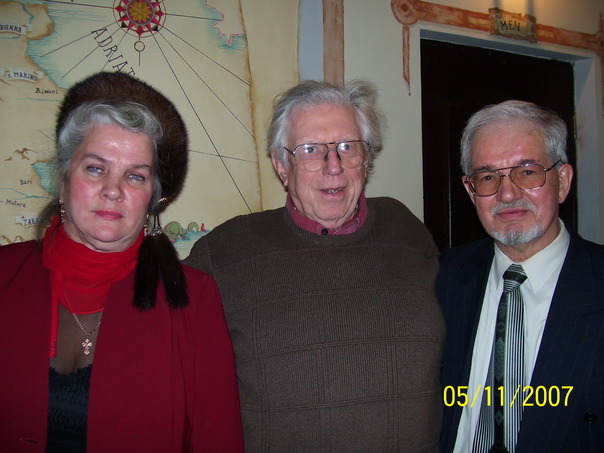
On Wednesday, we flew with the Ukrainian Airline to Kiev and then to Simferopol. The taxi driver, who drove me from Hotel Aster to the apartment of Katya’s relatives, and then both of us the long way to the Saint Petersburg airport,and then a few days later back again in the middle of coldwinter nights, was a wonderful story teller. He told usone most humorous and hilarious taxi - life story after the other, and thereby made Katya very happy. We expressed our hope to the very poeticalSaint Petersburg taxi driver, that he would publish his wonderful stories some day for the enjoyment of a larger public. If we had asked our taxi driver what 1917 meant for him today, he would probably have answered as others of his profession did, that the revolution was still present as in the past so now in every family, in the fate of every family: the dead of the Gulago were much worse off, than the dad of the Second World War- because the latter defended their homeland and knew what they were dying for.Nevertheless, it is possible, that- if the thirdcounter-revolutioncontinues -the intelligentLenin may have to make room forthelast, mostin capable, and incompetentCzarNikolaj II, and that Lenin’sbody may be taken out of the Mausoleumin Moscow and may be re-burried in one of the city’s cemeteries in Januar 2008, in remembrance of the day of his death, after the Czar’s body had already been reburried in the tomb of the Romanows in the Saint Petersburg Peter and Paul Fortress, and after the Orthodox Church had canonized him as a martyr. in2000. The taxi drivers and others are convinced,that as Lenin’s revolution of 1917 had been paid for by German money, theorange counter-revolutions in the Ukraineof2004, in Georgiaof 2003, and in Kirgistanof 2005 wereanalogically financed by American money. Sic transit gloria mundi! Not only was our flight with the Ukrainian Airline and later on back with the RussianAiroflotvery save, but we also found most friendly assistance at every airport, as in the USA, and in Germany, so also in Russia and in the Ukraine. In the Ukraine even a doctor assisted us, which was more than we needed. That assistance was a wonderful sign of humanity in the midst of all the high technology of the continually growing airports!! When we flew across the huge European territory of the Russian Federation and the Ukraine, I could not help myself to remember the three million so called fascist soldiers, who not even seventy years ago devastated the land and the villages and the cities below and killed 27 million so called communists and 6 million Jews. I thought of the Muslim Tartars, who were allied with Hitler, and therefore later on were punished by Stalin through resettlement. I thought of the Christians, e.g. the Mennonites and others, who bravely following the Sermon on the Mount did not want to bear and use arms against other human beings, and who therefore were driven out by red fascism into exile, or were sent into labor camps, in order to build cities behind the Ural, which had only numbers up to the counter-revolution of 1989. Others were simply murdered. When seven years earlier, I flew into Kiev, it was the Sunday on which the city remembered the arrival of the SS in the city 50 years earlier. on this Sunday, 180 Jews were shot in the city, simply because of their race. Later on 36 000 Jews were killed in a quarry near Kiev. This was before the insecticide Cyclon B, which had been invented by Fritz Haber, the father of the gas-war, and which had been produced a mass by IG Farben, was used in the German work- and death- camps. Already in the 1920s, long before the fascist armies arrived, a pogrom killed many Jews in the Ukraine, simply because of their faith, When the German troops came to Kiev in October 1941, and fought their way against heavy Russian resistance across the Dnepr on their way to the Volga, and to Stalingrad, and into their disaster, the river seemed to consist of human blood rather than of water. Today (December 2,2007). The Government-conform Fox News tells us, in its usual fair, balanced and unafraid way, after Vietnam, Afghanistan and Iraq, after Lebanon, and Palestine, after Chenya, and Sudan, and after Abu Ghraib and Guantanamo Bay, that atrocities are simply committed by some unstable characters, or that they are merelya part of war and come along with the territory. That never was, is, or will be a psychological,moral, ethical, or legal excuse, justification ,or legitimation for atrocities. Our friend and driver Igor picked us up in Simferopol, Ukraine. Also Zhenia Leontyeva’s Mother was there. Zhenia is my Ukrainian graduate student, who lives in my house with free room and board like so many other students from the USA and many other countries before, and is doing her Ph.D. in Sociology at Western Michigan University. Zhenia’s Grand Father, who is Jewish, was deported into a German concentration camp, when he was only 15 years old, There medical experiments were performed on him. When he came home again two years later, he had gray hairs.Igor was a prominent soldier in the Russian army. He is doing rather well in the travel business around the growing airport of Simferopol. He just bought himself a better-used car, which we enjoyed very much. But Igor cannot and does not want to give up his socialist-humanist longings, and still hopes for better times.Igor drove us to Yalta, where we arrived after a two-hour mountain trip and stayed again in our old and very good Hotel Orianda. The seventh international course in Yalta on Religion and Civil Society: Identity Crisis and New Challenges of Post-Secular Society was once more a great success. Professors and students were present not only from the Ukraine, and from the Russian Federation, but also from behind the Ural, and from Central Asia. A representative of the Ukrainian Cultural Ministry was present, who wanted to receive information from us specialists in Comparative Religion, Psychology, Sociology, Political Science, Philosophy and Theology for policy purposes. There are many tensions in the religious sphere, which the state would like to mitigate through wise policies, while at the same time staying neutral. Also the Orthodox Church was represented through a priest and theologian. Father Nicolay belonged to the Patriarchy of Moscow: the Third Rome! There are tensions between the Patriarch of Moscow and the Archbishop of Kiev. Maybe the Archbishop would like to become independent and a Patriarch of the Ukraine in his own right. There are also tensions among all religious groups concerning church property, which had been confiscated by the Soviet state, but which has been given free after the victorious third counter-revolution of 1986. Tensions exist between the Crimean Tartar Muslims, who followed Hitler, and the Kiev Muslims, who stayed with Stalin. Thus we spoke much about the neutral liberal or socialist state, the separation of religious faith and secular rationality, and of church and state, the consequent privatization of religion, the difference between good and bad religion, the theodicy problem, etc. Members of all three Abrahamic religions were present Fears were expressed about a possible partition of the Ukraine between the coal-rich, highly industrialized East, which is Orthodox and inclined toward the Russian Federation, and the West, which is Orthodox as well as United and Roman Catholic and tends toward the European Union. An inclusion of the Ukraine, or a large part of it, into the European Union and the NATO, would equal to a quasi–encirclement of the Russian Federation, and thus could elicit and provoke fears in Moscow similar to those, which the Germans had in the 19th and 20th centuries, and which found there realization in two two-front wars. There was not only the battle of Stalingrad, now Wolgograd, but also the tank battle of Kursk, which - if it had been successful- had reached behind Moscow. Besides directing the international course together with a Russian Professor, who had once been my student, Tatiana Tsenyushkina, I gave two papers: one on The Critical Theory of Religion: The Lex Talionis, and the other on The Jesus Revolution, the Judas Kiss, and the Empires. I prefer critical theory of religion over theo-logy, because I think it would be good to have a moratorium for several decades concerning the name of Theos, because of its blasphemous abuse by the bad religion of the Crusaders not only of Novgorod, but particularly also of the 20th and 21st centuries. once more Katya did an excellent translation job for two languages - Russian and Ukrainian. Katya also gave her own excellent sociology paper. I wished, of course, that I could have taken more students like Katya from Western Michigan University on my trip. But my finances were not sufficient for other students. We had good and passionate discussions in our international discourse among members from different Eastern and Western civilizations. I had a particular intense discussion with the Orthodox priest, Father Nickolay, and Dr,Gabrielyan, Chair of the Political Science Department of the University of Simferopol, where I had spoken three years earlier: an Armenien andan excellent pedagogue andpolitical scientist. While Father Nicolay presented thegreat Orthodox patristic theology, I engaged in the critique of the ambiguity of any religious tradition as such. While Dr,Gabrielyan, emphasiced the fear - factor in all social and political life, I stressed the enlightenment as the attempt, to free people from their fears, and to make them into masters of their fate. We all agreed on thedesirability of both, the continuation of good religion – the longing that the present national and international injustices are to be overcome – as well as of the enlightenment project, no matter if we were religiously committed or not. My papers were taken very well. The Professors wanted the papers to be published in Russian and Ukrainianas fast as possible. Our discourse came to its most friendly , harmoniousand peaceful conclusion with a delicious Ukrainian meal and wonderfulreligious as well as secular presentations by a young, veryecumenical Orthodox choir. Our international course in Yalta as well as in Durbrovnik rests on the presupposition, that there will be no peace among nations without peace among the world religions; and that there will be no peace among the religions without discourse among them; and that there can be no discourse among them without their knowledge about each others' interpretation of reality and orientation of action. The purpose of our international courses in Yalta and Dubrovnik is to increase this mutual knowledge, and thus to contribute to peace among the religions, the nations, and the civilizations. Also the results of this seventh course will appear in a book. for a broader public, The University of Simferopol expressed interest in a contract with Western Michigan University. We have such contract already with the University of Sevastopol. This city had beendestroyed to a large extend by German artillery, like Odessa. The representative of the University of Sevastopol expressed its wish, that Western Michigan University would send the necessary papers to Simferopol. I promised to discuss the issue with Western Michigan University, The Professors of the University of Simferopol and Kiev invited me to stay for vacations in Yalta - a wonderful city -for a whole summer talking with just one beloved person. What a strange idea of a vacation! They have no idea that I have done only working vacations for 30 years, and would not like to have it otherwise. On Friday night, Igor drove us back to Simferopol. on the way we stayed in the mountains in a wonderful hunting lodge and had an excellent Russian meal. Germans are coming to these lodges in large numbers during summer on their peaceful pilgrimages through the Ukraine. Sometimes they may visit Hitler’s former headquarter near Kiev during the Operation Barbarossa, South.When we arrived in our Hotel in Simferopol, Zhenia’s Mother received us again, and we spent some time together talking about Kalamazoo and Zhenia’s life and her very successful work in WMU's Sociology Department. Early in the morning we left in a Russian Aeroflot plane from Simferopol to Moscow. We landed on the airfield east of Moscow, which the German Center Army had reached late in November1941, precisely 66 years earlier, when suddenly a horrible winter weather set in, Hundreds of German tanks and airplanes were destroyed by ice and snow. Hitler arrived in Moscow six weeks late, because of the Balkan war, which he had to fight for his model and friend Benito Mussolini, who had got stuck there on the way to Greece. At this time, Hitler could have reached an armistice with Stalin, who was ready to leave Moscow, but Communism was the archenemy of National Socialism, and he wanted to have the whole territory up to the Volga for colonization. Our plane had once more to be deiced in Moscow. Then we flew on to Saint Petersburg. Katya's Uncle picked us up again from the airport and took us through an unbelievable traffic to the Hotel Aster. In the middle of the night we started our flight back with Luft - Hansa to Frankfurt and to Detroit. In Frankfurt we had to land through a horrible dark and cold rainstorm. My hometown has done this to me already many times before.I could see the Main River only a few minutes before the landing, so deep the clouds were hanging. After we had left Yalta a terrible storm sank seven ships in the Black Sea, A horrible storm raged in the North Sea against Bremen, and Hamburg, and Southern England. We somehow sneaked safely through all the storms. The crossing of the Atlantic ws very smooth, Steve picked us up in Detroit. and on the way home we celebrated our return with a good American meal. We had not slept several nights, and we had to start teaching next morning again. But we are tough people. Katya comes from Russia. I was trained to go into Russia. So we both were well trained, and all went well! I would like to express the heartfelt gratitude of all members of the seventh international course on Religion and Civil Society: Identity Crisis and New Challenges of Post-Secular Society in Yalta to Western Michigan University for its generous financial contribution, without which it could not have taken place, and without which its results could not be published for a broader circle of scholars.
December 11, 2007
-------------------------------------------- Rudolf Siebert: 80 years! Warm Congratulations! Professor Rudolf Siebert’s unique historical contribution: understanding of the Golden Rule as ethos of peace from harmony Or Five embodiments of the Golden Rule in life and creativity of Professor Rudolf Siebert for 55 years: 1. The deep and detailed development of the critical theory of society and religion, including universalistic ethics and global ethos on the basis of thereligious Golden Rule,andthe secular philosophies of Kant and Hegel,andPeirce’s, Apel’s, and Habermas’s theory of communicative action, in 24 books, and more than 680 printing and web publications in 12 languages and public lectures in the last 42 years. 2. The great experience of teaching at Western Michigan University and 12 other Universities in America, Europe, Asia, and the Near East from 1955 – 2007, and about 450 public lectures in universities and colleges around the globe. 3. The huge public, scientific and humanitarian work connected with the creation and leadership of two annual international courses: the first course in the IUC, Dubrovnik, Croatia, from 1977 – 2007, etc. is entitled: "The Future of Religion”; the second course in Yalta, Crimea, Ukraine,from 2000 – 2007, etc. is entitled : “Religion and Civil Society.” 4. The self-denying love to children, which is expressed not only in the education of his own 8 children and 14 grandchildren, but also in the creation of his apartment the House of Peace with free room and board for students, who could otherwise not afford to study, from the USA, Germany, Croatia, Ukraine, Iran, Mexico, etc, since 1965. During the civil war in the former Jugoslavia, Professor Siebert brought for five years money and medicine for the wounded and ill people of all the ethnic groups involved in the conflict. Similar activities characterize Professor Siebert as a person of highest moral integrity and heroism in the service to humankind under difficult conditions. He has proven his right for the highest recognition not only for his philosophical, and social-scientific, and practical activity, but also for his personal example, in which he has embodied the high principles of the Golden Rule, the Categorical Imperative, and the Communicative or Discourse Ethics consistently through his thinking and ethical life throughoutthe past 60 years of turbulent history in Europe and America: always in the service of peace. 5. Professor Siebert's great contributions in two epochal projects:
1. Harmonious Era Calendar, now includes 38 authors from 15 countries of the world writing in 17 languages (2006: http://www.peacefromharmony.org/?cat=ru_c&key=190) and
2. Magna Carta of Harmony including 43 authors from 16 countries, writing in 8 languages (20007: http://peacefromharmony.org/?cat=en_c&key=3). The "Golden Rule" in its religious and inverted secular forms, in the research and propagation of which Professor Siebert has played a most important role in recent decades, is the humanistic basis for the new thought and ethics of peace from harmony. All this allows me to recognize for Professor Siebert, for his unique contribution into comprehension of the Golden Rule as ethical source for peace from harmony the highest Honorary Title of the union "Peace from harmony": "World Harmony Creator" in honour 80th anniversary. On behalf of our union I warmly congratulate Professor Siebert with the great jubilee and I wish for him strong health and inexhaustible personal energy to peace from harmony!!! Happy birth day!!! We love you, Rudi! Dr Leo Semashko Union/site “Peace from harmony”,Founder and President September 30, 2007 -------------------------------------
Dear Rudolf Siebert Professor Siebert, MANY HAPPY RETURNS - WISHES AN UNIQUE BIRTHDAY CELEBRATION on THIS DAY. Your memorable contribution through the Golden Rule as ethical source for peace and harmony is a HONOUR for all of us to CONGRATULATE AND WISH YOU on THE 80TH ANNIVERSARY. Pray God to bestow upon you his choicestblessings. Harmoniously THOLANA Poetically Yours Dr. T. Ashok Chakravarthy, Litt.D H.No. 16-2-836/L, Plot-39 Madhavnagar, Saidabad HYDERABAD - 500 059 [AP] INDIA www.poetryofpeacewings.com 01/10/07 ------------------------------------------------ Dear professor Rudolf Siebert: Congratulations for your 80 years whose you passed the majority in the services of the humanity. Thanks to your works, much discovered the secrecy and the steps ofvariedsociety in the world. We wish that your life be to protect so that thehumanity benefits from from your experiments. Harmoniously Ammar Banni 01/10/07 ------------------------ Greetings in Peace! Recognizing the huge contribution You brought to the mankind, for a better world, and peaceful society, with deep gratitude and thoughts of love, we wish you all: HAPPY BIRTHDAY DEAR PROFESSOR RUDOLF! Health and long blessed years! with love, Tatomir-Member of Peace from Harmony 01/10/07 --------------------- Dear Leo: I received all the wonderful gratulation letters from the "Peace through HarmonyGroup" for my 80th birthday. I was very happy. I am most grateful to you as the initiator. Please tell all our friends , how grateful I am for all the good wishes. It is very beautiful to feel the solidarity in the "Peace through Harmony Group" : that there are good people in many parts of the world who are willing to use any chance bravely to promote peace locally and internationally. Thank you all ! I am with all my best wishes to you , your Rudi, from the House of Mir October 14, 2007 ------------------------------- Rudolf J. Siebert Leipzig July 2007 The Critical Theory of Religion: The Evolution of the Moral Consciousness from the Jus Talionis to the Golden Rule. The specific theme of this essay, The Critical Theory of Religion: The Evolution of the Moral Consciousness from the Jus Talionis to the Golden Rule, is certainly of highest actuality in the present globalized, rather oppressive and troublesome world-historical transition - and crisis – situation (Habermas 2001; 2005; 2006;Habermas/Ratzinger 2005). The horrible abuse, which religion has suffered through its ideological functionalization in the Western civilization as well as in the Near Eastern civilizations, and elsewhere, particularly since September 11, 2001, and during the recent wars in Afghanistan, Iraq, Palestine, and Lebanon, and in the psychological preparation of a possible war against Iran, make the general theme of our Leipzig Conference Secularity and Religious Vitality as well as the specific topic of this essay particularly relevant and necessaryconcerning the possiblefuture of religion. A. Jus Talionis The present war situation and the religious terror and the secular counter-terror of virtue, freedom and democracy in the Near East after the neo-conservative trend turn of the late 1960s, and after the victorious neo-liberal counter-revolution of the late 1980s, and particularly after September 11, 2001, have been initiated, and motivated, and dominated by Right-Hegelian conservative revolutionaries, or better still very successful counter-revolutionaries, e.g. Mr. Wolfowitz, or Mr. Rumsfeld, and their economic, political, military, and cultural agenda. (Habermas 1981 chs. 9 – 466; 1985; 2006; Borradori 2003), The deconstructionists, or post-modernists, not to speak of the Left-Hegelian praxis philosophers in Europe and America had no active part in the so called war on terror, but even denied, that this was a war at all in the sense of international law, and certainly not in the war against Afghanistan, and in the second Iraq war, or in the most recent war against Lebanon, or in the war and civil war going on in Palestine. Terror Terror means great fear(Borradori 2003). Terrorism means the policy of using acts inspiring great fear. Terror is a method of ruling or of conducting political opposition. To terrorize people means to fill them with terror and to dominate them by inducing terror. There is religious and secular terror. There is state terrorism, revolutionary terrorism, and nihilistic terrorism. Long before the Shiites or Sunis used religious terror as means of Jihad, it had been practiced by the Crusaders and the Inquisitors. Long before the Alliance of the Willing used secular terror of virtue, freedom and democracy in the name of national security in Afghanistan and Iraq, it had been practiced by the great bourgeois revolution in France from the fall of the Gerondists on June 2, 1793 to the fall of Robespiere, on July 27, 1794 (Horkheimer 1985: 238-239; 1988:ch.3; 1989: chs. 15 17, 25). It was dominated by the Committee of Public Safety in Paris. This secular terror consisted of mass executions through the newly invented guillotine in order to galvanize national resistance in the face of foreign counter-revolutionary invasions. Functionalization of Religion Unfortunately, the present ideological functionalization of religion in antagonistic civil society does not respect, recognize, preserve, and realize the prophetic texts of the three Abrahamic religions, but rather distorts them beyond recognition, and motivates a political and military praxis which is in direct contradiction to their original meaning ((Schmidt 1972). Küng 1991; 1994; 2004).Can Christianity, or Judaism, or Islam possibly survive such horrendous Machiavellian, and blasphemous, hubris-like abuse? Of course, we can trace religion, troubled empires, terror and torture from Artaxerxes, and the Persian Empire, and the torture-death of the soldier Mithradaites after the victory over Cyrus, the King’s brother, through the historical linkage of religious and political Manichaeism, to the second Bush Administration, and the American Empire, and Abu Ghraib, and Guantanomo Bay (Hegel 1986:39o- 405). Mithradaites was most cruelly killed, because he accused rightly the King of having lied about his killing his brother, and was thus made falsely a liar himself, who followed Arhiman, the God of the lie and thus of darkness and evil, the opponent of Ahura Mazda, the God of light, and goodness, and the truth, Religion has changed from Zoroastrianism through Judaism and Christianity to Islam. But it has survived in always-new forms. Dialectical Definition We don’t have to start with a definition of religion, we remember the warning by Friedrich Nietzsche, not to define anything, which has a history and is still moving( Horkheimer 1974: 157-158). Religion, certainly, has a long history and it is still developing. Some people may say that Christianity has not even really started.Also what is called civilization – Jewish civilization, Christian civilization, Islamic Civilization, etc., has a history of hundreds of years, and is still in process. Even the second Bush Administration has found out, that the Rightwing Hegelian Francis Fukuyama had been wrong, when he stated, that history had come to its end with the climax of the victorious neo-conservative counter-revolution of 1989: the fall of the Soviet Empire. Recently Fukuyama was, nevertheless, intelligent enough, to leave the neo-conservative camp, and movement, and think tanks in time. As usually, the rats are leaving the sinking ship! Obviously, the Jihadists have helped to re-start history again. In any case, the second Bush Administration seems to continue modern colonial and imperial history for better or for worse toward what Samuel Huntington, - the disciple of the Hitler-jurist and political theologian, and one of the fathers of both, deconstructionism and neo-conservativism, Carl Schmitt - and, Harvard Professor and Pentagon advisor, had called the clash of civilizations, instigated by Christianity on one hand, and Islam on the other, on the basis of the latter’s political-theological mythology and anthropology: aiming at the redemption of the unredeemed world (Meier 1994; Groh1998). The second Bush Administration has not been post-modern so far, but rather still very modern, when it engaged in Machiavellian style in globalization, a very old modern phenomenon, in the form of neo-imperialism to the point of imperial hubris, and in the form of neo-colonialism in the service of the American and British oil magnates, not to speak of nationalism and religious fundamentalism. It seems, that critical religion and critical theology as well as genuine modernity and enlightenment are still- as communicative and critical praxis – unfinished projects.We may, nevertheless, be allowed in this present war and terror situation to have at least a working definition of our focus point – religion. We define religion with the critical theorists of society as the longing for the wholly Other than the horror and terror of nature and history (Horkheimer 1985: chs. 28, 2930,32,34,37, 40) Good and Bad Religion We understand religion as a dialectical notion: it is contradictory, polemical and revolutionary in itself in relation to traditional and modern civil societies, states and empires(Hegel 1986q: 278 – 291,341 –344;Horkheimer 1974: 16,18,92-83,131 – 132;Siebert 2007c;2008). But religion’s dialectical character can also be harmonized and it can thus be functionalized for counter-revolutionary purposes. Shortly, there is good and bad religion( Horkheimer 1974: 92-93,96-97, 121 – 123,127,131-133, 141-142, 148; Siebert 2007c;2008). Good religion is the impulse, which is carried through and out against the reality of civil society, state, and history, and which is still not yetcompletely suffocated through them,,that things should become otherwise, and that the ban, the curse, and the spell of evil should be broken, and that things should turn to what is right: toward alternative Future III – the reconciled society(Horkheimer 1985g: ch.37). Where life stands in this cipher of the longing for the wholly Other down to every gesture, there is good and genuinereligion( Horkheimer 1974: 92-93;1985g:chs. 17,29). To the contrary, bad religion is the impulse, which is perverted into affirmation, and which therefore gilds the reality of traditional and modern civil societies, states and empires, inspite of all scourging and whipping of them. This impulse is the vain lie. According to this impulse, the bad, the suffering, the horror have a meaning, be it through the earthly, be it through the heavenly future. The bad religion is the impulse, to give a positive meaning to Auschwitz and Treblinka, to Dresden, Hiroshima and Nagasaki and all the horror and terror of nature and history ,these names stand for(Horkheimer 1974: 92-93,96-97, 121 – 123,127,131-133, 141-142, 148; 1989m: chs.1516,25,30; Siebert 2007c). Good religion is the impulse, that things must become otherwise in society and history, so that a Vietnam, or a an Iraq,including Abu Ghraib and Guantanamo Bay, or an Afghanistan, or a Lebanon, or a Palestine can not happen any more,The bad religion, the lie is in no need of the cross. It lives already in the notion of Transcendence. Where the good religion, the impulse toward what is right is genuine, there is no need for apologetics.This good impulse is not able to justify itself. As for the theologian Paul Tillich and for the sociologist Talcott Parsons the ulyimate concern or the concern for the Ultimate Reality can be shared by religious and secular people, so Horkheimer’s and Adorno’s impulse or longing forentire Otherness can have a religious and a secular form( Hegel1986a: 344 –345, 417; 1986b: 287-433; 1986c: 169, 423,424; 1986e: 267, 270; 1986l: 174;1986m: 135, ;1986r: 173;1986p: 9 – 88; 1986t: 386,399,407,418; Tillich 1963a: II, 9,14,26,30,87,116; Tillich 1963b: III, 102,125,130,154, 223, 283, 287, 289, 293, 349, 422; Parsons 1964: chs I,II; 1965: chs. I,II; Horkheimer 1985: chs.23, 25, 26, 27, 28, 29, 30, 32, 34, 37, 40 ). The religious impulse andlonging fortotal Otherness carry in themselves the possibility of reconciliation between the sacred and the profane, revelation and enlightenment, faith and knowledge( Hegel 1986a: 344 –345, 417; 1986b: 287-433; 1986c: 169, 423,424; 1986e: 267, 270; 1986l: 174;1986m: 135, ;1986r: 173;1986p: 9 – 88; 1986t: 386,399,407,418; Horkheimer 1985: chs.23,25,26,27,28,29,30,32,34,37,40 ; Habermas2001;Habermas/Ratzinger 2005). Stages The critical theory of religion encounters four stages in the motion of the genuine polemical, revolutionary, good religion (Horkheimer 1974: 92-93,96-97, 121 – 123,127,131-133, 141-142, 148; Siebert 2007c;2008). 1.There is firstly.the corruption in the secular society,state or empire. 2.There is secondly the polemics of the good religion against this corruption,and this sinfulness. 3.There is thirdly the reaction ofthe corrupt society, state or empire , often legimiated by bad religion, against the protest, the polemics of the critical revolutionary good religion: non licet esse vos!. 4.There can forthly come about the victory of the matyrized good religion over the persecuting society, state, or empire. But there can also happen a compromise between religion and state in order to stop the persecution. The religion accommodates itself to theproblematic state. Things go on as usually. Religion adjusts itself to the identity principle of the Empire, be it the Roman or American Empire and is rewarded for it.The good religion may even turn into a bad religion, and legitimate the state or empire in spite of its evil aspects.It may even take revenge on the former persecutors. Genuine, good relogion is always the iversion of what is the cse in the real world. If this good reliogion becomes positivistic and pragmatic in order to survive in a corrupt society, state, or empire. Ioy betrayes itself, and moves imto a niche of history and becomes irrelevant. And may even go under. The good religion. which inverts what is the case in society, state or empire,can be called with Dietrich Bonhoeffer religionless Christianity,or with Dorothy Sölle atheistic Christianity, or with Thomas Mann secular Christianity(Enns2007: 167-180;Sölle 1977; 1993; 1994; Mann 2004). Eye for Eye According to Francois deVoltaire andArthur Schopenhauer, the origin of all wars was the desire and the lust for thieving: Dans toutes les guerres il nes’agit que de voler (Schopenhauer 1985: 287, F,527). At this time, - July 2007 – the American Congress is working on the privatization of the Iraqian oilfields,so that they can be appropriated by the American oilmagnates in consequence of the first and second Iraq war. While robbery is definitely one motivation for war, revenge and retalion is certainly another one. Hitler’s war was driven by revenge as well as by the lust for robbery: by revenge against the West, and by thieving against the East. Whatever may have been the different economic or political motivations and goals of the attack against the World Trade Centers in New York and the Pentagon in Washington D/C. and of the prevented attack against the Congress Building, the Capitol, or the White House, on September 11, 2001, and the followings wars against and occupation of Afghanistan and Iraq in the past five years, it has become quite obvious, that the religious principle of the Jus or Lex Talionis has also played an important role (Siebert 2005;2006). The Torah teaches: But should she (the pregnant woman, who had been beaten by a man) die you shall give life for life, eye for eye, tooth for tooth, hand for hand, foot for foot, burn for burn, wound for wound, stroke for stroke (Exodus 21: 24-25) The New Testament teaches: You have heard how it was said: Eye for eye, and tooth for tooth. But I say this to you: offer the wicked man no resistance. on the contrary, if anyone hits you on the right cheek, offer him the other as well. (Matthew 5: 38-42). The Holy Qur’an teaches following the Torah: freeman for freeman, and slave for slave (Surah 2: 190,193). To be sure, on a certain stage of the evolution of moral consciousness the Lex Talonis came to be a limiting law: one eye for one eye, and no more. Unfortunately, in the present wars the stronger party tends to remove this limiting character of the Jus Talionis and takes ten or even more eyes for one eye: e.g. the lives of 600 000 Iraqis for the lives of 3000 Americans, in spite of the fact, that Iraq had nothing at all to do with September 11, 2001. Retaliation: A Taste of Suffering Usama bin Laden as well as Mohammed Atta have left no doubt, that they were motivated by the intent of retaliation: they wanted to give the Americans a taste of all the suffering they had caused other people in years past: at least from the terror saturation-bombings in Europe, through Hiroshima and Nagasaki to their involvement in Iraq, Somalia, Southern Sudan, Vietnam, Indonesia, Kashmir, and in the Israeli struggles in Palestine and Lebanon, (Lawrence 2005). The Holy Qur’an teaches: Fight for the sake of Allah those who fight you, but do not violate the limits, Allah does not love aggressors. (Surah 2: 190). Fight them until there is no more chaos and oppression, until there is justice and faith in Allah. If they cease hostilities, let there be no hostility except for those who oppress (Surah 2: 193). Usama bin Laden said in an interview in November 2001: We ourselves are the victims of murder and massacres. We are only defending ourselves against the United States. This is a defensive jihad to protect our land and people. That’s why I have said, that if we don’t have security, neither will the Americans. It’s a very simple equation that any American child could understand: live and let others live.Usama bin Laden said in December 2001: The events of 22nd Jumada al-Thani, or Aylul, are merely a response to the continuous injustice inflicted upon our sons in Palestine, Iraq, Somalia, southern Sudan, and other places, like Kashmir. The matter concerns the entire Umma. People need to wake up from their sleep, and try to find a solution to this catastrophe, that is threatening all of humanity (Lawrence 141). Revenge Wars Today – July 2007 – the American revenge wars in Afghanistan and Iraq continue undiminished and fiercely, and even escalate further. Over 3500 American soldiers have been killed, while they were killing others in Iraq alone. Over 25 000 American soldiers were wounded and crippled for life in body or soul, or both, while they were wounding and crippling others in Iraq alone. Already in the first Iraq war over 400 children had been incinerated by a single rocket attack on one bunker in Baghdad alone. Between the first and the second Iraq war, 500 000 children were killed by the international embargo. Former U.S. Secretary of State, Madelein Albright, took responsibility for the death of these children. She stated, that the death of the children had been necessary and worthwhile as a means for changing President Saddam Hussein’s regime. In the meantime, Albright has many times regretted and apologized for her statement, but not for the fact, that the children have been killed.So far over 600 000 civilians have been killed in Iraq, since the beginning of the second war. Over a thousand civilians, among them many children have been killed during the recent Israeli invasion into Lebanon. A new war against Iran may be possible, probable, and even imminent, since the psychological warfare and the attack fleet of carriers have been in place since quite some time. Daily the most primitive, and archaic, and necrophilous Jus Talionis has been practiced in recent years on both sides in Palestine, in Israel, in Lebanon, in Afghanistan, in Iraq, in the Sudan, and elsewhere.
Redemption
The great atheistic thinker, Friedrich Nietzsche, had hoped toward the end of the 19th century, that human kind would be redeemed from the urge of revenge and retaliation some day (Kaufmann 1967: 30-32, 42-47, 203 – 409, 443 – 447,450-454). But the spell and the ban of the most mythological Jus Talionis, - including terroristic rocket-bombardments, suicide attacks, aerial saturation bombings, imprisonments, tortures of all kinds, hangings, decapitations, shootings – continue unbroken, and are even escalated into our present historical situation – July 2007. Crime is committed against crime, without the order of private right, personal and social morality, and of law being mythically or otherwise restored (Hegel 1986: 198 –292). As crime is committed against crime, criminality is only multiplied and escalated into the future in terms of a bad infinity. Children and grandchildren shall have to pay the price for it, with their own property and lives. Deeper and deeper becomes the abyss between political, military, and historical facticity on one hand, and religious as well as secular-humanistic ethical, and moral, and legal validity, on the other (Habermas 1992; 2001;Borradori 1994). As the unholy trinity of stealing, killing, and lying continues from day to day, the guilt connection among individuals and nations intensifies, and spreads, and enslaves them more and more. Genuinely religious and humanistic people try in vain to break the bad, quantitative infinity of nature and history through their insatiable longing for the good qualitative Infinity – the wholly Other than the horror, and the terror, and the curse of natural and historical finitude (Hegel 1986c: 131 132, 33; 1986d: 16,87-88 185-187; 1986e: 145,149 – 166; 1986l: 30-55; Schopenhauer 1986; Horkheimer 1967: chs. 252, 269; 1985g: chs. 4,9,21, 28, 29, 30,32,34,37, 40). Lawlessness and Immorality In the meantime, global protest – weak and powerless as it may be against the iron will of the globalizing corporate ruling class - has, nevertheless, arisen and continues against the application of the Lex Talionis , and the increasing lawlessness and immorality connected with it in particular, and the neo–conservative or neo-liberal agenda in general:concerning the war against Afghanistan, Iraq, and Lebanon (Wettig 2006:18–21). Thus, e. g. , in April 2003, the Church of Nativity in Bethlehem, Israel, decided, to ban President Bush junior and Prime Minister Blair from the birthplace of Jesus of Nazareth, who had broken the Lex Talionis in his so called Sermon on the Mount , and replaced it by thelove of the enemy and the Golden Rule: So always treat others as you would like them to treat you; that is the meaning of the Law and the Prophets( Matthew 5: 38 – 48,12; Horkheimer 1989m:chs 15, 20; Global Research 2006). The Church of Nativity stands under the authority of the Greek Orthodox Church (Matthew 2: 1–23; Küng1994: 145–335). The Church remembers not only the birth of Jesus in Bethlehem, but also, in connection with it, the killing of all the two year old male children in Bethlehem and its surroundings by Herod, the King of Judea, Idumaea, and Samaria, who governed from 37–4 B. C, and was known as a mass murderer. The Church of Nativity decided, to ban Bush and Blair access into the Nativity Shrine forever, because they were war criminals and the murderers of children. Their entry into the Church would tarnish it as (Bush’s) hands were covered in the blood of the innocent. The spirit of Christmas consisted in spreading peace and justice. The spirit of Christmas was, when war criminals were banned from the birthplace of Jesus, the Christ. The Church of Nativity banned the American President Bush and the British Prime Minister Blair in Israel, in spite of the fact, that the USA and Britain are the closest allies of Israel (Grosbard 2001; Rebhuhn/Levy 2006:391—414). The US news media have so far–July 2007–not yet reported this story of the Church of Nativity in Israel. That is what theJeffersonian freedom of the press has come down to. Regime Change The neo-conservative application of the Lex Talionisand the consequent national and internationallawlessness and immorality, and the global protest against it, reached a new climax with the unilateral regime change in Baghdad, and with the trial and execution of President Saddam Hussein. As the transfer of President Hussein by the American authorities to the Iraqian authorities and his long planned execution through hanging approached in the last days of the so bloody year 2006,not only in Iraq and Afghanistan, but also in Lebanon and Palestine and elsewhere, the Vatican, the center of the Roman Catholic Church, which had condemned the first and second Iraq war as unjust and immoral, announced, that this death penalty imposed by an Iraqian court under American occupation and influence, meant only the retaliation for one crime by another one: Jus Talionis ( Küng 1994: 336 –601;.Global Research 2006;Schwartz 2006:1-4;Wadlow 2006:3-5;Grosbard 2001;Rebhuhn/Levi 2006:391-414). President Hussein was not tried and sentenced to death and executed for having attacked two neutral countries in peace time, two international war crimes which he shared with President Bush junior, whoinitiated the wars against Afghanistan and Iraq, but becausehe retaliated for an assassination attempt against his own life by killing over 200 Shiites, Death Penalty Already when the neo-liberal President Bush junior was still Governor of Texas, the Vatican had tried several times to intervene into and prevent one or the other of the over150 executions, which took place under his governance: more than in any other state of the Union. Not only the Roman Catholic Church but also members from the World Council of Churches started to resist neo-conservative economic, political, and military lawlessness and immorality. When a born again prisoner in on of the born again Governor Bush’s Texas prisons asked him for mercy and the commutation of her death penalty, he ridiculed herpublicly on television, and let her be executed next day: Lex Talionis of one so called Christianfor the an other! The Governor must have misunderstoodthe Rabbi Jesus’ teaching on being born gain even more so than Nicodemus from the Synhedrion in Jerusalem in his nightly discourse withRabbi Jesus, the Nazarene: Jesus - I tell you most solemnly, unless a man is born from above, he cannot see the kingdom of God.- Nicodemus-How can a grown man be born? Can he go back into his mother’s womb?(Matthew 19-28; Titus 3:5John 3: 4, 5; 1 Peter 1:3, 3 ; Titus 3:5) Nicodemus was not too far removed in his literalist consciousness from the modern American religious and political fundamentalism - or from that of the Talibans in Afghanistan, Legal and Psychological Preparations In spite of the protest and resistance of the Catholic and Protestant Christian Churches and of Islamic organizations, particularly of the Suni, persuasion, the American and Iraqian legal and psychological preparations for President Sadam Hussein’s execution went ahead for months in a trial in Baghdad, which suffered from many procedural flaws, some of which were intended to hide the American complicity in his war against Iran (Horkheimer 1988n: 67; MacFarquhar 2006; Canetti 1960:chs. 1, 4, 5; Opitz 2006:41–44; Harprecht 2006:11–14).The United States had supportedPresident Hussein in his unjust war against Iran and had provided him with mustard gas, which had been invented by the Jewish-German General Fritz Haber in 1915, and whichwas a weapon of mass destruction outlawed by the Geneva Convention, like later on the American Government supported Osama Bin Laden in his struggle against the Soviet Union in Afghanistan.(Lawrence 2005). one of the flaws of the trial against President Hussein was the Baghdad court’s lack of independence from the Iraqian and the American Governments. The Iraqian Government changed the judges at least three times, when they did not perform according to its and American intentions. Another flaw was, that President Sadam Hussein could not confront and question the witnesses appearing against him, etc.. Beyond that, President Hussein and his co-defendants, and his defense team, including the former American Attorney General, Ramsey Clark, knew very well, that the American corporate ruling class, and the American Government and its Iranian puppet - government, had already pre-ordained the death penalty through hanging for all the defendants, before the trial even started. In psychological preparation for the execution of President Hussein, as the execution date approached, i. e. the end of the year 2006, the American and global mass media showed in graphic detail, what the hanging of a human being entailed, so that all citizens would know exactly, how cruelly the American Empire practices the Jus Talionis, and punishes high level government officials, democratically legitimated or not, in dependent states, who do not obey the commands of the American corporate ruling class and its rackets and coolies (Hearit 2006). After President Hussein’s execution, Human Rights Watch released a report calling the speedy trial and subsequent hanging of Saddam proof of the new Iranian Governments disregard for human rights, not to speak of the American Government (Abdul–Zhara 2007: 1–4). The director of the Human Rights Watch’s international justice program stated: The tribunal repeatedly showed its disregard for the fundamental due process rights of all the defendants. Of course, the Human Rights Watch did not make the slightest difference in American or Iraqiangovernmental behavior. Might had become Right! History is made and written by the victors, not by the victims ( Benjamin 1977: ch.10). As late as Easter 2007,Pope Benedict XVI condemned the war in Iraq once more by saying in his Message to the world, that it was a butchery, and that nothing good could possible come from it. The Democratic Party in the American Congress agreed with the Pope: not so President Bush junior, who continues to escalate his crusade for freedom and democracy, i.e. not for the freedom of All, but rather of the Few, for the American and international bourgeois power elite even still today – July 2007 - in the form of the so called Search. Service to the Corporate Ruling Class The global corporate ruling class, engaged in globalization and faced by Middle East terrorism, is treating people very differently depending, if they serve it well or not (Sullivan 2006: 1–3; Reese 2006: 1–2). Some peopleare rewarded and others punished. Thus, President Gerald R. Ford and President Saddam Hussein, both died in the last week of the bloodiest year of the Iraq war, the year 2006 (Woodward 2006:1–4; Torchia/Abdul–Zarah 2006: 1–3; Hurst 2006: 1–4; Harprecht 2006:11–14; Auken 2007:1–4). Both menhad served the same trans–national, corporate ruling class, what President Eisenhower had called the Military- Industrial Complex, particularly the oil magnates and their many rackets: the bourgeois masters of the free market and the globalized economy, and its social, political, and military consequences (Meyer 2006: 344–47; Hearit 2006). But President Ford obeyed humbly the manifoldly mediated commands of the corporate ruling class throughout his life and work as a lawyer, a politician, a President, and a commander in chief, and thus became wealthy, and reached peacefully the ripe, satisfied, and fulfilled old age of the patriarchs in the Hebrew Bible in the midst of his loving family, and had a funeral, attended by many friends, including many old conservatives and neo–conservatives, and with all state honors in Washington D. C. , and then was flown with his family and friends in the stately Air force one for an honorable burial in a grave close to his museum in his hometown of Grand Rapids, Michigan (Woodward 2006:1–4; Canetti 1960: 66–92). Sic transit gloria mundi! In contrast, President Hussein somewhere in his carrier as a lawyer, a politician, a President, and a commander in chief, began to misunderstand, or to rebel against the manifold mediated commands of the international corporate ruling class, consisting of bankers and industrialists, particularly oil magnates, and all their rackets (Torchia/Abdul–Zarah 2006: 1–3; Hurst 2006: 1–4; Canetti 1960: 66–92; Fisk 2006: 1–2). He made the mistake, to nationalize the large Iraqian oil resources, and to use part of the profits to have free schools and free hospitals for his people, and thushad progressed furtherin terms of social justice than the United States, President Hussein made the mistake, not only to commitinternational crimes, which served the interests of the globalizing corporate ruling class, like his war against Iran, but also those against it, like his invasion into the wealthy Quait, in order to overcome the bankruptcy of the Iraqian state, caused by the costly war against Iran. Thus, Saddam was first demonized by Western propaganda, and he then was hanged by his taunting political enemies, and had to die without his family, which partially had already been liquidated either by himself or by hisAmerican enemies, and was thrown–as one of his accusers said–on the garbage dumb of history. He had a small, poor, miserable burial without any family or close friends, and without all honors in his hometown of Ouja, outside Ticrit. Sic transit gloria mundi! Nearby Saddam had surrendered to the invading American troops as prisoner of war, stating that he was the President of Iraq, and that he could be helpful in negotiations. He was not taken seriously any longer. Saddam was a dictator, first created, and then destroyed by America, as so many others in the Near East, and in Latin and Central America, and elsewhere around the globe in the past 100 years of American invasions and regime changes in the interest of American big business (Hegel 1986l: 111–114; Mercieca 2006; Fisk 2006: 1–2; Sherriff 2006: 106; Harprecht 2006: 11–12). Thus Saddam’s life was one of many political tragedies! That at least is, what the historical equation appears to be. But only for the positivists appearance and essence are identical: not so for the dialecticians (Hegel 1986f: 17–185; 1986l: 19–55, 215–274; Torchia/Abdul–Zarah 2006: 1–3; Hurst 2006: 1–4; Canetti 1960: 66–92; Fisk 2006: 1–2; Sherriff 2006: 1–6; Meyer 2006: 44–47). Execution President Saddam Hussein was executed in a prison in Baghdad on Saturday, December 30, 2006, on Eid al–Adha, a Suni–Islamic feast day, at 6.00 a.m. (Torchia/Abdul–Zarah 2006: 1–3; Frayer/Mattar 2007: 1–4). The execution took place during the year 2006’s deadliest month for the U.S. troops with the toll reaching 113 American servicemenand women. At this time, over 3000 members of the US military hadalready died in Iraq since the war began in March 2003: i. e. more human beings than hadbeen killed in the attacks on New York and Washington D. C. 2 years earlier, on September 11, 2001. In addition there were over 25 000 wounded American soldiers. The Iraqian civilian casualties–collateral damage in army jargon–count over 600 000 in July 2007, over half of them women and children (Davies 2006: 1–3). The limiting Lex Talionis has no longer any limits( Siebert 2005;2006). Iraq’s death penalty had been suspended by the U.S. military after it toppled President Hussein in 2003. But the new Iraqi Government re-instated the death penalty two years later, in 2005, with the consent of the American Government, when President Saddam Hussein’s trial started, saying that executions would deter criminals (Hegel 1986a: 440–442, 614, 620; Torchia/Abdul–Zarah 2006: 1–3). Saddam’s request to be shot honorably like a soldier, instead of being hanged shamefully like a common criminal, had been denied by the American guided Iraqian courts, together with all other appeals. The American military authorities delivered President Hussein, a Suni, to his Iraqi executioners, who were Shiites, and who were very much intent on revenge and retaliation for the crimes he had committed against them: Lex Talionis (Exodus 21:24; Matthew 5:38–48; Torchia/Abdul–Zarah 2006: 1–3; Hurst 2006:1–4; Siebert2005; 2006). In the pre–execution turmoil the American authorities wanted very much the execution to be postponed by two weeks, in order to make it more orderly. The new President of Iraq, Jalal Talabani, was against the death penalty in general, and therefore refused to sign the constitutionally required execution order. However, the new Prime Minister Malakhi, a Shiite, wanted Sadam to die before the New Year 2007 began. Therefore, Malakhi declared the President’s signature to be unnecessary, and signed the execution order himself. As the American military authorities delivered Saddam to his revengeful Shiite executioners, they of course took sides in the Iraqian civil war - as once in the Vietnamese civil war on the side of the Diem–fascists against the Giap–communists,–now with one of the Iraqian war parties, the Shiites, against the other, the Sunis, and the residuals of the Baath–Party, and Generals, and Al–quaeda, and the foreign fighters, which would have disastrous consequences for the rest of the overall Iraqian as well as Afghanistan tragedy, It is the Shiites, who are the majority in Iraq, but who are the minority elsewhere, andwho are despised throughout the Middle East and elsewhere. Allah Akbar The American authorities did not tell President Saddam Hussein, when he went to bed on Friday night, December 29, 2006, that early next morning he would be pulled out of bed, and would be delivered to the Iraqian authorities, in order to be hanged by a Shiite lynch mob in the most barbarous way. (Torchia/Abdul–Zarah 2006: 1–3). Maybe in the general turmoiland confusion not even the American guards of the President Hussein knew, what would happen early next morning. When shortly before his execution President Saddam Hussein was delivered by the American military to his Shiite executioners, he carried The Holy Qur’an in his hand, He had nothing to say any longer to his American captors. But he spoke to the Iraqian mainly Shiite crowd, which was gathered for his execution. Before his black–hooded hangmen put the rope around his neck, Saddam shouted: Allah Akbar! The nation will be victorious and Palestine is Arab! Arabic nationalism, including Islamic and socialistic elements, prevailed with Saddam up to his end! Saddam appeared calm, but scornful with his Shiite captors, as he stood on the metal framework of the gallows (Hurst 2006: 1–4). He exchanged taunts with them. He engaged in give– and take– with the crowds gathered eagerly to watch him die (Canetti 1960; 1972: 66–92, 104–132; Torchia/Abdul–Zarah 2006: 1–3; Hurst 2006:1–4) Saddam insisted, that he was Iraq’s savior, not its tyrant or scourge. Sadam stated, that he and his friends were going to Heaven, and that their enemies would rot in hell. Saddam also called for forgiveness and love among the Iraqis. But he also demanded, that the Iraqis should continue to fight the Americans and the Persians. one of the Shiite guards shouted at Saddam: You have destroyed us. You have killed us. You have made us live in destitution. Saddam responded: I have saved you from destitution and misery. I have destroyed your enemies, the Persians and the Americans. God damn you, the guard said. God damn you, Saddam responded. The dialectic of mass and power, of the one and the many, of the one on one side, and the crowd in the execution room and the masses watching the execution on Iraqian and global television on the other, worked itself out with all brutality and cruelty (Hegel 1986e: 174–208; Canetti 1972: 122–124; 1960; Mosse1977) However, Saddam seemed to smile at those Shiites taunting him to the end from below the gallows, Some voices chanted Mokthada, Mokthada, the given name of the radical anti–American Shiite cleric Mokthada al Sadr, whose Mahdi army militia is believed to be connected with Iran, and to have been responsible for the deaths of thousands of Sunnis in the past year 2006(Ladurner 2006:16–18). President Hussein looked states–men - like in his long black coat. Saddam said to the Shiite crowd, that they were not showing manhood. Then Saddam began to recite the Shahada. It is a Muslim prayer, which says that there is no god but God, and that Muhammad is his messenger. Saddam made it to midway through his second recitation of the verse, when his hangmen cut him off. His last word was Muhammad. Then the floor dropped out of the gallows. The tyrant has fallen, some Shiites shouted in the crowd of immediate onlookers. Then came another Shiite voice from the Shiite hanging pack: Let him swing for three minutes (Canetti 1972; 1960). It appeared through the cell phone cameras, as if Sadam had fallen victim to a Shiite lynch mob, tolerated by a Shiite Government and by the American occupation force, A post–execution picture showed a large bloody spot at the front of the neck of Sadam, and thus made obvious to the world the extreme cruelty and inhumanity of the whole lynch procedure, followingquite logically the other crimes in Abu Ghraib and Guntanemo Bay, initiated and inspired by the American neo–conservative agenda. Public Reactions Soon afterwards, far away from the Baghdad prison, in which President Saddam Hussein had been hanged, Sheil Yahya al–Attani, a Suni cleric at the Saddam Big Mosque, said: The President, the leader Saddam Hussein, is a martyr, and God will put him along with other martyrs (Torchia/Abdul–Zarah 2006: 1–3; Hurst 2006:1–4). Do not be sad or complain, because he has died the death of a holy warrior.Also the Vatican condemned the execution as an act of revenge andas practice of the Lex Talionis. In the first days of 2007, the City of Rome lighted up the Coliseum, in which many Christian martyrs had been executed, in remembrance of President Sadam Hussein’s execution and in protest against it. Also the USA’s closest ally in the war against Iraq, the British Government, which had abolished the death penalty after World War II, which was fought by the Allies against the Axis Berlin, Rome, Tokyo, against European and Asian fascism, condemned the execution of President Saddam Hussein, whom it had helped to depose against international law and against the will of the UN Security Council. Iranian President Mahmoud Ahmdinejad said, that the execution of Saddam Hussein prevented the exposure of the secrets and the crimes of the former dictator committed during his brutal rule (Ladurner 2006:16–18). He meant particularly the secrets and crimes connected with Saddam’s war against Iran, which had been supported by the United States. During the war against Iran the neo–conservative Donald Rumsfeld, the later Secretary of Defense, led an American delegation to President Saddam Hussein, which expressed support, The USA supplied to Iraq the mustard gas,which had been developed by the German–Jewish General, Fritz Haber, early in World War I, in support of the German attacks against Belgium and France( Siebert 2006). While the American partisanship in the Iraq civil war for the Shiite government would have serious consequences for the ongoing war and for the future fate of Iraq, the immediate consequence of President Saddam Hussein’s execution was large, butmostly peaceful. Suni protest rallies all around Baghdad and Iraq. There was, however,also a rise in Suni violence not only in Baghdad, but also all over the country in retaliation and revenge for the President Sadam Hussein’s most cruel and inhumane death. It was already clear in January 2007, that the Shiite Unity Government, and the American and British Government would be held responsible for the rest of Iraqian history, no matter how long it would last, not only for President Hussein’s in many ways flawed trial in Baghdad, but also for his lynch execution, and beyond that for the two wars against Iraq, and their military casualties on both sides, and for their large civilian, so called collateral damages, and for Abu Ghraib and Guantanemo Bay, and for all the consequent misery, pain and suffering in the present and in the future, no matter how much they would try to correct this impression and judgment of the people in Iraq, in the whole Near East, and even in Islamic communities and states around the globe, or whitewash them, or re–write history. Generations ofparticularly Americansand British would have to pay for all that horror and terror with their property and their lives or many years to come, eye for eye, if the iron chain and spell of the Jus Talionis would not be broken. (Scheurer 2007:1–2; Miller 2007: 1–2; Abdullah 2006; Siebert 2006)). It is thus no wonder, that the neo–conservative television evangelist and preacher, Pat Robertson, predicted on January 3, 2007 a deadly terror attack on the US during the new year, which would cost the lives of millions of people (Torchia 2007:1–3; AP 2006:1–4; Siebert 2006). He claimed, that God told him so. Lex Talionis all over again (Siebert 2006). Maybe it was Robertson’s own scrupulous, if also somewhat selective Protestant conscience, which told him so: selective in relation to socialist and Muslim enemies, which according to the Sermon on the Mount he was supposed to love (Matthew 5: 43–48). Robertson did not say, that God intended to do something about the impending new horrible theodicy and prevent it, or that man would finally in the year 2007 be redeemed from the Jus Talionis, or would. liberate himself from the ugly age–old, primitive and archaic urge to revenge himself, privately or collectively, through wars, terror attacks, flawed show–trials, or public executions (Exodus 21:24; Matthew 5:38–42; Hegel 1986a:440–442, 613–614, 6–19–620; Siebert 2006). An American toy factory reached the peak of the general tastelessness of the culture industry and of enlightenment as mass deception, when it produced a doll of Saddam Hussein with a robe around its neck (Horkheimer/Adorno 1969:120–167). The Sadam - dollas selling well to the children of America on the free market. The only excuse of the producer was, that this was justthe kind of things he was doing: making dolls for children out of contemporary public events and issues.Already the children are introduced into the mysterium iniquitatis of revenge and retaliation( Siebert2005; 2006). Investigation In response to the national and international upheaval about the barbarous execution of President SadamHussein, the Iraqian Prime Minister, Nouri al–Maliki, ordered an investigation into it on January 2, 2007: but not concerning the inhuman taunting, which occurred during its procedure, but rather concerning its making it public through the use of several cell phone cameras (Torchia/Abdul–Zarah 2006:1–3; Hurst 2006:1–4; Scheurer 2007:1–2; Miller 2007:1–2; Abdullah 2006; Abdul–Zhara 2007:1–4). The supervisor of the execution and two guards came under suspicion. The Prime Minister promised, that the next executions of two co–defendants of Sadam Hussein would be more orderly (Frayer/Mattar 2007:1–4). When President Hussein’s younger half–brother, Barzan Ibrahim, was executed together with another co–defendant, Awad Harmed al–Bandar, like President Hussein in the Saddam–era military intelligence headquarters building in the Shiite north Baghdad neighborhood of Kazimiyah at 3. 00 a. m. on January 16, 2007, they were merely wearing Gutanomo–style red orange jumpsuits, but they were not taunted. They also prayed like President Hussein before the Shahada, shortly before they were executed. But when Saddam’s younger brother was hanged, his head was severed: the hanging turned into a decapitation. By day’s end at least 3000 angry Sunnis protested by firing their guns into the air, or they were weeping, or they were cursing the Iraqian and American Governments at the burial of Ibrahim in Ouja. Another global outcry of protest followed. Human Rights The American mass media, particularly the powerful Rightwing, neo–conservative, most Government–conform Fox News television and radio–stations described the crimes of the two co-defendants of Sadam Hussein in detail, in order to justify the new public crime of their gruesome hanging or decapitation. According to Fox News, one of the men protesting the hanging, asked in grief and utter frustration: Where are those who cry out and demand human rights: Where are the UN and the world human rights organizations? Barzan had cancer. They treated him only to keep him alive long enough to kill him. We vow to take revenge even if it takes years. Ibrahim’s son in law Azzam Saleh Abdullah said: We heard the news from the media. We were supposed to have the information a day earlier. but it seems that the Government does not know the rules. It reflects the hatred for the Sunnis felt by the Shiite–led Government. They still want more Iraqui bloodshed. To hell with democracy. The new Iraqian Government has obviously not only inherited the Iraqian sectarian hate, but also the American neo–conservative disrespect for legal and moral rules from the Nixon– through the Reagan– to the two Bush Administrations. A spokes woman for the new UN Secretary–General, Ban Kimoon, said he regrets that despite pleas from both himself and the High Commissioner for human rights to spare the lives of the two defendants, Ibrahim and al–Bandar, they were both executed. on Monday, January 15, 2007, the Martin Luther King Day 2007, Secretary of State, Condolezza Rice, said during a press conference with her Egyptian counterpart in Luxor, Egypt, that the executions in Baghdad had been mishandled, and that she hoped that those responsible for making the cell phone videos of Saddam’s execution would be punished: of course, not the Shiite lynch mob, who taunted, and mocked, and executed him. Rice stated with the usual neo–conservative or neo-liberalhypocrisy: We are disappointed that there was not greater dignity given to the accused under these circumstances. Revenge against Revenge On Monday, January 15, 2007, the Iraqian Government reported, that at least 55 people were killed or found dead in Baghdad. on the same Martin Luther King Day, the US Military announced the death of two more soldiers killed in Baghdad. The mutual application of the Lex Talionis, revenge against revenge, has continued every day up to this time – April 2007 - without redemption in the Jewish, Christian or Islamic, or even the Buddhist sense (Küng 2004:19–55; Siebert 2006; 2005). on Tuesday, January 16, 2007, in revenge for the execution of President Hussein and his two aids over 109 Iraqians were killed outside a Baghdad University and over 200 people were wounded, as students were heading home for the day, and 4 American soldiers were killed in Northern Iraq (Gamel 2007: 1–4). A few days later, on January 20, 2007. 20 U. S. Service members were killed in Iraq (Mroue 2006:1–4) A few days later, on January 22, 2007, the Al Qaeda Deputy, Ayman al–Zawahiri, mocked and challenged US President George W. Bush’s plan to increase Iraq troop numbers by over 21 000 troops in a video message intercepted by the UD–based terrorism think–tank Site, to send the entire army to Iraq (BBC News 2007:1). He threatened, that the Iraqi insurgents would burry 10 armies like those of Mr. Bush. His strategy in Iraq was going to fail. Al Zawairi asked the President, why send 20 000 troops only–why not send 50 000 or 100 000. He asked President Bush: Arent’you aware that the dogs of Iraq are pining over your troops’ dead bodies? That is the hateful archaic language of revenge. on January 16, 2007, the UN announced, that the death toll in Iraq for 2006 topped 34 000 Iraqis. The Golden Rule, which all three Abrahamic religions, and Buddhism, and the other world religions share, and the project global ethos, built on it as well as on the categorical imperative and the apriori of the universal communication community, remains mute and unrealized as Modernity continues unnegated in the neo–conservative and neo–liberal form of globalization, and as only its Orwellian and Huxleyian lies, hypocrisy and lawlessness point to global post–Modern alternative Future I–the totally administered, loveless and meaningless world, and to global post–modern alternative Future II–the entirely militarized more and more murderous world: War is Peace. Freedom is Slavery. Ignorance is Strength ( Huxley, 1969;Orwell 1961: 7,17,87-88152 – 153,;Adorno1997j/2: 9–10, 47–71, 97–122 , 375–395, 573–594, 608–616, 674–690, 702–740, 785–802; Horkheimer 1985g:chs. 34, 35, 36, 37, 40; Küng 1990; 1991: 486 -536, 537 – 762; 1994: 869 –906; 2004: D and E; Siebert 2006; 2005; Meyer 2006: 22–27). Facticity and Validity In his press conference with the Christian–Democratic German Chancellor, Angela Merkel, on January 4, 2006, the neo–conservative President Bush junior supported the investigation into President Sadam Hussein’s execution by the Iraqian Prime Minister, but–like his Secretary of State–refused to condemn the Shiite henchmen, who taunted him before his hanging (Frayer/Mattar 2007: 1–4; Abdul–Zhara 2007: 1–4). It seems, that like Machiavelli or Pareto, the teacher of Benito Mussolini, before, so President Bush junior and his cabinet often seem to be blind for the essential difference between facticity and validity: namely that the mere fact, that a President, whose government has been recognized internationally for over three decades, has factually and effectively been removed by a foreign government through overwhelming power, force, war, and execution, does not yet mean, that this procedure was rightful, moral, ethical, or legal, and that thus it has validity in any religious or secular sense (Habermas 1992). Not even the United Nations has the right to perform a regime change in any of its member states, or in any other state outside itself. only a nation itself may have the right to remove its government, if it threatens its existence. Regime change in one nation through unilateral intervention, first strike, war, occupation, terror or executions by another state can never be ethically or legally universalized. The very fact, that often before in American or European history might has been right de facto, does not mean that, therefore, this principle has validity, and can be an excuse for present or future overwhelming military interventions. This principle of might is right also does not gain validity through the very fact, that the enemy practiced it as well nationally or internationally. If I imitate my enemy and thus become like him, what is the purpose in fighting him? Injustices have the tendency to generate further injustices, and even escalate them, rather than to restore the violated order of right and personal, social, political, or historical morality. That has been the curse of the Jus or Lex Talionis through centuries. That is under all circumstances to be broken, and not to be continually reproduced, so that the horrible theodicy problem is further increased(Genesis 34; Exodus 21:24; Matthew 5:38–48; Hertz 5716–1956:127–129/1–31; Leibniz 1996: Vol. I and II; Hegel 1986 l: 28, 540, 1986p: 88; 1986s: 497; 1986t: 248, 455; Oelmüller1990; Torchia/Abdul–Zarah 2006: 1–3; Hurst 2006:1–4; Siebert 1993; 2006). Under the condition of always more sophisticated weapons of mass destruction, such increase of the theodicy problem may very well mean the end of the human species in the form of a Third World War among the religion-based civilizations carried out with ABC weapons, as foreseen by Samuel Huntington and his followers. Shortly, the reduction of validity to facticity, or of right to might, can not possibly be universalized in terms of the Golden Rule, or of its secularization and rationalization in the form of the categorical imperative, or of the apriori of the unlimited communication community (Apel 1975: vol. II, 155–436; Habermas 1983; 1991; 1992; Küng 1990; Siebert 2006; Lee 2006). If these universalizing principles are continually violated, only the always–escalating Lex Talionis and the consequent horror of the deepening theodicy problem are left (Siebert 2005; 2006). Abolishment of the Death Penalty The critical theorist of religion remembers, that the Christian social ethics evolved only very slowly to the point, when finally in the 20th century it was ready to find the death penalty implausible and unacceptable, and agreed with the modern enlighteners’ attempts to abolish it (Hegel 1986a: 440–442, 613–614, 6–19–620; Canetti 1960; 1972; Opitz 2006:41–44). The death penalty had been quite customary in Antiquity, Medieval and Modern Europe, under the slaveholders, and the feudal lords, as well as under the bourgeois ruling class (Hegel 1986a: 440–442, 613–614, 6–19–620), Unfortunately, also the moral and legal and practical track record of the different Christian paradigms as well as of the other world religions concerning death penalty, as well as torture, or slavery has rather been miserable. Before World War II, only Norway had been humanistic and social–minded enough, to abolish the death penalty in its territory. But then from 1945 on, when the European nations wanted to extract themselves from the bestiality of two world wars, and wanted to rediscover their normative identity and base in their seedbed societies of Jerusalem, Athens, and Rome–the Golden Rule and itssecular modern inversion into the categorical imperative and the apriori of the unlimited communication community, s well as autonomy, humanism, scientific rationality, universalistic humanity, democracy, constitutional state, and social market economy–they as well as the USA, were so repelled and disgusted by the all too frequent and criminal application of the death penalty by the fascist regimes, particularly by the most revengeful Adolf Hitler, that they were ready and willing to abolish the death penalty (Kant 1929:472–474, 633–634; 1946; 197540–54, 55–61, 77–93, 113–122, 129–131; Hegel 1986g:398–514; 1986q:50–95, 96––154, 155–184, 185–346; Fromm 1973:ch. 13; Canetti 1972:chs. 1, 4, 5, 7; 1960; Sohn–Rethel1975:chs. 10, 11; Apel 1976: vol. I and II; 1982; Habermas 1983; 1991; Küng 1990:84–85; 1991; 1994; 2004; Küng/Kuschel 1993a; 1993b; Häring/Kuschel 1993; Nida–Rümelin 2006: 5–10; Harprecht 2006: 11–14). The death penalty remained abolished in the West for several years, and still remains so in the European Union up to the present– April 2007. However, during the social crisis and social destabilization in the West in the 1960s and 1970s, which was caused particularly by economic setbacks under the Keynesian system, and by the War in Vietnam, and by the student rebellion, and which led to the successful neo–conservative revolution, or bourgeois counter–revolution, and to the neo–liberal trend turn, the Supreme Court of the USA permitted the particular states of the Union to reintroduce the death penalty again. Over 20 states did do so. Recently, however–in 2005/2006/2007– several of these states have felt serious doubts concerning different aspects of the death penalty: but not enough yet, in order to abolish it again and suspend it altogether everywhere and forever. To do so, would help greatly to reduce the general necrophilia in the late capitalist commodity–exchange societies, and it would be an important step on the way to global alternative Future III–a society characterized by a possible socialism as practiced humanism, and situated beyond both, the free market economy on one hand, and the centrally administered economy, on the other (Adorno 1979:354–372, 397–407 408–433, 434–439 578–587; Fetscher/. Schmidt 2002:chs. 1, 2, 4, 5, 6, 7, 8, 9, 10; Flechtheim/Lohmann 2003). According to Canetti and Adorno, even the most modern and enlightened societies are still built on a latent coercive violence behind all commands of the international corporate ruling class and its rackets. It becomes manifest and immediate in a most extreme way not only in wars, but also already in the praxis of the death penalty, and in the particular executions: as e, g, that of President Saddam Hussein (Canetti 1960: 90–91). The critical theorist of society, Theodor W. Adorno, argued, following Hegel, that every execution was directed toward the others,i.e. toward those, who are not executed (Hegel 1986a: 440–442, 613–614, 6–19–620; Canetti 1960: 90–91. Already Adorno’s great teacher, Friedrich Nietzsche, the son of a Protestant pastor and the self–proclaimed anti–Christ – Dionysus versus the Crucified –. spoke, nevertheless, the great sentence in conformity with the Sermon on the Mount, and quite in the spirit of Hegel: that man had to be redeemed from the mythological spell of the Jus or Lex Talionis, from revenge, from retaliation (Exodus 21: 24; Matthew 5: 38–42; Hegel 1986a: 440–442, 613–614, 6–19–620; Canetti 1960: 90–91; Kaufmann 1968:ch. 12; Canetti 1960: 91–92; Siebert 2006). B. Golden Rule Hans Küng had toadmit, that certainly the world religions have always been and stillare in the temptation, to loose themselves in an infinite undergrowth of commandments, rules, regulations, instructions, cannons and paragraphs (Küng 1990: 84 – 85). We may remember in the Jewish Religion of Sublimitythe 613 Mitsvoth of Maimonides, or the 614 Mitzvoth of Fackenheim,based on the Torah( Hegel 1986 q:50-91; Küng 1991). However, the world religions can, if they want to, give often with greater authority than any philosophy good reasons, that the application of their norms are not only valid from case to case, but categorically ( Kant 1965: 128,158, 472 – 474, 633 – 634; Küng 1990: 84 – 85). Categorical Imperative In the perspective of the critical theory of religion, the great world religions can give to human being a highest norm of conscience: that for present socially torn apart, antagonistic civil society immensely important categorical imperative. which obligates people in a much greater depth andmore fundamentally than any philosophy possibly can. (Küng 1990: 84 – 85). This is so, because all great world religions have demanded something like a Golden Rule: i.e. a not only hypothetical, conditional, but rather a categorical, apodictic, unconditional norm. It has been acompletely and definitely practicable doable norm in the face of highly complex situations, in which individuals and groups have oftento act. Different Forms of the Golden Rule The Golden Rule appears in the different world religions in slightly different forms: The Golden Rule states in its Chinese form: Do not do to others what you do not want them to do to you(Confucius, Analects 15,23). The Golden Rule says in its Hindu Form: This is the sum of duty: do nothing to others, which would cause you pain, if done to you (Mahabharata XIII 114.8.) The Golden Rule teaches in its Buddhist form: A state that is not pleasant or delightful to me must be so for him also; and a state which is not pleasant or delightful for me, how could I inflict that on another? ( Samyutta Nikaia V) The Golden Rule of Jainism says: A person should treat all creatures as he himself would be treated (Sutrakritanga 1.11.33anga). The Golden Rule says in its Jewish form: Do not do to others what you would not want them to do to you( Rabbi Hillel, Shabbat 31a). The Golden Rule teaches in its Christian form: In everything do to others as you would have them do to you ( Mathew 7: 12; Luke 6:31). The Golden Rule states in its Islamic form: No one of you is a believer until he desires for his brother that which he desires for himself ( 40 Hadith. Sayings of Muhammad of an- Nawawi 13 The Golden Rule says in its Wicca form : If you harm none, do what you will: what you give forth, will come back three fold. From Is to Ought L. Kohlberg discovered the Golden Rule on some of the six levels of the ontogenetic and phylo-genetic development of moral consciousness (Matthew 7: 12;Apel 1990: 340). In his essay From Is to Ought, Kohlberg tried to show through his stage scheme, that and how the progressive equilibration process of the ontogenesis and phylogenesis of the moral judgment, which had been postulated by J. Piaget’s cognitive theory of development, could be comprehended as hierarchy of forms of moral integration in the sense of the growing sense of justice (Kohlberg 1971: 165). Kohlberg explicated this claim in the following four theses: 1.The moral judging is based on a process of role taking, e.g. in the sense of George. H. Mead(Apel 1990: 317; Mead 1969). 2.The role takingdemonstrates on each level a new logical structure corresponding to the logical stages of the thinking process in J. Piaget’s theory. 3.This structure can be grasped as justice-structure.4. This justice-structure is as such in every following stage more embracing, and at the same time more differentiated, and more equilibrated than on the previous level. Kohlberg explicated and proved these four theses on the passage through the six stages of his scheme: The preconventional stage I. The preconventional stage II The conventional stage III The conventional stage IV The post-conventional stage V The post-conventional stage VI People perceive and understand The Golden Rule very differently on the different stages of the evolution of the moral consciousness. Different Conceptions of Justice On the pre-conventional Stage II, Kohlberg spoke of a naïve-instrumental or better naïve strategic conception of the essence of justice and fairness.( Kohlberg 1971: 165; Otto 1990: 317-318) Correspondingly, Kohlberg perceived on this level the Golden Rule of the New Testament in the senseof the reciprocity of the actual exchange offavors or also of theretaliation or reprisal for evil deeds in terms of the Jus or LexTalionis (Exodus21: 24; Matthew 38-42; Kohlberg 1971: 165; Otto 1990: 317-318). As a matter of fact on this level in the development of moral consciousness the Golden Rule and the Lex Talionis can fall together and become identical. on the conventional Stage III, the children or young adults were the first time able to do role taking in a reflective way. Now they could put themselvesat the same time into two different roles, which were related to each other. Correspondingly, they understood now also the Golden Rule of the New Testamentappropriately and suitably in the sense of an ideal reciprocity of the formula: Treat the others in such a way, as you would like to be treated by them ( and not in such a way as you are factually treated by them). Now the Golden Rule and the Lex Talionis could no longer be mixed up with each otherAccording to Kohlberg, the beginning of the universalization of the role taking respectively the Golden Rule was on this conventional stage III not yet possible. Likewise also precisization of the role obligations and rights was not yet possiblein the sense of a social function-system: of an order of society, which had fixed the roles throughrulesbelonging to them or through norms of the correct behavior. Al that would happen on StageIV, V, and VI. Precedence ofthe Possibility of Universalization . Kohlberg used the application of the Golden Rule as example to explain the precedence of the possibility of universalization on the Stage VI ofPiaget andhis own ontogenetic developmental logic of the moral consciousness( Matthew 7: 12;Apel 1990: 11, 317 – 340, 330-331, ch. 10). For Kohlberg, the applicationof theGolden Rule became possible the first time in the stage III in the development of moral consciousness. But according to Kohlberg the Golden Rule did not yet lead on this level III to a completely equilibrated solution of possible conflicts between humanlegal entitlements. The reason for that was that here in stage III as also still in the sacrosanct and closed social order of level IV of the development of the moral consciousness the role taking was still too much prejudged through the reciprocity relationships of the respective referencegroup or though a pre-given order of role obligations. Here the role taking did not yet get to the point, where it carried outcompletely the demand of reversibility in the sense of the principle equal rights of all human beings. Kohlberg exemplified this through the New Testament story of the rich young man, to whom Jesus recommended to give all his goods to the poor: And there was a man who came to him( Jesus) and asked.” Master, what good deed must I do to possess eternal life?” Jesus said to him: “Why do you ask me about what is good ?There is one alone who is good. But if you wish to enter into life, keep the commandments.” He said,” which?”” These ,” Jesus replied,” You must not kill.You must not commit adultery. You must not steal. You must not bring false witness. Honor your father and mother, and: you must love your neighbor because he is like you.” The young man said to him,” I have kept all these. What more do I need to do?” Jesus said: “ If you wish to be perfect, go and sell what you own and give the money to the poor, and you will have a treasure in heaven, then come, follow me.” But when the young man heard these words he went away sad, for he was a man of greatwealth(Exodus 20:12-16; Deuteronomy 5: 16-20; Mark 10:17-31; Matthew19: 16-22; Luke18:18-27).Then Jesus said to his disciples,” I tell you solemnly, it will be hard for a rich man to enter the kingdom of heaven. Yes, I tell you again, it is easier or a camel to pass through the eye of a needle than for a rich man to enter the kingdom of heaven,” When the disciples heard this they were astonished.” Who can be saved then?” they said. Jesus gazed at them,” For men,” he told them,” this is impossible; for God everything is possible. Then Peter spoke.” What about us?”he said to him,” We have left everything and followed you. What are we to have then?” Jesus said to him,” I tell you solemnly, when all is made new and the Son of Man sits on his throne of glory, you will yourselves sit on twelve thrones to judge the twelve tribes of Israel. And everyone who has left houses, brothers, sisters father, mother, children or land for the sake of my name will be repaid a hundred times over, and also inherit eternal life. Many who are first will be last, and the last, first. For Kohlberg through Jesus’ indicated recommendation to the young man to give his goods to the poor was indeed not solved the problem of distributive justice, which Aristotle had precisely formulated the first time, in reference to the dyadic reciprocity relationship between the rich man and the poor people. Athens departed from Jerusalem! According to Kohlberg, what was missing in the recommendation of Jesus to the rich man, was the complete reversibility of the role taking in the sense of justice. However, here Kohlberg has not only not yet made sufficiently clear, to what extent the principle of the complete reversibility of the role takingdid constitute not only the possible end point of a theory of the development of the moral competence to judge a la Piaget, buthe has also not given a sufficient normative justification of a theory of justice. e.g. in the sense ofJ. Rawls ( Rawls1971; Apel 1990: 191-192 331). Kohlberg himself confirmed this impression through his essayJustice as Reversibility: The Claim to Moral Adequacy of a Highest Stage of Moral Judgment. In the perspective of the critical theory of religion, Kohlberg abstracted from Jesus’central demand of mimesis or imitation, as well as from his eschatological reservation of eternal life and of the kingdom of heaven, which are expressions of - what Horkheimer and Adornohave called- the longing for the wholly Other than the horror and terror of nature, society and history, the longing, that the murderer shall not triumph over his innocent victim, at least not ultimately, the longing for the absolutely New, and which constituted for them the very core of religion( Horkheimer 1985g: ch. 29,37,40;Apel 1990: ch.11). Modern Inversion Habermas, informed by Piaget, Kohlberg andApel,has objected, that the Golden rule in all its forms was not the Kantian categorical imperative, and rightly so. The Golden Rule is, of course, pre-modern, religious and material in all its forms.However, the Kantian categorical imperative is modern, secular and formal ( Kant 1965: 128,158, 472 – 474, 633 – 634; Küng 1990: 84 – 85).However the religious Golden Rule can also be inverted, translated, sublated, rationalized, formalized, and secularized in modern, post-modern, and post-metaphysical philosophical and social-scientific discourses into the principle of- what Immanuel Kant had called- the categorical imperative: Act in such a way, that the maxim of your will can at any time also be valid as principle of a universal legislation, or Act in such a way, that you use the humanity in your own person as well as in the person of every other human being always also as purpose, never merely as means. Kant 1965: 113, 114, 128,143, 158, 160, 472 –474,633 – 634; Küng 1990:84-85) Charles Pierce, Karl-Otto Apel and Jürgen Habermas have translated, sublated, rationalized, formalized, and secularized further in their communicative or discourse ethics the religious Golden Rule and the secular Kantian categorical imperative into the principle of the apriori of the unlimited communication community: Your action is ethically valid, when it honors the five validity claims – truthfulness, honesty, rightfulness, tastefulness and understandability, and when it finds the consensus of the universal communication community, particularly of the possible victims (Apel 1976: vol. 2; 1982; Edelstein/Habermas 1984;Habermas 1983;1991a).
Ethical Motivation Habermas has admitted, that modern secular ethics has a problem with motivation (Habermas. 1983; 1991a; 1991b: Part III; Küng 1990:84-85). Even after Apel’s and Habermas’s communicative or discourse ethics has verified the validity of an ethical norm – e.g. that it is better to love than to hate, or that one should not kill if one finds that convenient for one self or for one’s country, there remains still the question, why a person should follow it? . The secular categorical imperative or the likewise secular communicative ethics has no adequate answer to this question of motivation. Küng had to admit, that certainly the world religions have always been and still arein temptation, tocommandand give orders to human beings in a most authoritarian manner, and to demandfrom them blind obedience and to do violence to their consciences ( Küng1990:85). Transition A major issue facingreligious and secular people in late capitalist society is the possible transition from the necrophilous Jus Talionis to the most biophilous Golden Rulenot only in Christianity, but in all world religions, and also in a secular form in the modern humanisms: So always treat others as you would like them to treat you: that is the meaning of the Law and the Prophets – in personal and collective, national and international relations and behavior (Matthew 7: 12;Küng 1990:84-85). Daily the Jus Talionis has been practiced in the most cruel way by Jews, Christians, and Muslims on both sides of the front in the past 5 years: in Palestine, in Israel, in Lebanon, in Afghanistan, in Iraq, in the Sudan, and elsewhere. Seven million years ago humans separated from the Chimpanzees, who also were used to practice furious retaliation from one tribe to the other. Much has changed and much progress has been made not only in terms of instrumental rationality but also in terms of communicative rationality since then on our long march from animality to alternative Future III – the realm of freedom beyond the realm of natural necessity. This has been true particularly since the establishment of the great civilizations at the Euphrates and the Tigris Rivers, at the Nile River, at the Indus River, and at the Yellow River: shortly since the axis time. We went to the moon and we shall go to Mars. We overcame tribalism and nationalism at least to the extend, that the European Union and the United Nations became possible. Why should it not be possible for us, to abolish the Jus Talionis, and to make the transition to the Golden Rule?
Causes In order to promote such transition,we must explore the possible biological, psychological, economic, sociological, anthropological, and theological causes, which so far have prevented us from moving to alternative Future III – the free and reconciled society, and which force us to move toward alternative Future I – the totally administered society, and toward alternative Future II –– the entirely militarized society, producing always new wars and civil wars, and instigating the collision of religion – based civilizations,and preparing World War III to be fought with weapons of mass destruction(Flechtheim 1971). Not at least and not at last we need to discover the causes, which compel us to the always-new application of the most primitive and archaic Jus Talionis without end. There is already in the Torah the wonderful story of Joseph, who’s ten brothers wanted to kill him and then had shamefully and pitilessly sold him into Egyptian slavery, and who had now as representative of the Pharaoh the opportunity and the power to revenge himself( Genesis 37 – 50). The greatness of Joseph lies in the fact, that for all time he showed men a better way than retaliation – the Lex Talionis, He tested his brothers, holding his own natural feelings in check, until convinced of their filial piety to their father Jacob, or Israel, their love for Benjamin, and their sincere contrition for their crime towards him. Then Joseph forgave them freely, fully, and lovingly. He practiced the Golden Rule instead of the Jus Talionis. Also Jesus of Nazareth tried to break the Lex Talionis through forgiveness in the fourth commandment of the so-called Sermon on the Mount. There are Suras with the same intent in the Holy Qur’an. Torah, New Testament , and the Holy Qur’an contain the Golden Rule as well as forgiveness.All three Abrahamic religions as well as other world religions and humanisms prefer the golden Rule and forgiveness over the praxis of the Lex Talionis. That has recently been portrayed most masterfully, simply, powerfully and remarkably in the wonderful Russian movie Prisoner of the Mountains on the war in Tchechnia Praxis Why then have the Jewish, Christian, Islamic and other religious and humanisticattempts to abolish the Jus Talionis through the Golden Rule andforgiveness not worked in Praxis universally so far through the centuries? (Küng 1990; 1991; 1994; 2004). Why did it not work for Christians, in spite even of the moral compromise of the Seven Point Just War Theory of St. Augustine, the initiator of the Roman Catholic Paradigm of Christianity? It was honestly practicedby Christian heads of states only twice in 1600 years. Why, to the contrary, were the Hindu Mahatma Ghandi and his followers able to break the ban of the Jus Talionis,, and instead to practice the Golden Rule and forgiveness successfully, while so many members of the Abrahamic religions have such a hard time to realize it? Since the Reformation, the Sermon on the Mount, which contains the negation of the Jus Talionis as well as the Golden Rule, has become a mirror, in which individuals and nations can recognize their sinfulness, rather than a genuine orientation of action, which would lead out of the present crisis situation. Of course, if the Golden Rule, which includes the Law and the Prophets, and forgiveness, is not practiced, then the bloody praxis of the Jus Talionis is the unavoidable and necessary consequence, in private and collective life, and thus merely a further deepening of the terrible crisis in which find ourselves in the present transition period, in which since 1917 a post-Modern Paradigm has began to determinately negate the Modern Paradigm of the past 400 years: creative destruction (Habermas 2002;2005: chs. 5,8, 9; Habermas/Ratzinger 2005;Küng 1990; 1991: 486 -536, 537 – 762; 1994: 869 –906; 2004: D and E; Siebert 2006; 2005; Meyer 2006: 22–27). Inversion All living world religions share the Golden Rule (Küng 1990; 1991; 194; 2004). It has also been inverted, translated, sublated, rationalized, formalized, and secularized in modern, post-modern, and post-metaphysical philosophical and social-scientific discourses into the principle of- what Immanuel Kant had called- the categorical imperative – Act in such a way, that the maxim of your will can at any time also be valid as principle of a universal legislation, or Act in such a way, that you use the humanity in your own person as well as in the person of every other human being always also as purpose, never merely as means – and into – what Charles Pierce, Karl-Otto Apel and Jürgen Habermashave called -theaprioriof the unlimited communication community – Your action is ethically valid,when it finds the consensus of the universal communication community, particularly of the possible victims. Global Ethos The Golden Rule in its religious and secular forms is not merely a hypothetical, conditional, but rather a categorical, apodictic, unconditional norm (Küng 1990). It is also practicable and doable in modern and post-modern highly complex situations in globalized, very antagonistic civil society, in which individuals and groups have to act communicatively or instrumentally only too often. The Golden Rule could very well become the foundation of – what Hans Küng has called- a global ethos, and which he has presented to the United Nations in New York, and for which there he has reached complete consensus. Such global ethos could inform the actions of teachers, economists, businessmen, politicians, generals, as well as the masses of the people in such a way, that the application of the Jus Talionis would become for them more and more implausible and unacceptable. It is the purpose of our discourse to contribute to such enlightenment and emancipation as reconciliation and atonement. Public Use of Reason To be sure, the realization of the Golden Rule and the global ethics is not possible without religious faith and without- what John Rawls and Jürgen Habermas have called – the public use of reason Rawls 1971; Habermas 1983; 1985; 1991; 1992; 2002; 2004). Certainly, the modern separation of synagogue, church or mosque on one hand, and the secular neutral state, on the other, influences deeply the role which religious faith, traditions, communities, and organizations are allowed to play in antagonistic civil society, and in the political public sphere, above all in the political opinion- and will – formation of the citizens. In our discourse, we shall try to explore, where in the opinion of the neo-conservative revisionists the dividing line should be between religion and state. We shall have to find out, if the neo-conservative or fundamentalist Jewish, Christian, or Islamic opponents, who are currently engaged in a culture war against the liberal standard version of an ethics of citizenship, are actually only championing the pro-religious meaning of the secular state held to be neutral, versus a narrow secularist notion of a pluralistic society. It is also possible, that the neo-conservative and fundamentalist opponents are more or less inconspicuously trying to change the liberal agenda from the bottom up, and thus are already arguing from the background of a completely different self-understanding of modernity. on the answers to such questions it depends, which chance the Golden Rule or the global ethos may have to be actualized in the public forum of modern states and among them. In any case, there will be no peace among the nations without peace inside and among the world religions. Post-Secular Society We shall discuss the liberal premises of the modern constitutional state and the consequences, which the liberal conception of the public use of reason has on the religious or secular ethics of citizenship (Rawls 1971;Habermas 1983; 1985; 1991; 1992; 2002; 2005). We shall treat the most important objections to the rather restrictive liberal idea of the political role of religion. Through a critical discussion of neo-conservative and fundamentalist revisionist proposals that do touch on the very foundations of the liberal self-understanding, we shall try to develop a conception of our own, which gives the Golden Rule, the categorical imperative, the apriori of the unlimited communication community and the global ethos a chance to assert and actualize themselves against the archaic and mythological power of the Jus Talionis. We shall be ready to admit, that religious and secular citizens can only fulfill the normative expectations of the liberal role of citizens, if they likewise fulfill certain cognitive conditions and ascribe to the respective opposite the corresponding epistemic attitudes. We shall have to explain, what this means by discussing the change in the form of religious consciousness, which was a response to the challenges of modernity. In their response to the process of modernization, religious communities have often differentiated themselves in themselves between those believers, who wanted to resist it, and those who were willing to accommodate themselves to it, and assimilate themselves to it. Thus, in Judaism we find orthodox, conservative and reformed Rabbis. In Christianity we find conservative and liberal believers. By contrast, we shall discover, that the secular awareness that one is living in a post-secular society takes the shape of post-metaphysical thought at the philosophical level. Post-secular does, of course, not mean, that religion is returning for good, but rather that it disappears much more slowly than some of the secular enlighteners had predicted and hoped for. We shall see, that the secular and neutral liberal state faces the problem, that religious and secular citizens can only acquire those mutual epistemic attitudes through complementary learning processes, while it remains a mute point, whether these are learning processes at all, and ones, which the state cannot influence by its own means of law and politics anyway. In any case, our discourse wants to promote epistemic attitudes in religious and secular – humanist citizens of modern liberal and even of still historical-intermediate states, which make the Jus Talionis obsolete, and which promote the Golden Rule and the global ethos. Cooperation Already in the present transition period from modernity to post-modernity the open dialectic between the religious and the secular, revelation and autonomous reason, faith and knowledge can make possible the cooperation between religious and secular people, believers and enlighteners toward a project world ethos (Küng 1990), It could be centered in the Golden Rule, which the Chinese Religion, Hinduism Jainism, Buddhism, Judaism. Christianity and Islam and other world religions have in common. The Golden Rule embraces not only the whole Hebrew Law and the Prophets, but also the New Testament and the Koran. Also many enlighteners and humanists have no problem to accept the Golden Rule as the foundation of a global ethos. one may even extend the Gold Rule to non-human living beings: men would do to animals, as men would have animals do to them: e.g. pull the sheep out of the pit even on the Sabbath (Matthew 12: 1,2,5,8,10,11,12). If men would not like to be eaten by sharks or lions or bears, they should not eat them. Before Noah all people were vegetarians. If men would respect animal rights in terms of the Golden Rule could they still establish zoos or keep domestic animals, not to speak of having huge slaughterhouses. The End of the Lex Talionis The Golden Rule in all its different forms can conquer the Jus or Lex Talionis (Küng 1990; 1991; 1994; 2004). on Sunday evening, April 9, 2006, the Israeli Government announced , that it has a right to retaliate against the missiles coming from the Gaza Strip: eye for eye, tooth for tooth! A few minutes later the Palestinian Authority announced that it had the right to retaliate against the Israeli counterattacks: free man for free man, slave for slave!Not even the limiting character of the Jus Talionis is taken seriously.The practice of the Golden Rule would be the end of the Lex Talionis: treat the other as you want to be treated! The analysis should not stop with the so called realistic assertion that the Golden Rule can not be practiced and thus the spell or the curseof the mutual application of the Lex Talionis can not be broken, Men like Mahatma Ghandi, Martin Luther King and Archbishop Romero practiced the Golden Rule even in its extreme form by following the fourth and fifth commandment of the Sermon on the Mount. It is rather so that the psychoanalytical and critical sociological and critical theological analysis must begin precisely with the question: why is it not possible for some people to practice the Golden Rule and why must they remain under the spell of the mythological Jus Talionis?Which powerful instincts in the basement of the human civilization prevent continually the application of the Golden Rule ? Self-preservation, death drive, the hunger of the predator, will to power? Should it not be possible to break forever Adolf Hitler's aristocratic principle of nature, the right of the predator to enslave or to kill the prey, for the sake of the survival of the human species on this planet earth? When some people can liberate themselves from this ban of the Lex Talionis and do to others, as they want to be treated, why cannot all do it, since they all share in the same human nature? In any case, who does not want to lose his eye, should not take it from his brother. Who does not want to be stolen from should not steal or engage in usury,or nationalism, orcolonialism, or imperialism. Who does not want to be killed by the sword, should not use it. Who does not want to be murdered, should not murder, or engage in war, or torture, or assassinations, or terror, religious or secular. Who does not want to be lied to should not lie and engage in false advertisement, or false propaganda, or ideology understood as false consciousness, the masking of national, or racial, or class interests, shortly the untruth. Whoever does not want his personal autonomy or national sovereignty to be violated, should not attack that of other persons or nations: e.g. for the sake of regime change.Whoever does not want his own country to be devastated by natural or historical agents, should not devastate other peoples’ countries: otherwise New Orleans of August/September 2005 and the surrounding states, cities, towns and villages suddenly look with their thousands of wounded and dead, and refugees, and homeless, and hostages, and fires, and shootings and killings and rapes and disorganization and chaos like Baghdad and Basra and surrounding Iraq, and Kabul and surrounding Afghanistan from 2002 until now. Who does not want other life forms to intervene into his own, should also not intervene into other peoples’ life forms. Whoever does not want other nations to have or to use weapons of mass destruction, should also not have or use them himself. The Israelite, Hebrew, Jewish, Christian and Islamic prophets and the Hebrew psalmists, would have said: repent! The Lutheran Christian Hegel would have said: world-history is world judgment! The Black Muslim Malcolm X would have said: the chickens are coming home to roost! Egalitarianism The Golden Rule implies a true egalitarianism among individuals and nations, without which there cannot be any true discourse, or personal or social morality (Küng 1990). Whenever the Golden Rule is not actualized, the Lex Talionis will take its place. If we do continually to others, as we would not have them do to us, then there will necessarily be endless mutual retaliation: until both opponents are exhausted, or one of them has been annihilated, or one of them has the courage to take the first step to break the curse.Wars of revenge can not be won, except through the total annihilation of the other, the enemy, .If the wars of retaliation are not directed against another state but rather against a worldwide religious movement, then- since they are no wars at all in the first place - those non-wars can be won even less. There remains only either the practice of the Golden Rule, and thus the inclusion of the other, or cold, universal despair, and finally alternative Future II:a third world war between the civilizations a la Samuel Huntington’s.The Christian theologian and ecumenist, Hans Küng, has presented such project world ethos, centered in the Golden Rule, to the World - Parliament of Religions as well as to the United Nations, and found full and universal acceptance. While Huntington’s prophecy of the clash of civilizations has admittedly and unfortunately at this moment in world history the tendency to fulfill itself, we, nevertheless, side with Küng’s project World Ethos, and the discourse among the religions and the civilizations in the hope, that it will help to produce peace among the nations. Fundamental Principle According to the critical theory of religion the fundamental principle of the Golden Rule and four ethical and socio-ethical directives derived from it can show the way to global alternative Future III: a free society, characterized by personal autonomy as well as by universal, i.e. anamnestic, present, and proleptic solidarity (Horkheimer 1985g:chs. 37,40;Habermas 1986;Küng 1990) The fundamental demand is the Golden Rule. This principle was found and has persisted in many religious and ethical traditions of humankind for thousands of years: what you do not wish done to yourself, do not do to others. In the perspective of the critical theory of religion, this fundamental principle should be the irrevocable, unconditional norm for all areas of life, for families and communities, for races, nations and religions. It should be supported by the insurmountable longing for the totally Other, than what is the case in nature and history with their often most cruel laws. This totally Other stands for what once was called in Judaism and other world religions Infinite Power, Perfect Justice, Unconditional Love, Heaven, Eternity, Beauty, and Absolute Truth. Ethical Directives. On the basis of this fundamental principle of the Golden Rule, four ethical directives, found in all the great world religions of humanity, have to be remembered, if global alternative Future III should be realized: 1.You shall not murder, torture, torment, wound. This directive means in positive terms: you should have reverence for life. You should be committed to a culture of life and love, rather than to a culture of death. 2.You shall not lie, deceive, forge, manipulate. This directive means in positive terms: You should speak and act truthfully. You should be committed to a culture of truthfulness and tolerance. 3.You shall not steal, exploit, rob, bribe, and corrupt. That directive means in positive terms:You should deal honestly and fairly. You should be committed to a culture of fairness and a just economic order. 4.You shall not abuse sexuality, cheat, humiliate, dishonor. This directive means in positive terms: You should respect and love one another. You should be committed to a culture of partnership and equal dignity of men and women. (Küng 1990; Rawls 1971) While all four ethical directives can be found in the Mosaic Decalogue, which all three Abrahamic religions have in common, the first and fourth directive is also part of the specifically Christian Sermon on the Mount. However, its third, fourth and fifth commandment could also serve as ethical directive some day on a higher level of social and cultural evolution on the way to alternative Future III: no oath, cancellation of the Lex or Jus Talionis, and love of the enemy.Jews, Christians and Muslims, as well as committed believers of other world religions, are under the obligation, to seek every opportunity to practice kindness and love or - in secular terms – solidarity, and to bring relief and blessing, wherever they go. They see providential happenings in history: that there is Divine control of human conditions and that many humanly unaccountable things happen in individual and collective life. Already now the above four directives constitute a global ethic, able to lead humankind toward alternative Future III. Global Ethic In the perspective of the critical theory of religion, such global ethic should not be imposed by law but be brought to public awareness and be based on the consensus of the unlimited, universal communication community (Habermas 1983; 1985; 1991a; 199b; 1992; 2002; 2004; 2005;K¨¨ng 1990). Such global ethic is simultaneously applicable to individual persons and to collectives and their institutions. Such global ethic does not only focus on the collective responsibility to the relief of any responsibility the individual may hold, and vice versa. Of course, often the social conditions, or history, or the system must be blamed for specific injustices, abuses, and crimes. But also the individuals may be responsible for themat least to some extend, The global ethic focuses equally on the responsibility of each individual in his or her place in society, as well as on the collective. Individual and collective are mediated through each other. They reproduce each other. As the individual is a product of society, so society is a product of the individuals. They reproduce and thus change each other. In order global alternative Future III to be reached, individual and society will have to go through mutual revolutionary changes. The Support of Law In the view of the critical theory of religion, the free commitment to such global ethic, does, of course, not exclude the support of the law (Hagerman 1992; Küng 1990).It rather includes it. In some circumstances the global ethic can appeal to the law Such circumstances include cases of genocide, crimes against humanity, war crimes, international assassinations and aggression contrary to international law. Meanwhile, following its ratification by more than sixty nations, the International Criminal Court (ICC) has been established. According to the global ethic, it is to this court that such violations can be brought. This is specifically the case, when a signatory state is unable or unwilling to inflict legal penalties on atrocities committed in its territory or under its control. Peace Up to this point in history – July 2007 - the illegal and immoral wars against Afghanistan and Iraq have not brought the promised peace to either country, nor have they diminished terror around the world (Fromm 1992: 203- 212;Küng 1990; 2004: 29-42;Lawrence 2005;Siebrt 2006). As the two wars and civil wars continue, the decisive question arises more than ever before: what international commitments are to be made? In the perspective of the critical theory of religion, not the alternatives of the passing Modern Paradigm, but the alternatives of the future Post-Modern Constellation are most relevant. There are alternatives, if the billions that are being spent on sinfully expensive new weapon systems, e.g. the new German Tornados, in order to fight terrorism and in preparation of new wars among the civilizations, were being spent on kindergartens and schools, health care, hospitals, cancer research and public services at home and abroad, and on fighting against poverty, hunger and misery in the world:. to promote the prophetic concept of shalom, (Fromm 1992:203 – 211). Particular demands will have to be put on all world religions, not to support uncritically the official politics and policies of their respective governments, which only too often conduct politics as identification and demonization of the enemies, a la Carl Schmitt and Samuel Huntington: be these enemies the communists or the Jihadists, but to fulfill their own critical role in antagonistic civil society. The critical theory of religion does not promote a vision of war, but rather a vision of global alternative Future III – a peace society, in which the mainantagonisms of modern civil society will have been fought through andwill have been reconciled. The critical theory of religion summarizes this vision of alternative Future III in five propositions: 1.There will be no peace among nations without peace among the world religions. 2.There will be no peace among the world religions without discourse among them. 3.There will be no discourse among the world religions without comparative foundational research in them and among them. 4.There will be no discourse among the world religions without global ethical standards: particularly the Golden Rule and its ethical directives, 5.There will, therefore, be no survival of this globe without a global ethic (Horkheimer 1985g:chs. 37,40;Habermas 1986; Küng 1990). Such global ethic – driven by the longing for the imageless and nameless totally Other than the horror and terror of nature and history – must guide the discourse and cooperation among civilizations, if they want to avoid further collisions, and the alternative Futures I and II, and if they want to survive, and if they want to find their way to global alternative Future III – a genuine peace society, characterized by the freedom of all, beyond the realm of natural, economic, political, and historical necessities. (Hegel 1986l: 133 –141;Marx1961: 873-874; Horkheimer 1985g: chs.29; 34,35,36, 37, 40; Adorno 1973: 300-408; 1997j/2: 97-122; Benjamin 1977: chs. 10,11; Bloch 1970a; 1879b; 1971; Fromm1966; 1967; 1992: 203-212; Habermas 1976; 1986; 2001; 2006; Flechtheim1971; Flechtheim/Lohmann2003; Gerth/Mills 1964: Part IV; Eggebrecht1979) Shalom – It shall be well! (Fromm 1992: 203 –212). References Apel, Karl Otto 1976Transformation der Philosophie. Band 2.Das Apriori der Kommunkationsgemeinschaft. Frankfurt am Main: Suhrkamp Verlag 1982Sprachpragmatik und Philosophie. Frankfurt a.m; Suhrkamp Verlag 1990Diskurs und Vernatwortung.Das Problem des Übergangs zur postkonventionellen Moral, Frankfurt a.M: Surhkamp Verlag Benjamin, Walter 1977Illuminationen.Frankfurt a.M: Suhrkamp Verl;ag Borradori,Giovanna 1998Arbeit an der Heillosigkeit der Welt. Frankfurt a.M. : Suhrkamp VerlagEdelstein, Wolfgang /Habermas,Jürgen Fromm, Erich 1992The Dogma of Christ And Other Essays on Religion, Psychology, And Culture.New York : Henry Holt and Company Habermas, Jürgen 1983Moralbewusstein und kommunikatives Handeln.Frankfurt a.M: Suhrkamp Verlag 1985Der philosophische Diskurs der Moderne. Zwölf Vorlesungen.Frankfurt a.M; Suhrkamp Verlag 1991aErläuterungen zur Diskursethik. Frankfurt a.M; Suhrkamp Verlag 1991bTexte und Kontexte. Frankfurt a.M; Suhrkam,p Verlag 1992Faktizität und Geltung. Frankfurt a.M: Suhrkamp Verlasg. 2001Glauben und Wissen.Friedenspreis des Deutschen Buchhandels 2001. Laudatio: Jan Philipp Reemtsma.Frankfut a.M: Suhrkamp Verlag 2005Zwischen Naturalismus und Religion.Philosophische Aufsätze.Frankfurt a.M.: Suhrkamp Verlag 2001Glauben und Wissen. Frankfurt a.M; Suhrkamp Verlag 2002Religion and Rationality. Essays ion Reason,God, and Modernity. Cambridge, Massachusetts: The MIT Press. 2005Zwischen Naturalismus ud Religion. Philosophische Aufsätze..Frankfurt a.M.: Suhrkamp Verlag 2006The Divided West . Malden, MA: Polity Press Habermas,Jürgen/Ratzinger, Joseph 2005 The Dialectics of Secularization. on Reason and Religion. San Francisco:Ignatius Press. Hegel,Georg W.F. 1986pVorlesungen über die Philosophie der Religion I.Frankfurt a.M: Suhrkamp Verlag 1986gGrundlinien der Philosophie des Rechts oder Naturrecht und Staatswissenschaft im Grundriss,Frankfurt a.M.: Suhrkamp Ver;ag 1986cPhänomenologie des Geistes, Frankfurt a.M: Suhrkamp Verlag 1986dNürnberger und Heidelberger Schriften 1808-1817. Frankfurt a.M: Suhrkamp Verlag. 1986eWissenschaft der Logik I, Frankfurt a.M: Suhrkamp Ver;ag 1986lVorlesungen über die Philosophie der Geschichte. Frankfurt a.M: Suhrtkamp Verlag Horkheimer, Max 1985Nachgelassene Schriften 1931 – 1949. Frankfurt a.M: Fischer Verlag 1988Schriften 1931 – 1936, Frankfurt a.M.: Fischer Verlag 1989mNachgelassene Schriften 1949 – 1972.Frankfurt a.M.: Suhrkamp Verlag 1985gVorträge und Aufzeichnungen 1949-1973. Frankfurt a.M. ; Fischer Verlag 2005Messages to the World.The Statements of Osama Bin Laden.London/New York:Verso. Mann, Thomas 2004Meistererzzählungen. Königliche Hoheit.Zürich: Manesse Verlag Meier, Heinrich 1994Die Lehre Carl Schmitts. Vier Kapitel zur Unterscheidung Politischer Theologieund Politischer Philosophie. Stuttgart: Verlag J.B.Metzler Orwell,George 19611984.New York : The New American Library of World Literature Parsons, Talcott 1964The System of Modern Societies.Englewood Cliffs, New Jersey: Prentice Hall, Inc. 1965Societies: Evolutionary and Comparative Perspectives. Englewood Cliffs. New Jersey: Prentice Hall Rawls,J. 1971A Theory of Justice. Cambridge, Mass.:Harvard University Peress Schmidt,Wilhelm, 1972Religion der Religionskritik. München: Claudius Verlag Schopenhauer, Arthur 1986Parerga und Paralipomena II. Frankfurt a.M; Suhrkamp Verlag. Siebert, Rudolf 1966“A German Experience,” in At the Cross Road, V,No. 2and 3, 1987cHegel’s Philosophy of History:Theological Humanistic and Scientific Elements, Lewiston/Queenston/Lampeter:The Edwin Mellen Press. 1987dHorkheimer’s Critical Sociology of Religion,The Relative and the Transcendent, Lewiston/Queenston/Lampeter:The Edwin Mellen Press. 1993Recht, Macht und Liebe.Georg W.Rudolphi’s Prophetische Politische Theologie, Frankfurt a.M.: Haag and Herchen 2001The Critical Theory of Religion.The Frankfurt School, Lanham, Maryland, and London: The Scarecrow Press, Inc. 2002From Critical Theory to Political Theology: Personal Autonomy and Universal Solidarity, New York, Washington D.C./Baltimore, San Francisco, Bern, Frankfurt am Main, Berlin, Vienna, Paris: Peter Lang 2004b“The Open Dialectic between Religious and Secular Values and Norms:their Universalization through Public Discourse,” in G. Lundskow, (ed.) Religious Resurgence in Global Perspective, Jefferson, North Carolina:McFarland and Co. 2005a“Toward a Discourse between Cognitive and Critical Theoreticians of Religion:Open Dialectic between the Religious and the Secular,” in B. Wilson and Th. Light’s (eds.) Festschrift. 2005b“The Golden Rule” from the Russian website:http//peacefromharmony.org/?cat=en_c&key=131. 2005cLe Relatif Et Le Transcendant.La sociologhie critique de la religion de Max Horkheimer,Paris, France, Budapest, Homngrie, Torino, Italie:L’Harmattan. 2006aLex Talionis.Religion, force et terreur.Suivi der Thomas Müntzer.Jus Talionis, Abjat Sur Bandiat, France:X-Alta 2006b“Liberation et redemption dans la musique Hegel-Horkheimer-Adorno,” in X-Alta,Bumero 9,decembre 2996. Musicopathie del’impossibilite de la musique LaRoderie.F-24300 Abjat Sur Bandiat, France 2006c“The Critical Theory of Religion:Toward an Open Dialectic Between Religious Faith and Secular Experience and Knowledge” in Forum on Public Policy.Religion.Volume 2.Number1. 2006d“Toward a Dialectical Sociology of Religion: A Crique of Positivism and Clerico-Fascism,” in Warren S.Goldstein,Marx, Critical Theory, and Religion.A Critque of Rational Choice. Leiden, Boston: Brill 2007a“Our Friendship:It began with Thomas Müntzer, the Theologian of Revolution,”Paper read in the IUC Dubrovnik, Croatia in April 2006 and published inKarl Koop / Jeremy Bergen, / Paul Doerksen, Creed and Conscience.Essays in Honor of A.James Reimer.Toronto: Pandora Press. 2007b“Theology of Revolution versus Theology of Counter-Revolution”, in Michael Ott, The Future of Religion : Toward a Reconciled Society, Rotterdam: Brill Publisher. .2007c“ The Jesus Revolution, The Judas Kiss, and the Empires,” Lecture in international course on “ Religion and Civil Society: Identity Crisis in the Post-secular Society”in Jalte, Crimea, Ukraine. November 8, 2008“ The Jesus Revolution, The Judas Kiss, and the Empires”,X-Alta . Paris, France Sölle,Dorothee 1977Revolutionary Patience.Maryknoll, New York : Orbis Books. 1993Gott im Müll. München : Deutscher Taschenbuch Verlag. 1994Atheistisch an Gott glauben. .München : Deutsher Taschenbuch Verlag Tillich, Paul 1963aSystematic Theology,Chicago, Illinois: The University of Chicago Press, Vol I. 1963bSystematic Theiology.Chicago Illinois: The University of Chicago Press, Vol. II.
----------------------------------------------------
March 26, 2008 Dear Berta: Here are a few memories about my encounters with my good friends, the Professors Ivan Supek, Branko Bosniak, and Srdan Vrcan. Two of them were my co-directors.I hope my notes will be useful for you as you compose your book. Enjoy them. I shall see you soon in paradisiacal Dubrovnik again. We shall stay in our old historical Hotel Lero again, where many good memories will come back to us. I am with all my good wishes for you, and your dear family, and your great work, Your Rudi Siebert Ivan Supek I met Professor Dr. Ivan Supek (1915-2007) the first time on his trip to the United States in1974. He was a guest at Western Michigan University. At that time Ivan invited me, to come to the Inter-University Center in Dubrovnik, which he had just founded in 1970.A year later, I participated and gave papers in his course on the Philosophy of Science, and in another course on Marxism and Phenomenology. At the end of both courses, Professor Ivan Supek and Professor Branko Bosniak asked me, if I was interested in founding a course of my own in the IUC. I happily agreed and took the title from the endings of my two papers: The Future of Religion. Two years later, in March 1977, we started our course. From 1977 on I met Ivan almost every year in the IUC or in Hotel Lero, and during and after the war in Hotel Argentina, when Hotel Lero had become the home for many refugees. We had wonderful discourses with each other on quantum physics; on the law of gravity; on religion; on his novels; on history; on dialectics and positivism; on politics; on the principle of uncertainty; on the freedom in the atom as well as in society; on Heisenberg’s God, who gambled; on inverse evolutionary selection in civil society; and many other topics, which interested us. Some times Ivan challenged me. He was not a dialectician like his brother Rudi Supek. Thus once Ivan asked me, to explain the law of gravity dialectically. So I did. Then he developed the law of gravity in terms of theoretical physics. using up for that purpose all the blackboards in the IUC lecture room, where we found ourselves. . Then Ivan pointed out triumphantly and lovingly the superiority of his non-dialectical approach, of which I had understood very little. That happened still during the socialist time, and under the system o self-management. We talked about Ivan’s studies with Werner Heisenberg. We remembered his arrest by the Gestapo in Germany in 1941, because of his antifascist activities: as a spy for the British. His Professors Heisenberg, Hund, and von Weizsäcker intervened to release him from prison. We talked about Ivan’s return back to Croatia in 1943, after his doctoral work with Heisenberg had been completed, and about his time in the Croatian anti-fascist movement, and about his struggle against the German occupation forces as a partisan. After the Gestapo officers had released Ivan from prison, they asked him, where he wanted to go. He said he wanted to go back home to Zagreb, where his father was dying from cancer. The Gestapo officers counseled Ivan not to return to the inferior Slavic race in allied Croatia, but rather to stay in victorious Germany. Ivan proudly went back to his beloved Zagreb, and his family and nation, and joined the anti-fascist partisan movement. Ivan and I reflected on his time as Minister of Education and Science in Zagreb. Ivan was a humanist and a man of peace. Already in 1944, fourteen months. before Hiroshima and Nagasaki, Ivan warned of the danger of the newly developed atomic bomb, which had the potential to destroy all life on earth. We talked much about war and peace, particularly his unwillingness to participate in a project for building the atomic bomb for the former Socialist Republic of Yugoslavia. We reflected on Ivan’s consequent turn from active research in theoretical physics to researching more in philosophy and literature. In the year 1960, Ivan became not only the Rector of the University of Zagreb, but he also founded the Institute for the Philosophy of Science and Peace, The Institute was also a center for the nuclear disarmament movement. Ivan was also the founder of the international organization World Without a Bomb. Ivan formulated his famous ten humanistic principles, which were repeated at almost every later peace summit and event. Ivan also established the International League of Humanists. Ivan did not stop his humanistic peace work with his retirement in 1985. Ivan was a critic of the globalization process, and a proponent for the Global Justice Movement. His life long struggle for peace, human rights, and democracy made Professor Supek one of the greatest humanists of the 20th century. Also after his death on March 5, 2007, in his home in Zagreb, after a long illness, his heroic peace advocacy remains of highest actuality. Ivan continually legitimated and protected our course on the Future of Religion in the former Socialist Republic of Yugoslavia, and thus made its uninterrupted continuation through 32 years possible. While for Ivan art had become his religion, he at the same time showed a wonderfully wise tolerance toward and understanding for the Abrahamic as well as all otherworld religions. Maybe Hegel had been right after all, that art, religion, and philosophy share the same content, and differ only in form. It was not always easy to keep our course on the Future of Religion open for all types of scholars on the Hegelian Right, and on the Left and in the Center. I noticed early on, that the praxis philosophers from Zagreb were missing in our course. I protested and said we would not come, if the praxis philosophers could not come, In the next course some praxis philosophers arrived, but the Yugoslav students were missing. The next time the inverse happened. The Tito Government obviously wanted to keep the praxis philosophers and the students apart, because the professors wanted self-management moving up into the highest layers of government, while the government as afraid, that such a move was premature and would cause restlessness among the students. It took some time, until we were able to get professors and students together. Ivan, who’s brother Rudi was a praxis professor, was always most helpful. Ivan was amazingly objective, truthful, and honest in his academic work, and in his novels in an always changing and often very difficult political and cultural context: in the communist and post-communist period. Ivan had many friends at home and abroad, not only in Europe, but also in the United States and Canada. Ivan was not only an outstanding scholar and artist, but also a great, and wonderful, and most friendly and warm-hearted human being, who deserves our remembering solidarity, as well as our admiration, and our love, and our imitation, if also on a much smaller and modest scale. When Ivan and I had breakfast together a last time at Hotel Argentina, he spoke about his dreams. He had also studied under Carl Gustav Jung in Switzerland. , and thus dreams meant a lot to him. As he looked across to the Island of Love and beyond toward the sunny Adria, he told me, that he had recently had some bothersome dreams, in which German soldiers appeared to him, who reproached him for having killed them, when he was a partisan during World War II. I told Ivan, that as a Heisenberg student he was of course a superior mathematician and that, therefore, he had certainly been put into the artillery, and that the artillery kills people many miles away, and that, therefore, he could not possibly ever have seen any of his victims. Ivan affirmed, but insisted that these complaining German soldiers appeared in his dreams, nevertheless. So I told Ivan, that he had had a moral right as a Croatian partisan, to defend his country against the German invaders. Ivan affirmed, but argued that the protesting German soldiers continued to appear in his dreams, nevertheless. Was it, that these German soldiers were not only soldiers, and not only Germans, but also and most of all human beings? Ivan, the great prophet of peace, had not only the great imagination of the artist, but also a deep and rigorous religious, moral, and humanistic conscience Ivan will be with us in spirit in all our courses to come, and he will continue to inspire us to work for peace among the nations through promoting peace among the world religions in continued open discourse. We have dedicate our 32nd international course on the Future of Religion: The Wholly Other, Liberation, Happiness and the Rescue of the Hopeless to our great friend, Professor Dr. Ivan Supek His whole life and work was driven by the insatiable longing for the totally Other than the horror and terror in nature and history: including the yearning for enlightenment, friendship, and love, as well as liberation, happiness and the rescue of the hopeless victims of society and history. I had the honor, to participate in a well-deserved Festschrift for Ivan Supek, which affirms all aspects of our experience with the truly great man. Branko Bosnjak I met Professor Branko Bosniak (1923 – 1996) the first time in the course on Marxism and Phenomenology in the IUC in March 1975. After we had decided, that there would be a course on The Future of Religion, and that I would be the director of the course, he volunteered right away to be the co-director, There existed a rule in the IUC at the time, that every Western director had to have an Eastern - European co-director on his side, Dr. Bosniak served as co-director to our course in 1977 and 1978. on Easter 1978, at 8.00 in the morning, we experienced the horrible earthquake in Hotel Lero. There was great devastation and emotional depression in Dubrovnik and in the wonderful cities south of it. This natural catastrophe was an anticipation of the social catastrophe, the war, which we would experience in Hotel Argentina 15 years later. In spite of the earthquake the resource persons and participants of our course continued bravely to arrive, as they did later on during the war. After our course of 1978, Professor Dr. Srdan Vrcan took Professor Bosniak’s place as co-director, up to the end of the war. Professor Bosniak and I had many wonderful discourses with each other inside and outside of our course in Dubrovnik, and also in his office in the University of Zagreb. We talked about the history of philosophy and about the relationship between art and science.Professor Bosniak had been the co-founder and member of the Editorial Board of the famous journal Praxis, which according to the great Marxist philosopher of religion, Ernst Bloch, was the world’s best Marxist journal. Dr. Bosniak had also been the co-founder of the Cordula Summer School, which was an international Neo-Marxist philosophical conference, in which many members of the Frankfurt School took part. It lasted from 1965-1973. Professor Bosniak and I considered our course to be a humble continuation of the Cordula Summer School, as we developed further the Frankfurt School’s critical theory of religion. ProfessorBosniak had also been the founder and director of the first post-graduate inter-disciplinary study of religion at the University of Zagreb: Theories of Religion and Atheisms, in 1967/1968. In his philosophy of religion, Dr. Bosniak moved continually more and more from anti-theistic Marxism to dialogue with the world religions. At the time, when I met Professor Bosniak, some people were already convinced, that he had never been, or that he was no longer. a Marxist atheist, When I once visited the Orthodox Seminary in Athens, Greece, scholars told me, that Professor Bosniak had always been a practicing believer in the Orthodox Church. Once I visited Professor Bosniak in his rather comfortable office in the University of Zagreb. The office had huge white curtains, which could have come from the Imperial Palace in Vienna. We had a long discourse with each other, including topics like:Aristotle; the history of philosophy as science; Christianity; Marxist Christian dialogue; higher criticism of the Bible; the problem of truth. I was astonished to hear, that Professor Bosniak was not only very knowledgeable and pleased with the work of the fascist philosopher Martin Heidegger, but that he had even visited him in the Black Forest in Germany, and had been very well received by him and his wife. We discussed intensely Heidegger’s post-humous article in the German journal The Spiegel, from which it became only too obvious, that he had given up his fascist position as little as had Carl Schmitt or Mircea Eliade, in contrast to Carl G, Jung, who did convert. Professor Bosniak and I discussed particularly the title of Heideggers last article: Only a God can help us!For Professor Bosniak’s sharp analytical mind, it was most important to find out, on which word in the title the accent was put. Professor Bosniak’s scholarly greatness consisted precisely in his ability to be open toward the Hegelian Right and Left, without losing his own identity. Also after Professor Bosniak had left our course, when once he saw, how well it developed, I met him again and again at the occasion of scientific and philosophical meetings in Dubrovnik and Zagreb. Our course had always a firm place in his heart, and he did whatever he could, in order to support it. We owe Professor Bosniak the greatest gratitude particularly for the initiation of our course. It would probably not have come about without his initiative. Srd Vrcan Professor Dr, .Srd Vrcan was a most devoted and passionate sociologist in the Law Department of the University of Split, Croatia. . He was the director of an Institute committed to the empirical sociology of religion, which combined dialectical and positivistic methodologies. I was amazed, when once Dr, Vrcan connected Marxist dialectics with the structural - functionalist notion of dys-funtionality. He was astonished, when he heard me still use the Marxian concept of surplus value. Dr, Vrcan developed his empirical sociology of religion with the help of his many students in a large number of books and articles. He was in continual discourse with outstanding scholars in Western Europe, particularly Italy, and in Eastern Europe, particularly the Soviet Union. As committed Marxist, Professor Vrcan had at the same time the deepest respect for religion, particularly for the Roman Catholic and the Greek Orthodox Paradigms of Christianity. It is true, Dr. Vrcan had some problems with the Catholic teaching on sexual morality, e.g. Paul VI’s Encyclical Humanae Vitae. He had the impression, that to follow Catholic sexual morality meant to have no sex at all. but rather to live in celibacy, being married or not.Dr, Vrcan worried deeply about religions crises and final fate in Modernity.Like Professor Bosniak, so was also the Co-director Dr. Vrcan of the opinion, that our course was a successor to the Cordula Summer School, which in his perspective had been closed, because of a lack of hospitality on the side of the population, and that it was our main task to develop a critical, or dialectical theory of religion, through which good religion could be rescued. Already in 1977, Professor Vrcan took my wife Margie and myself through the mountains around Dubrovnik. He loved these mountains, and the city, and the country – all six republics. He was deeply hurt in his feelings, when later on in one summer, still before the war, some people burned down the forest on the mountains above Dubrovnik. It was a bad omen for him.
Professor Vrcan was the most honest scholar, I had ever witnessed, and all my colleagues agreed with me. Being a committed Marxist Professor of sociology, Vrcan would never shy away from open criticisms of deficiencies in the Yugoslav or Soviet Government. That then gave him also the moral right to criticizer deficiencies in the West as well. Crises he saw in the East as well as in the West. Professor Vrcan had a deep longing for making good things, which had gone wrong in the past. one year, Professor Vrcan brought as Co-director into our course on the Future of Religion, an outstanding scholar from Germany. Later on I found out, that the scholar’s father had been an Ustasha General, who after he had come back from a visit to Benito Mussolini, and had landed at a beach near Dubrovnik, had been caught by the partisans, and had been court-marshaled, found to be guilty of treason, and executed n the spot. . Professor Vrcan wanted to bring the son home to Yugoslavia. He used our extra-territorial course as a means to do so. The German scholar gave an excellent lecture, if also somewhat on the Right. All went well with him in our course. But when Professor Vrcan took the German scholar to his own University in Split, the students were less hospitable and rejected him. But Professor Vrcan had done his best, to make something good. Dr. Vrcan remembered always from his partisan days an attack on a monastery, where monks were armed and fighting on the Ustasha side. When the partisans stormed the monastery, they also killed monks, who were in the monastic hospital, and who had no weapons on him. This one monk remained an ethical problem for Professor Vrcan’s most sensitive conscience. It had always been a great question for. how secular humanists would deal with such questions of conscience, after once they had left religion behind. One day I visited with Professor Vrcan several monasteries in Dubrovnik. We wanted to invite some of the monks, particularly the Jesuits, as well as the Bishop and the clergy to join our discourse on the future of religion. They usually hesitated to come, because they thought we were all communists, and thus engaged in discourse avoidance, As we left the monasteries, Professor Vrcan remarked, that the life of the monks was too poor and miserable. I answered, that after all the monks had taken a vow of poverty and were as such the better communists. But Dr, Vrcan insisted with great sympathy that the monks were poorer than their vow allowed for, and I had to agree. Once Professor Vrcan invited me to come to the University of Zagreb, and to speak to the Sociology Department. At this occasion, he also introduced me to a circle of priests, who were open to discourse and cooperation with the socialist Tito- Government, and were also willing to come to our course on the Future of Religion in the IUC. During the lunch with the priests, one of them, who had just had brain operations, continually fell asleep. But whenever he woke up again, he injected into our discourse one important thought from the great Pope John XXIII: What we need is a culture of love!Professor Vrcan could not have agreed more. One day Professor Vrcan invited us, to come to his city of Split. It was a day, on which President Tito came to Split. Tito came with two Limousines, one for himself and one for his little dog. His wife had house arrest, because she had conspired with Serb Generals, who leaned toward Russia, and were now incarcerated. Tito, already high in age and short of breath, had still red hairs. People stood along the road, when Tito came and jubilated rather spontaneously. The people forgave the beloved people’s tribune his weaknesses, because he had liberated them from European fascism, and he had kept them independent from the Soviet Union. That was something to be grateful for. While we were celebrating President Tito’s presence in Split, eating fish all night long in his hotel, Professor Vrcan told us some events from the city’s history. When the Roman Emperor resigned from power – which has happened very seldom in history – and divided his Empire into two parts between his two sons, he retired to Split, and build himself there a retirement palace, as well as a burial place, When the Christians came into power a few years after the death of Deocletian, they had completelly forgotten, that he was the Emperor, who had stopped officially their persecutions in 305, and pulled his body out of the grave, and fed it to the fish in the Adria, and transformed his palace into a cathedral, which still stands today. As the night proceeded, Professor Vrcan also told us the tragic story of the Jews in Split. During the Second World War masses of Jews had fled to Split, because the city was under Italian occupation, and the Italians were less Anti-Semitic than the Germans, and thus could be bribed into concessions. When Italy surrendered to the Allies, the Germans took over the fascist occupation of Split. They shot the Italian officers, because they had given their weapons to the Yugoslav partisans. The partisans warned the Jews of Split, that they would be transported to Auschwitz. But most of the Jews did not believe the partisans, and when the SS thousands of them called them went to the market place of Split, and from there was lead into the mountains, never to be seen again. They never arrived in any concentration- or death - camps. They simply disappeared into thin air. Professor Vrcan was horrified by traditional religious Anti-Semitism, - and there had been enough of it in Eastern Europe - as well as of modern biological and anthropological Anti-Judaism, and all the fascist atrocities connected with it.
Professor Vrcan admired and encouraged us greatly, when we continued to come to Dubrovnik after the war started. We had to arrive by ship, passing by Split, because the people-owned and self-managed Yat Airline did not function any longer, and the Dubrovnik Airport tower had been demolished by Serbian troops. Shortly before the war started, I saw the striking crews leaving their planes standing on the airfield in Belgrade with all doors open in the midst of heavy rains, and from my window in the Yat Hotel in the center of Belgrade I could see Croatian and Serbian and other officers coming to and going from the still Yugoslav military headquarter in great haste. During the war, we met in Dubrovnik in the basement of Hotel Argentina, which was continually under sniper fire from the mountains above. We had a room in the basement of Hotel Argentina right beside the room for UN forces, which observed and monitored the struggle between the Serbian and the Croatian forces in the mountains above Dubrovnik. From Hotel Argentina we saw the Serbian fleet approaching Dubrovnik from Saphtat, Professor Vrcan found it, nevertheless, somewhat amusing that in the middle of the war zone, we studied Immanuel Kant’s Eternal Peace and the project of a peaceful world republic. At the same time, Professor Vrcan was also frightened for us, because once on my way from the IUC Building to the Monastery down at the beach, I walked into a mine field against a possible Serbian invasion. The Croatian solders did not see me, because they had their afternoon coffee hour. After much shouting, they found the maps of the minefield, and fished me out of my dilemma. At the occasion I saw that the soldiers were wearing rosaries on their shoulders. A few days later, I went on the radio, or maybe also on television, and asked that the rosaries would be removed. It was not that I was against rosaries – I have on myself –it was rather that I was against pulling God down into human conflicts. Professor Vrcan was in full agreement. He was very happy and grateful, that I could bring money and medicine to the wounded and sick of Dubrovnik, independent of their ethnicity, sometimes twice a year, throughout the war Professor Vrcan and I were very saddened, when we heard that high bourgeois Germans were sailing on their luxury yachts up and down the Dalmatian coast,and observing the war asked without any empathy with the suffering people the idiotic question: how can something like that still happen at the end of the 20th century? Like Professor Vrcan, I continued to recognize and love all our resource persons and participants, no matter which ethnic group they came from or belonged to. We were happy, when finally, long after the war was ended, the first Serbian students arrived again in our course: after a long time of alienation, hate, and destruction. We welcomed them wholeheartedly.. Professor Vrcan suffered much physically, and even more so psychologically during and after the war.But that did not hinder him from bravely continuing his research in the sociology of religion, and to remain enormously productive. I cherish his wonderful letters, which he wrote to me up to the end of his life, appreciating our work, and agreeing with our philosophy, that there can not be any peace among nations without peace among the world religions, and that there can be no peace among the world religions without discourse among them on the basis of mutual knowledge about each other’s interpretation of reality and orientation of action. We cannot honor the great most scholarly and humane humanist more than bravely to continue our discourse in gratitude to him. ------------------------------------
Up
|
